Tag Archives: risk mitigation

Pandemic or Disease

A pandemic is a disease that affects a large number of people over multiple countries. I wonder what is the metric defining a large number of people, thus determining a disease is epidemic versus just a day to day illness.

As more and more people around the world become vaccinated against the current covid pandemic, what is the point it becomes just another disease and extraordinary restrictions currently in place can be lifted?

Caution is Prudent

Personally I agree guarding against illness by cleanliness, distancing, masks, testing etc are all practices that make sense.  They  do mitigate (but not remove) the possibility of us catching a disease.

However, the question is what level of risk mitigation is appropriate when the likelihood and impact of the risk is considered.  Before the covid pandemic the practices most followed to prevent catching some illness were generally far less than current.

The level of caution around illness prevention has risen greatly over the last tow years.  This can be attributed to the increased risk of becoming ill (covid is very communicable) and the impact (covid can lead to death).

Acceptable Risk

A key question for me, of late, is what is the measure that will allow us to declare the temporary risk mitigation restrictions of the last two years no longer needed by society as a whole.

The rate of transmission and the severity of covid cases would seem to me to be reasonable measures.  The tricky part is what the exact metric would be, surely not  zero transmission and hospitalization, but if not that definitive than what?

My concern is not enough thought has been given to this measure or clear communication of the goal we seek.  Without drawing a bar we could just continue in pandemc mode for years or decades.  Does this make sense?
 

Certainty

The other day a colleague advised me he was absolutely certain about something.  The implication was he knew his information was for sure, in his mind it had been established beyond doubt.

The things we know are likely never an unqualified certainty and so cannot be fully relied on.  This particularly applies to future happenings.

Blind Faith

Relying on certainty as an absolute indicates some lack of perception, awareness, or discernment.  That is, blindly believing a thing without recognizing the unknown always exists and can lead to the unexpected is a bit myopic.

That is not to imply our plans and actions should always take into account the potential things will not unfold as we expect.  While this is a possibility the types of impact-driven by uncertainty will vary with the situation.

For example, planning a wedding taking into account the very real possibility it may be called off by the happily engaged couple is certainly a way to mitigate the frustration and costs of standing down.

However, it is unlikely to occur.  Most engaged couples do proceed.

Be Prepared

Preparing for uncertainty should begin with an assessment of likelihood.  If things are likely to proceed as expected, based on past experience, current state, and what is known about the future, planning to address the uncertainties can do more harm than good.

It is important to recognize being prepared to address uncertainty can both save us from pain and stress as well as cause us pain and stress (as we focus on the uncertain).

Strike a balance

The best approach to managing the uncertainty is to conduct a thorough analysis, test assumptions to the greatest degree possible, and ignore uncertainty with on the face of it is unlikely to have any impact or if it does minimal impact.

Balance what you know with what you don’t with a modicum of common sense.


Counting on the unknown

Nothing is known with certainty except for the existence of the unknown.   We can speculate, anticipate, predict and plan based on the things we know, but not the things we don’t.

Could things change?  Will the unexpected rear its ugly head?   Of course, these questions cannot be  answered with certainty.  We can determine the best or most likely scenario but always there will be an element of uncertainty.

Be Prepared

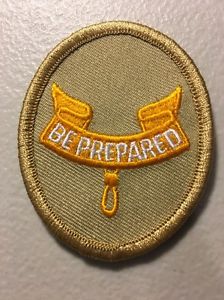
The boy scouts motto is “be prepared”.  Underlying this sentiment is the knowledge that no matter how rigorous your analysis and detailed planning the unexpected can occur.

In fact, the things we do not know might not impact our plans or goals.  Or, yikes, they might.  Being prepared is all about managing the risk of unknown factors having an impact on something.

This could be a good impact or a bad impact but either way, being ready for things we did not know about and consider helps ensure they do not derail the plan.

Mitigating your Risk

Anticipating impacts that might occur, that is guessing about the results of unknown factors to the best of your ability is a good way to be prepared to respond effectively, without panic.

The things you can do to resolve unpleasant surprises, mitigating actions, can be determined and prepared in advance.  Given they might never be needed spending a lot and time and effort is not the idea.

Most importantly is just having alternate ideas/concepts/tools etc. ready.  Awareness of the unknown and readiness to combat it is the key to being a good scout.


How do I know?

I have found a very useful quality check hinges on the answer to a single query.  The question can be applied to a product, service or process.

First, identify the outcome.  For example, if building airplanes, one outcome might be the plane can fly to its destination without mishap.

Question then Validate

The questions become things like.  How do we make sure this plane can fly the expected distance?  How do we make sure things don’t break in flight?

The plan to test the answers to the questions and make sure they are correct represents validation.

This simple process of repeatedly answering the question, (i.e.., how, ………….? ) while not infallible is a very valuable technique to determining quality, efficiency and effectiveness.

High Quality Outcomes

This simple questioning process is a great way to ensure outcomes will be what you expect (proactive) and then are what you expect (reative).

Asking the “ how do I know …..?” question reduces risk and increases predictability.  Based on the answers we can be condident that the process,service and ultimately the products will be consistent, reaptable and issues or deliberate attacks will be identified and can be avoided or at least mitigated.

Objective Measure

How do I know this blog is readable?  I use automated grammar and spell check tools.  I read the post at least three times before publishing.  I use feedback to improve quality of future posts.

My list actually goes on.  The point is, I am able to consistently produce a high quality post because I am always validating the outcomes using the how do I know questions.

How do I know the topic is interesting?  Hmmm.

Appetite for Risk

There are two main activities associated with risk.  First risk analysis, what are the risks, liklihood of occurrence and impact if the risk event does occur?

Following on the heels of analysis is the practice of risk management.  Some consider risk analysis just a sub process of risk management but I view them as separate practices.

Risk Tolerance

People often talk about thier tolerance for risk.  The implication being some accept more risk than others.  For me, it is not a questions of whether the initial risk is high or low, or accepting it at all, it’s how how you mitigate it so it becomes or remains low.

Any activity I undertake, whether, skiing, motor car racing, investing in equities or just walking down the street has a risk associated with it.

If the activity has a high probability of occurence and the impact will be quite detrimental, my approach is not necessarily to avoid the activity, particularly if it is some thing I want to do.

Instead of avoidance I practice mitigation.  By planning my actions in a way to reduce the likelihood of occurence coupled with an understanding of how to reduce the impact if the risk occurs, I can engage with confidence.

Consider for example bringing a Christmas tree into your house.  There is a risk it can be a catalyst for a house fire.  By watering and careful placement and use of heat sources when decorating, you mitigate or reduce the likelihood of occurance.

By having a fire extinguisher on hand you can mitigate the impact if the risk occurs.  A home insurance fire policy helps with this too.  Using these mitigation techniques enables you to bring a dead fire hazzard into your home without fear.

Risky Business

Everything we do entails some risk.  When we describe an activity as “risky” we have usually done a quick intuitive analysis and concluded their is a high risk of something bad happening.  In our minds this activity becomes a risky business.

Today’s post I want to explore the basic concepts of risk.  The question is,  rather than gut feel is there a way to quantify risk (hopefully a simple way) and then based on that quantification determine what if anything to do about it.

The topic of risk analysis and risk management is complex and huge.  As usual today’s post is just   exploring the basic concepts. I will build on these in future posts.

What is a risk?

Just sitting on the couch reading a book entails a risk.  You could have a heart attack.  The large tree outside your house could fall over, break through your roof and crush you.   A flea could bite your ankle,  the flea could carry a disease and you could get very sick.  Of course the list goes on probably as long as my imagination.

So, what risks do we care about and want to protect against?

A basic risk quantification technique is to score the likelihood a risk event (the bad thing) will occur multiplied by the impact factor of the event.   Typically likelihood is rated on a scale from unlikely to very likely.  Impact is classified from low to high.

For a quick semi balanced subjective/objective score of a particular risk you could assign say unlikely = 1, likely = 3, very likely = 5.  On the impact side low = 1,  medium = 3 and high = 5.    Then just multiple the two factors to get an overall score that is indicative of the risk magnitude.   For example an unlikely risk with low impact  would be 1 x 1 = 1.   A very likely risk of high impact would be 5 x 5 = 25.  So your risk assessments using this simple tool would line up between 1 and 25.  You might say you would worry about those above 15.

The scoring concept described above is weighted toward the subjective and overall high level.  Much more complex weighting systems with more accurate metrics can be appropriate to use depending on the risks you are assessing but the basic concept of rating and assessing likelihood and impact stands.

Let’s try out the simple model

 Activity – importing goods into the Port of Vancouver

Risk Event – a pocket nuclear device is imported.

Considering the protections at the port, custom inspections, x-rays, radiation detection devices and guards together with the difficulty to build and transport such a device, I will rate this a 1 (unlikely).  The impact side gets a 5 (obviously I think) for an overall risk score of 1 x 5 = 5.

Now if the protections and other mitigations against likelihood did not exist or were not in place this could be rated a 3 (likely) or 5 (very likely) in which case the overall risk score would be 15 or 25.   Overtime this score can change; say a terrorist announces they are intent on importing such a device and working actively on it we might raise our likelihood rating.   Or we might improve our risk mitigation activities to reduce the likelihood in the face of the heightened threat.

And there you have it, a simple model!

There is a lot more to say about this model and how it can be used and applied in more real world situations (like your house burning down , a new purchase breaking down) and I will get into those in future posts.  The basis concept described here though applies throughout.