All posts by steve@kerrzone.com

Shaping theFuture

Change is both inevitable and constant.  One simple way of validating this statement is to ask someone over the age of sixty to describe day to day life in their adolescent years.

Comparing their description to current daily life you will note a multitude of  differences in a wide variety of things including for example cultural behaviour, technical advances, human life expectancy, medical science and many more.

Human History is Change

Throughout time since the beginning of human kind the underlying constant has been change.  A simple review of human history confirms change is both inevitable and perpetual.

However, this is not to imply that change is not controlled.    Perhaps the bigger picture of events are not all connected and do not occur in sync but to a large degree both region specific and global changes are both generated and managed by human behaviour.

We all have the opportunity to generate change.  One would hope the goal would be to implement changes that create a better future.  The responsibility to both initiate and support positive change for the future is in all our hands.

For the betterment of our children’s children

Advancing the cause of continuous improvement is not a task best left to the anonymous them (whomever they are) nor is it something an individual can fully resolve alone but each of us can contribute to the solution.

Each of us must keep in mind future generations and consider what we can contribute to their betterment. Our small contribution will be subject to multiplication of impact through the centuries ultimately positioning great benefit for the future.

Do not ignore your part.  Contribute to the positive change for all while you can.  You can impact the shape of the future.
Be Calm

The time you spend with your thoughts can be refreshing and invigorating.  Thinking is a foundation of creativity.  However, anxiety and overthinking also begin with thought.

Our thoughts can take over and be in control.  Typically when negative feelings are generated during moments of focused thinking it is not because we desire to be become anxious, depressed, fearful or something similarly negative.

Be in Control

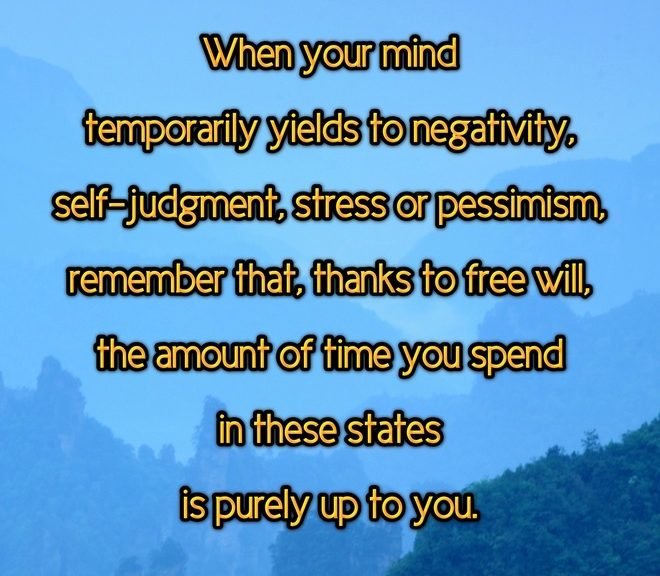
Putting science fiction aside, today outside of extreme cases (e.g. brainwashing, torture, hypnotism) we are solely in control of our minds.

The subjects we focus our thinking on may arise from our sub-conscious but always we have the ability to take control and decide where these conversations with ourselves will lead.

Why Worry?

Giving way to anxiety or unease by allowing one’s mind to dwell on difficulty or troubles is a choice.  What do we achieve by making the decision to worry about something?

Worry leads to feeling troubled or concerned and typically creates stress together with the associated physical reactions (e.g., high blood pressure, reduced ability to focus, tiredness).

There is little positive value resulting from being worried about things.  We our in control of our own thoughts so choosing to be calm enables us to avoid the negative results of being worried.

It is a Choice!

For each of us there are different ways to manage our thoughts, take ownership and be in control.  By taking control of our minds we determine what the outcomes of our thinking will be, that is choosing to be calm whatever the scenario.

The key point is not which technique you select to avoid worry and become anxious but rather recognizing it is your choice to do so and choosing wisely.

Being Awesome

Behaving in a way that others perceive you as extremely impressive or daunting such that you inspire them without being conceited or self centred is the underpinning of great leadership.

An innate attraction  imbedded in the very nature of being human that occurs when others unconsciously view you as being awesome.  This attraction can override even logical analysis creating an emotional bind between leaders and followers.

What is Awesome Behaviour

The road to awesomeness is paved with a complex intertwining of basic human behaviours which ultimately define you in the eyes of others.

Understanding and then continuously improving your skills in these areas all the while practicing them consistently will both define you as awesome to others but also you will personally feel awesome.

At the core, that is the motivating factors of awesome behaviour, is your personal value system.  At the apex of these values is the belief that everyone is important.

 What are examples of Awesome Behaviour?

This list needs to be personalized to your own values so that acting this way is not a chore, rather totally natural.  These examples are a solid framework for being awesome.

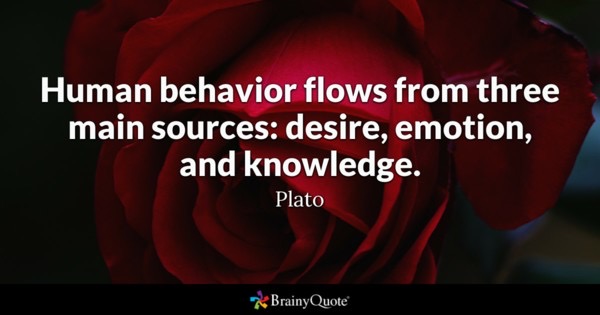
  • Understand and use your your behaviour drivers efficiently (i.e., emotion, desire and knowledge).
  • Take action, don’t wait to be asked or just follow others.  Deeds speak volumes. Anticipate what is needed.  Make it better.
  • Interactions with others (i.e., communication) are based on observation, ability to listen and most importantly deliver and receive messages  without misunderstanding.  Prove to others they are important.
  • Earn the trust of others by saying what you do and doing what you say. (Always).
  • Positivity, this behaviour underlies being awesome and is infectious.
  • View challenges as opportunities
  • Embrace change, it is not only inevitable but by owning and influencing it you can help ensure it is positive.


All it takes is everyone

On Tuesday I posted about the need for good leaders to perceive when their own and others behaviour is verging on stubborn so they can de-escalate the scenario and move to circumstances that are a benefit to all.

It was noted in later comments (keep those cards and letters coming they are appreciated) that everyone should practice eliminating stubbornness, this is not just a task for leaders.

In Principal, In Reality

I can imagine a place or state of things in which everything is perfect, in fact  not only imagine it but act in ways that will contribute to the development of a Utopia for all.

Unfortunately though, my own experience  and failures in this regard lead me to a more pragmatic perspective.  Seeking Utopia is a worthwhile endeavour but a very difficult if not improbable achievement, at least in the near term.

Thus, well it is true everyone should avoid stubborn behaviour, both for their own and others benefit a leader by dint of the responsibilities they accepted has an obligation to do this.

A realistic approach

Leaders are best positioned to guide us to utopian circumstances and while this should preclude universal participation the reality (at least in current times) is that motivation and direction from a central source (i.e. leader) is needed.

The damage caused by a powerful in transient belief, from terrorist acts to all out war, often has a leader at its heart motivating followers to act in unsavoury ways sometimes simply by first recognizing and then encouraging their innate stubbornness.

This is not to say effective leadership is a way to solve all of humankind’s problems, but it could be a start.   In the final denouement though it does take everyone’s participation’s


Pride in Leadership

To become an effective leader, in-most cases, significant effort is needed.  Achieving leadership roles is natural to lead to a  feeling of deep pleasure or satisfaction derived from one’s own achievements.

Basically this applies to the achievements of those with whom one is closely associated, or from qualities or possessions that are widely admired.  The leader recognizes this and is proud.

Pride and Self Confidence

Leadership is created through the practiced balance of many skills and competencies.  Being able to trust in one’s abilities, qualities, and judgment is one of these.

Unfortunately an unequal balance between pride and self confidence can lead to having or showing dogged determination not to change one’s attitude or position on something, especially in spite of any arguments or reasons to do so.

Avoiding Stubbornness

The caveat to being self confident  is the potential to evolve to a framework of insurmountable belief.  That is the leader develops an irrevocable understanding that their personal judgement should not be challenged.

They are proud of their demonstrated capabilities and proven success and contend that it should not be questioned.  Can they be wrong?  By dint of their granted power and responsibilities  a belief in personal ominicience develops.

This is a danger to be carefully guarded against, often evidenced by others perceiving stubborn behaviour and reacting stubborn in turn.   Self aware leaders identify and react to this scenario quite quickly.

Win Win

Diversity of perception and associated opinions represents an opportunity for moving forward with powerful positive solutions rather than being stuck in the cult of authoritative leadership albeit a balance of some authority is needed to avoid anarchy.

The next time you are presented with a situation of apparently intractable positions take time to consider,  is there an opportunity for you to change the context and lead to something beyond the butting of heads.

Understanding Pandemic Economic Impacts

Economics is an area of knowledge with a very broad scope that can be worldwide or regional and cover a plethora of activities although these are related to production, consumption and transfer of wealth.

Our regional economies link together in many different ways.  A worldwide event like the current covid pandemic impacts those links heavily and affects all areas of the earth although regional response and thus associated outcomes can vary.

Resource Management

The main purpose for studying economic activity is the development of plans to manage economies in ways that will produce positive outcomes for all (theoretically speaking).

In reality,  economics are also leveraged by many with a focus on personal gain.  The study of resource management together with associated predictions and manipulations is considered complex and sold to many as being an opaque topic for experts.

Keep it Simple

On the whole economics is a complex subject however currently the majority of production and consumption around the world is governed by the availability and perceived value of government backed currency (some currencies having more weight than others).

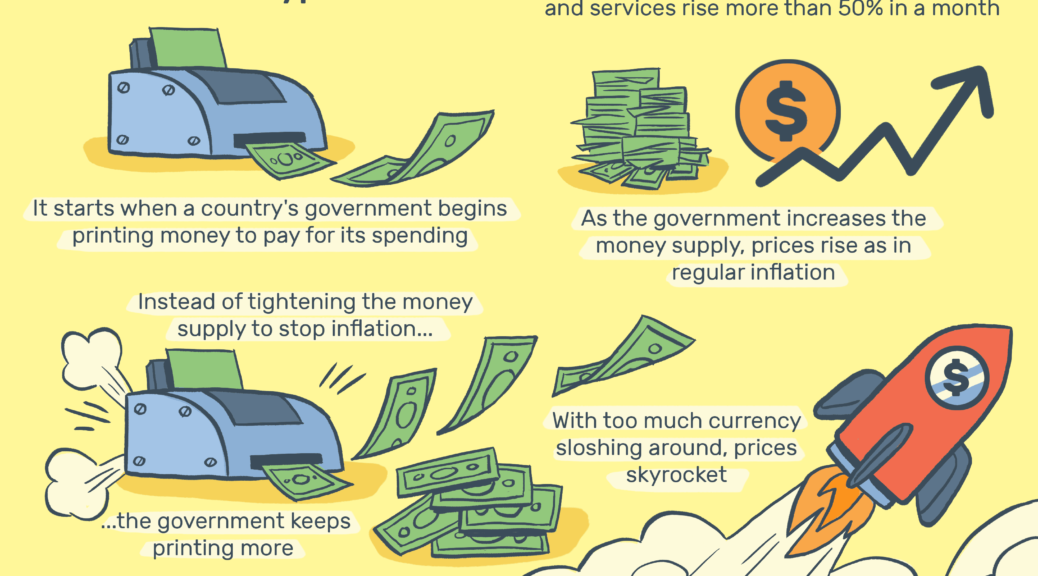
Simply put, regardless of other influences (e.g., covid) as long as currency has value manipulation of the money supply will allow governments to effect economic change.

And Therein Lies the Rub

Currency value is very much dependent on supply and demand.  Simply stated too much supply will make currency valueless.  Germany in the 1930’s presents a clear example of this when a wheelbarrow full of marks was needed to buy a loaf of bread.

In the event the money supply collapses because governments have printed money beyond the needs of demand it is likely economic focus will shift to goods and materials of critical value like food and water.  The barter system could see resurgence.

What does the future hold?

The monetary based economy as we currently know it could well disappear because our governments have chosen to address the pandemic impacts on production and consumption by printing money.

I believe this is why bitcoin has become so popular of late , the supply is fixed and subject to an absolute limit.  Hence when government backed currency becomes worthless and an alternative to barter is sought bitcoin may well be the answer.


No Fooling

The origin of All Fools Day or the more modern term, April Fools Day is the subject of much speculation and has yet to be to be pinned down beyond circumstantial evidence.

However the wealth of available literature indicates the origin could date back as far as the thirteenth century to as late as the beginning of the eighteenth century.

Practical Jokes and Hoaxes

Regardless of timing, the more interesting phenomenon to me is the development of a formal annual day to perpetrate and then celebrate hoaxes.

The question I ruminate on is the questions  why cultures felt the need to designate a specific time to play a trick played on someone in order to make them look foolish and to amuse others.

To me this seems of some value in raising morale, allowing venting and reducing stress but it does have the potential to backfire if the target becomes offended.

Humorous without Harm

Successful April Fools jokes focus on creating humour that can be enjoyed by all and although the target may experience some humiliation it must be clear the trick is more a signal of affection and admiration rather than derision, not always easily done.

Having Fun

The fact April Fools Day is accepted and often embraced by large segments of the population is an indicator humans recognize the value of laughing at ourselves and our circumstances occasionally.

Being serious constantly can create great stress and taking time, even if only once a year to break the rules, step out of the boundaries and just laugh about it all is probably really not a bad idea.

Use your Perspective

The way you see things, how you perceive and react both physically and emotionally is driven by your attitude and can change with the situational context.

Notwithstanding your surroundings or state of mind, with attention and effort your perceptions can be controlled.  This does require conscious and self determined action but it is within your control.  For example adopting the optimistic or pessimistic view.

Play or Work

A basic interesting example of this revolves around our daily activities.  That is, do we perceive them to be work or play and more to the point why is there a distinction.

By definition an activity involving mental or physical effort done in order to achieve a purpose or result, often something a person has to do is work.

Play is also activity focused but the meaning of these two words is simply differentiated by the classification of the activity.  Play being activities for enjoyment and recreation rather than a serious or practical purpose.

All in Your Mind

The distinction is subjective and really self determined.  One persons play might be another’s work and vice versa.  We can choose how to view what we are doing.

I would argue we are always doing something and have to., it is the very nature of being. This applies to whether it is for a defined urgent purpose or just to relax, we choose to do it.

Doing nothing is a choice and although it is a circular argument by choosing to do nothing you are in fact doing something.  I find doing nothing challenging, invigorating and enjoyable because I choose to.

Perspective Matters

Although a very simple concept viewing what you are doing as play versus work increases your engagement, enjoyment and effectiveness.

What is wrong with constantly being at play.  It is a more positive state, have fun, enjoy be happy there is no good reason not to and it is your choice.

Code of Conduct

Organizations of all types frequently choose to create and communicate to various stakeholders groups (sometimes all stakeholders) their behavioral expectations relative to interactions with the organization.

The code of conduct is developed by, or at a minimum – endorsed by, the board or senior leadership of the organizations.  The code is  strategic in nature providing direction for development of guidelines and procedures which are contextually specific.

Personal Values

Organizational conduct codes are necessarily in sync with the enterprise values, mission and vision.  This alignment is critical to build support for expected behaviors by those acting for and associated with the organization.

The organizational behavior expectations, grounded on expected values, work best when they are in sync with the personal values of those individuals that make up the organizational whole.

Thus the organizational code of conduct can be a filter both for selection of stakeholders as well as for the stakeholders themselves to determine if this organization is a good fit.

Developing a Code of Conduct

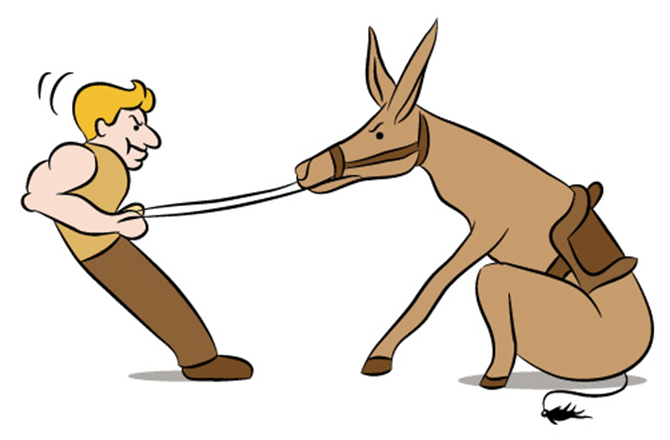
An interesting question for organizations is how to best develop the enterprise wide conduct expectations.  Is this a collaborative exercise among all stakeholders or should it be top down.

I believe there is no simple answer to this question and like many things (e.g., conservative vs. liberal, nature vs. nurture) in fact the answer lies with creating an optimal balance.

The organizational leaders both strategic and operational (i.e, the board and executive) play a key role in developing and issuing the code but to be effective it must take the expectations of the broader stakeholder group into account.

How to do this is very much contextual and dependent on the overall make-up of the organization but drawing on the existing culture, strategy and values at the core of the organization can often be an efficient way as opposed to the broader consultation processes often used by large and ineffective bureaucracies.

The big picture

I have often posted about leaders traits.  The focus have been on skills that define effective and powerful leaders.  The other day in a conversation with some friends I came to the realization knowing  things not to do is as important as knowing what to do.

That is even if you are aware of and consciously work on being an exceptional leader practising behaviours that are known to work, what if unconsciously your core philosophy on how to interact with others is flawed.

What matters most

The underlying tenant of leadership is ability to enable greatness across all stakeholders be it followers ,peers, subordinates or whatever defined relationship you  have with everyone you interact with.

A leaders power is derived from others and to be effective leaders need to focus those stakeholders needs.  Leaders who believe at their core “it’s all about me” will definitely fail over time.

Others recognize the inward focus and ultimately even if they continue to “follow” the leader it is not because they want to but rather some less powerful motivation which may continue for sometime but will likely be unsustainable over the long term.

It’s about others first

Both consciously and unconsciously leaders must not focus on their needs first.  Outstanding leaders value everyone and focus on t(e greater good rather than personal avarice.

Exaggerated examples of this concept are evident throughout history when considering dictators like the infamous  Adolph Hitler who clearly focused on his own needs.  He demonstrated time and again, to his detriment the world revolved around him.

There are many skills to help us be great leaders there are many skills we can leverage but if at the core are focus is inward facing we will fail.