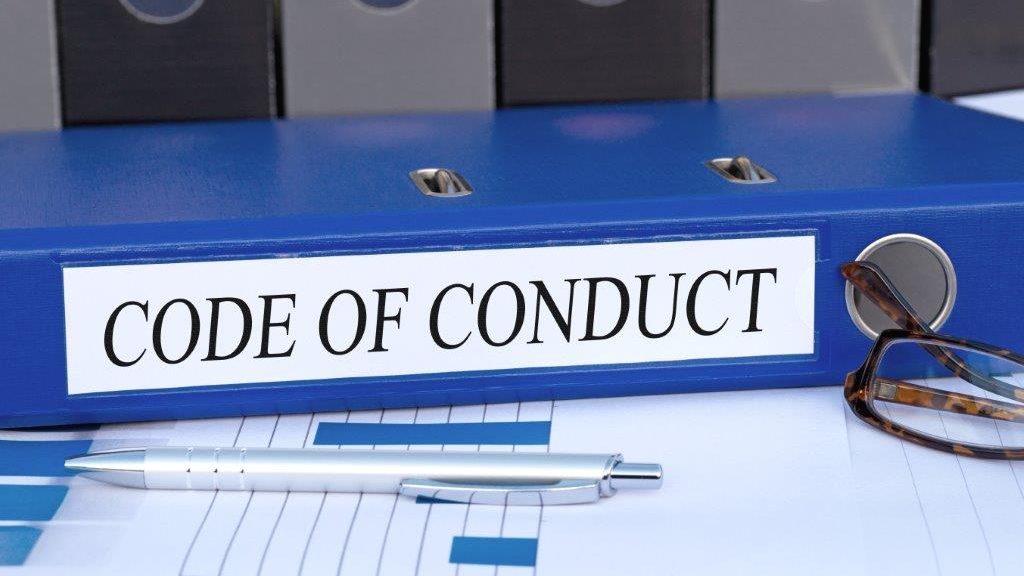
Organizations of all types frequently choose to create and communicate to various stakeholders groups (sometimes all stakeholders) their behavioral expectations relative to interactions with the organization.
The code of conduct is developed by, or at a minimum – endorsed by, the board or senior leadership of the organizations. The code is strategic in nature providing direction for development of guidelines and procedures which are contextually specific.
Personal Values
Organizational conduct codes are necessarily in sync with the enterprise values, mission and vision. This alignment is critical to build support for expected behaviors by those acting for and associated with the organization.
The organizational behavior expectations, grounded on expected values, work best when they are in sync with the personal values of those individuals that make up the organizational whole.
Thus the organizational code of conduct can be a filter both for selection of stakeholders as well as for the stakeholders themselves to determine if this organization is a good fit.
Developing a Code of Conduct
An interesting question for organizations is how to best develop the enterprise wide conduct expectations. Is this a collaborative exercise among all stakeholders or should it be top down.
I believe there is no simple answer to this question and like many things (e.g., conservative vs. liberal, nature vs. nurture) in fact the answer lies with creating an optimal balance.
The organizational leaders both strategic and operational (i.e, the board and executive) play a key role in developing and issuing the code but to be effective it must take the expectations of the broader stakeholder group into account.
How to do this is very much contextual and dependent on the overall make-up of the organization but drawing on the existing culture, strategy and values at the core of the organization can often be an efficient way as opposed to the broader consultation processes often used by large and ineffective bureaucracies.