Tag Archives: stress

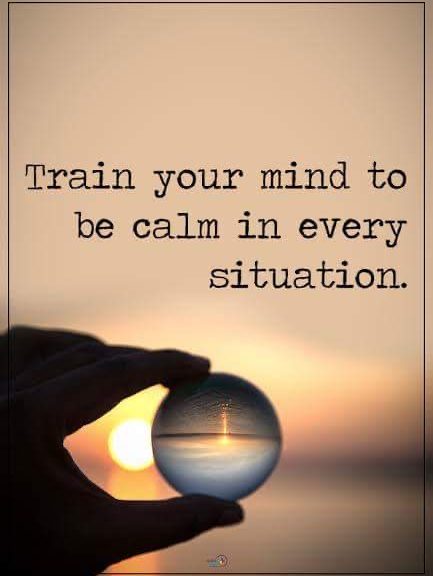
Be Calm

The time you spend with your thoughts can be refreshing and invigorating.  Thinking is a foundation of creativity.  However, anxiety and overthinking also begin with thought.

Our thoughts can take over and be in control.  Typically when negative feelings are generated during moments of focused thinking it is not because we desire to be become anxious, depressed, fearful or something similarly negative.

Be in Control

Putting science fiction aside, today outside of extreme cases (e.g. brainwashing, torture, hypnotism) we are solely in control of our minds.

The subjects we focus our thinking on may arise from our sub-conscious but always we have the ability to take control and decide where these conversations with ourselves will lead.

Why Worry?

Giving way to anxiety or unease by allowing one’s mind to dwell on difficulty or troubles is a choice.  What do we achieve by making the decision to worry about something?

Worry leads to feeling troubled or concerned and typically creates stress together with the associated physical reactions (e.g., high blood pressure, reduced ability to focus, tiredness).

There is little positive value resulting from being worried about things.  We our in control of our own thoughts so choosing to be calm enables us to avoid the negative results of being worried.

It is a Choice!

For each of us there are different ways to manage our thoughts, take ownership and be in control.  By taking control of our minds we determine what the outcomes of our thinking will be, that is choosing to be calm whatever the scenario.

The key point is not which technique you select to avoid worry and become anxious but rather recognizing it is your choice to do so and choosing wisely.

Bad News Overload

Everywhere in the world, the current pandemic has created an overload of bad news.  From the price of oil to job loss and economic destruction, there is a broad choice of worrisome news.

Keeping current about what’s up is probably a best practice. Ignoring or avoiding the news might appear to be a way of reducing your stress but there could well be more danger in not knowing.

Post Bad News Stress Syndrome

I recently read an article about the impacts of bad news on our mental states.  The author compared what he called post bad news stress disorder (PBNSD)  to the more commonly known post trauma stress disorder (PTSD)

I view this view as a bit of an exaggeration.  PTSD is much studied and well documented while considering our over reaction to an abundance of bad news as a potential mental disorder is a bit much and too hypothetical for me.

Maintain Your Perspective

Without a doubt a constant stream of disturbing news, particularly when it is close to home and impactful, is stressful.  We do need to both be able to absorb and understand the news content while maintaining perspective.

We can survive and overcome, allowing stress to drive ourselves to illogical behaviour can be harmful  and actually worsen the situation.    It is an over used mantra but I encourage everyone to keep calm and carry on.

It’s really important to remember, don’t be stressed about the things you can’t control (what could you do anyway).  Focus your actions on things that are realistically within your prevue and achievable.


Panic

It is probably not a desirable event but on occasion, most if not all of us will experience sudden uncontrollable fear or anxiety, often causing wildly unthinking behavior.

Panic probably has a purpose although I am not sure how valuable it is given the often associated illogical or irrational behavior which is driven by the shock/stress associated with the fearful event.

Keep Calm, Carry On

During the second world war, the British Government prepared a campaign to use in the event of an invasion by Germany.  The tag line was “keep calm and carry on”.

The premise was, panic is not a useful behavior in a crisis.   England was not invaded and the campaign was never run although leftover posters were found a decade ago and the motto has become a popular phrase for modern posters, coffee mugs, etc.

Why Panic

Panic is driven by strong emotions.  Most typically is fear of undesirable consequences.  The greater the impact of the bad things we visualize potentially the greater the magnitude of our panic.

For me avoiding panic starts with a logical consideration of why it occurred in the first place.   Panic is an innate natural behavior for prioritization.

Prioritization is critical to determining when to react, how quickly and how forcefully.  In this context, panic makes sense in that it could help us prioritize the need for immediate action.

Avoiding Panic

The downside arises from emotional underpinning.   Our prioritization might not be logical and the reaction might not be the most appropriate.

That is urgency drives us to “GO” even when a little forethought might be more appropriate to arrive at the best resolution.

Simple to avoid, stop, ask why you are panicking, consider options, pick the best one and move on.


Challenge/Stress/Anxiety

Anxiety is a natural response to stress or lack there off. Most associate anxiety with the presence of stress, however, the absence of purposeful goals (with their associated stress) can also be worrisome.

While anxiety is typically a feeling of fear or apprehension about what’s to come a lack of naturally occurring challenges or potentially stressful scenarios drives us to find things to worry about.

Making it up

In the absence of things that create stress we will often imagine potential worrisome scenarios. Interestingly, having nothing to do can be as stress as the more commonly recognized scenario of having too much to do.

Our minds are always active with conscious and unconscious thought. Thinking is a constant activity, we cannot avoid brain activity. If your environment is not stimulating you, often you will imagine issues – a car running out of gas, slipping on ice and hurting yourself.

Stress drives behaviour and sometimes is harmful, however no stress can cause us to make up stressful scenarios because we need some stress.

It’s a Balance

Too much stress can affect your help, lead you to unsocial or even unacceptable behaviour while too little stress can actually have the same results.

The key is finding the careful balance between too much and too little stress. In essence this equates to manageable or unmanageable stress.

Anxiety arising from manageable stress can be resolved and in and of itself the resolution activities are healthy. Unmanageable stressful situations should be avoided, both circumstantial but more particularly those of your own design.

Focus on Mental Well Being

While diet and exercise can be two key methods of maintaining good physical health, mental tranquility is the foundation of good health.  

Stress on your brain can weaken your entire body and regardless of your overall physical health, make you susceptible to disease or inexplicable aches and pains.

Managing Stress

Contrary to common belief, all stress is not harmful to your well being, in fact, a lack of good stress or eustress can be detrimental.  

The research of Hungarian/Canadian endocrinologist Hans Selye into our response to stressors showed that certain stress events led to positive biological reactions, while others, which can be labeled distress, were negative. 

(Note:  I  have simplified his concepts) 

When managing your stress it is important to classify the stressor a eustress or distress (this can vary by individual) and calculate your response accordingly.  

Eustress or Distress

Consider the retiree.  Eustress studies revealed those who retired and did not replace their daily purpose (work) with other activities (hobbies, travel, etc), were likely to die within 9 to 12 months of retirement.  

While some talk about the stress of work, worries about events, schedules, finances, in fact, these provide a biological incentive to the body and thus in a sense are life-sustaining, their lack is detrimental.

On the other hand, stresses with the negative impact that we consider out of our control (e.g. loss of a loved one, loss of employment) are the ones to both avoid if possible, or if unavoidable, (at a very minimum) accept and move on. 

Distress spirals out of control and can be very damaging to our well-being unless we can defuse it.  Basically accepts those things that just “are what they are” and move on. 

Relaxing

“Relax” is a verb refering to behaviour that results in you becoming less, tired tense or anxious.   I wonder if you avoided stress in the first place, whether relaxation activities would be required.

Relaxing can address the symptoms but eliminating the cause of tension or anxiety resolves the root cause and seems to be a more sustainable solution.

But Wait

Another consideration is whether stress has value.  If it does, eliminating stress before it occurs could create a different problem.  Perhaps the cycle of stress and relaxation in and of themselves are needed and contribute to your personal well being.

It is a kind of a circular argument, but, I like to relax.  if I was never worried or stressed out, making me tired I would have nothing to relax about.  So I need to be stressed.

With no reason to relax, I would miss this enjoyable activity.  That might stress me out.  The cycle of stress and relaxation would still proceed but in reverse.

Is there an Answer?

Stress is an important part of your life.  Eliminating stress (supposedly addressing the root cause of your tension and anxiety) is not a solution.

Embracing stress, leveraging the motivation and emotions it drives, to drive achievement and personal satisfaction is the answer.  And of course falling back on the enjoyment of just relaxing from time to time keeps everything in balance.


Eustress – gotta have it (as opposed to distress)

Janos Sayle, working at McGill University in Montreal Canada discovered and documented two distinct kinds of stress.  A simplified version of  these types defines them as a stress reaction resulting from good news (eustress) or resulting from bad news (distress).

Living without eustress

A colleague commented today how it nice it would be to have no stress.  Relaxation, now that is the goal.  Personally I am not totally certain how beneficial this perspective is.

There have been numerous studies which appear to definitely demonstrate that retiree’s who do not experience eustress tend to die earlier than those that do.

Good stress is motivating.  Simply it give you a reason to live and so supports your desire to do so.  Bad stress can result in undesirable physical impacts, lack of good stress also does.

Wandering Aimlessly

Intuitively wandering aimlessly with no pressures, demands, purpose or constraints,( for example being a beachcomber traveling the world searching for the perfect climate, pace, culture)  might seem like an ideal situation.

In reality this is really not the case, even the beachcomber has some stressful activities – the search itself for the beach for example is not fully without stress.

Back to Balance

Of course the level of eustress must be managed and balanced with low stress situations (whether good or bad stress).  That being said though, there is a strong case for the benefit of experiencing some level of eustress .

Avoid it altogether at your own peril.