Tag Archives: organizational behaviour

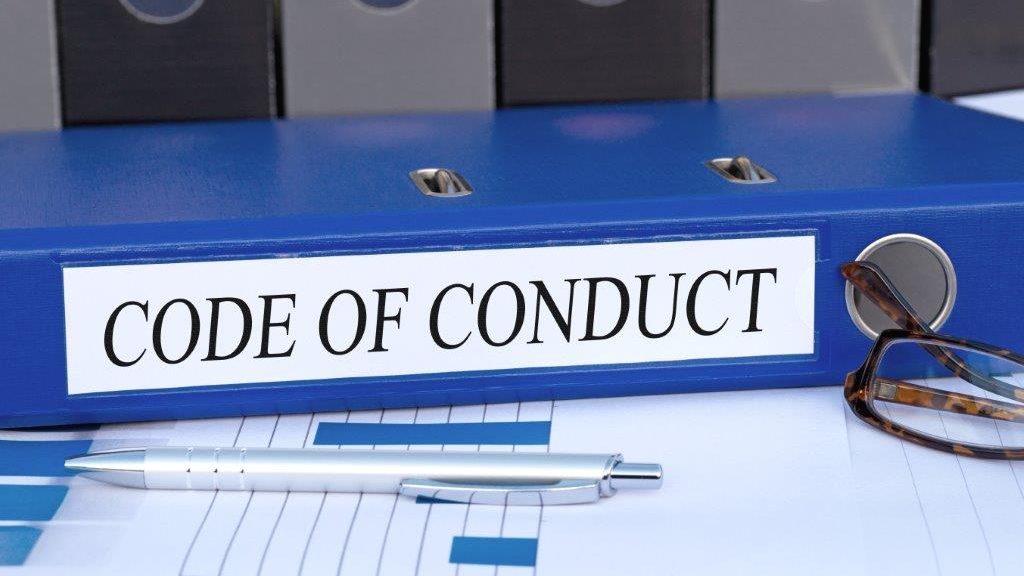
Code of Conduct

Organizations of all types frequently choose to create and communicate to various stakeholders groups (sometimes all stakeholders) their behavioral expectations relative to interactions with the organization.

The code of conduct is developed by, or at a minimum – endorsed by, the board or senior leadership of the organizations.  The code is  strategic in nature providing direction for development of guidelines and procedures which are contextually specific.

Personal Values

Organizational conduct codes are necessarily in sync with the enterprise values, mission and vision.  This alignment is critical to build support for expected behaviors by those acting for and associated with the organization.

The organizational behavior expectations, grounded on expected values, work best when they are in sync with the personal values of those individuals that make up the organizational whole.

Thus the organizational code of conduct can be a filter both for selection of stakeholders as well as for the stakeholders themselves to determine if this organization is a good fit.

Developing a Code of Conduct

An interesting question for organizations is how to best develop the enterprise wide conduct expectations.  Is this a collaborative exercise among all stakeholders or should it be top down.

I believe there is no simple answer to this question and like many things (e.g., conservative vs. liberal, nature vs. nurture) in fact the answer lies with creating an optimal balance.

The organizational leaders both strategic and operational (i.e, the board and executive) play a key role in developing and issuing the code but to be effective it must take the expectations of the broader stakeholder group into account.

How to do this is very much contextual and dependent on the overall make-up of the organization but drawing on the existing culture, strategy and values at the core of the organization can often be an efficient way as opposed to the broader consultation processes often used by large and ineffective bureaucracies.

Getting Better

The other day a colleague postulated that all organizations have a maximum maturity/ performance capability plateau dictated by the culture and the resources.  I took strong exception to this opinion.

Its all about leadership

In high performing organizations (or high performing teams) the performance/ maturity bar moves higher continously.  Sitting on ones laurels (i.e., stagnating) leads results on a downward slope.

The culture of the organization/ team is motivated by leadership.  In the best case scenarios everyone takes some leadership role and the motivating effect is multiplied.

You get what you believe

If you believe some artificial maturity/ performance barrier exists it likely will.  It is a self fullfilling prophesy.  Continual striving for greater success does not happen by magic.

The leadership and of course the team members themselves need to both buy-in and therefore support this approach.  A belief that a hard ceiling exists is a powerful inhibitor.

For Example

My colleague noted, personal experience has led to their belief the plateau exists.  In their experience it always appears at some point. While the world might not be full of high performing organizations, they do exist.

Tesla, Apple, Google are all top of mind obvious examples of organizations that continually strive for improvement.  These are not static companies.  Constant change for the better is clearly  built into their DNA.

This companies outcomes speak for themselves.

So for me, it is a real hot button.  You need to believe in better and continously put out the effort to get there.  It never stops.  And if you believe otherwise, sadly it will probably be true.

Organizational Behavior

Regardless of type (e.g., charitable, corporate, social, government, etc.) organizations all share a set of common traits.  These influence the way the organizations members behave.

Heirarchy

This always exists in some form.  The structure could be pyramidical (most common) or relatively flat with shared authority and accountabilities.

The details of organization vary depending on type but ultimately there are rankings of authority (leaders, managers) and various other member levels.

Overall the relationships and authorities associated with the organizations members are defined .  This may be crystal clear or vague, either way, whether strictly defined or loosley defined a structure will exist.

Culture

The organizations leaders and managers, those recognized to have greater power, together with the organizations stated goals and objectives set the tone for how the members behave.

The Individuals

The organizational culture is further influenced by the capabilities and personalities of the entire membership of the organization.

Group Behaviour

The combination of the influences of the heirarchy (leadership structure, cultural and individual members personal traits) dictates the basic overall personality of the group (i.e, the group behaviour)

This ultimately impacts the organizations effectiveness.

When the combinations of structure, culture and individuality gel effectively, typically the organization itself over achieves. A key point here is no one factor alone can influence success.

For example having  effective leadership or an open and vibrant culture or a group of individual super people alone does not necessarily make for greatness.

Real success lies in the balance and integrated combination of all the above factors playing off each other like an orchestra.

Typically great leaders, skilled resoures or a stellar environment alone will not succeed unless the balance exists that binds them  and enables them to work seemlessly in concert.