All posts by steve@kerrzone.com

Fewer words

Communication is a key to personal success. Understanding the information you receive and having information you provide interpreted as intended is not easy.

When listening or observing we interpret we filter the input and the result is not always as intended. Similarly when we communicate verbally we regularly say more than is needed.

Filtering

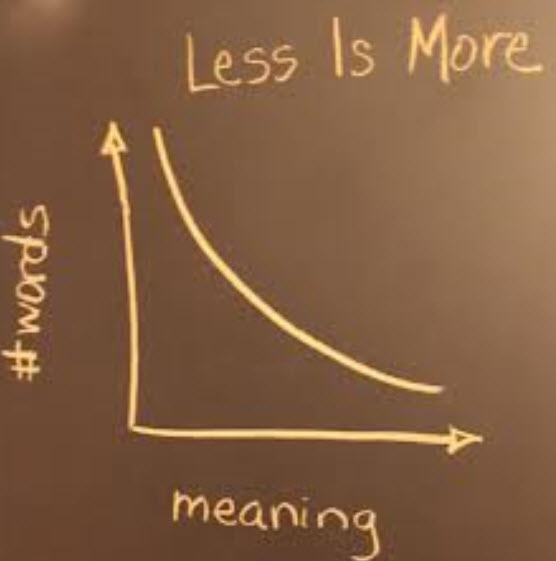
It’s virtually impossible to communicate, whether incoming or outgoing without some level of filtering affecting the result. When sending a communication you can reduce the risk of filtering through brevity.

Many mistakenly believe detail will support clarity. In reality, the more information provided, the more filtering occurs on the recieving end and thus a greater likelyhood of misunderstanding.

Few words, carefully selected and crafted into short uderstandable groupings are far more likely to be interpreted as intended.

In fact, more information, longer explanations including many supporting details frequently just get filtered out. The multitude of words are simply are not heard.

Although there may appear to be receptivity on the the part of the listener, the filtering going on in their brain is invisible to you, but it is definately present.

Wait

Start with a few words and wait for a response. This is doing the listener a favour, they have less filtering to do (fewer words on your part) and more time to digest, absorb, analyze and understand.

Your pause should prompt a response which will give an idea of the level of understanding. These allows you to craft your next set of few words (if needed) in way targeted to enhance understanding.

Improve your communication, use fewer words and longer pauses inbetween. You’ll beamazed how quickly it works.

Needs and Wants

Things required to live a healthy life are needs, everything else you desire is optional, albeit might be required to maximize your happiness.

Separating needs and wants can be a difficult task, but having a clear idea which is which can be most helpful. Needs are clearly a priority and should receive your focus.

Focus

Avoiding conflict between needs and wants helps ensure your efforts are focused on the best value proposition. That is, attaining the goal that gives the best return.

This requires self awareness coupled with the ability to be brutally honest with yourself. Categorizing needs versus desires is easier if you take the timee to define the attributes of each from a personal perspective.

You can then map the object of your desire to the qualities you defined as required to live or nice to have. This makes labling things as wants or needs easier to do.

Want or Need

Determining if something is required, versus just desired, means drawing some lines to suite your own personal situation. One size does does not fit every case.

Your bar should depend on impact. If you don’t attain an objective, what happens? In many cases life as you know it will go on, but could be negatively impacted.

A deficit of positive results is obviously impactful as well. The key to whether a thing is required (whether to avoid the negative or accent the positive is somewhat objective but completely related to impact.

Things with impacts devestating to you are needs, everything else is not.


Performance Feedback

One of my pet peeves is the fact most feedback we provide to others about how they are doing is negative.

Social media is a great example of this, while positive reviews of things have a few positive comments typically negative reviews are both more common and more detailed.

My own experience, and many psychological experiments have proven humans first instinct is to provide negative feedback. Positive comments are usually the result of conscious effort, negative feedback flows naturally.

Focus on the Positive

Years ago I discovered my suggestions for behavioural change rarely worked when focusing on things I perceived to be below my expectations or basically in my view, bad.

On the other hand positive comments led to continuous improvement focused on the foundation of things that were perceived to be good.

In short, as an effective leader, I found little point in commenting on the negative or opportunities for improvement. By focusing on the winning behaviour I noticed consistently it not only became more frequent but also more effective.

Motivation

Success motivates us. Focusing on success when providing advice to others intrinsically includes an element of positive motivation. Not so when telling someone they are doing it wrong, usually in this case change is only motivated by consequences.

Consequences may work for a while to motivate change but observation shows this approach is typically not sustainable. The fear of negative impacts slowly fades away.

It may go against your natural instincts but I strongly urge you to give this approach a try. Drop the opportunities for improvement or changes in behaviour you want to and focus on the behaviours that are worked – provide positive feedback EXCLUSIVELY.

I think you will surprised by the results.

Happiness

The formula for a happy life is not a secret. Tal Ben-Shahar is a self proclaimed happiness researcher. He has a doctorate in organizational behaviour.

Mr. Ben-Shahar famously advised Michelle Obama at their first meeting, when asked what he did, that he was a happiness researcher. Her classic reply, “Oh, is that a thing?”

Ideas

Tal travels the world consulting and lecturing on happiness related behaviours and concepts. One of his several books on the subject, Learn the Secrets to Daily Joy and Lasting Fulfillment, led me to todays topic.

Happiness is of our own making, yet, as implied by the self help books title there is some secret to attaining it. Personally, there is no secret. I know what makes me happy, actually I would suggest most people do.

Choosing to be Happy

For me the hallmark of the work of Tal Ben-Shahar is not researching happiness itself but rather how to practice happiness focused behaviours.

Ultimately it is about choice. The first key step in the secret formula to happiness (which is not really a secret at all) is choosing to do so. Of course the cavet is, “Not at the expense of others”.

Knowing what mkes you happy and choosing to behave in ways that create personal happinessis in fact the simple bu effective secret formula.

The key to this is resisting the urge to let external factors, those out of your control impinge on your happiness. You can contro your own reaction to everything so whatever happens, perceive it correctly and you can be happy.


Monitoring and Control

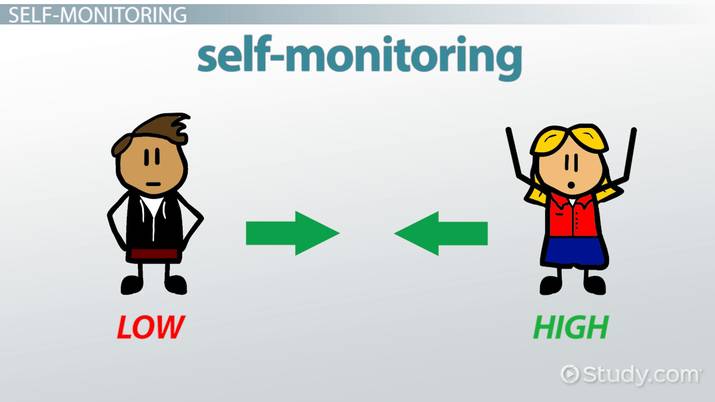
Keeping track of progress toward objectives is something we all do to various levels of intensity. In some cases we monitor only ourselves, sometimes ourselves, others and a variety of variables.

Monitoring is typically around information gathering. The observations are used as input to deciding what changes to influence and then executing (control)

Unseen

The best monitoring and control practices are those that get results but without most people even being aware they are subject to monitoring or control.

Strong direction and brute force should be reserved for the exception situations. These methods can work occassionally but typically are not sustainable.

A key trait of strong leaders, one that does not recieve a lot of direct attention, is the ability to monitor whats going on and influence positive change and motivation without being obvious.

The best leaders or influencers act as catalysts, not directly participating in the reaction but are a critical component required for the best results ( in many cases for the action to even occur).

Guidance versus Direction

Often we need to help both our own others performance without directly influencing. This involves understanding what is occuring (monitoring) and providing a focus (control)

The best results are derived from leaders that practice these behaviours (monitoring and contolling) in a seemless was such that it is not apparent.

One of the key reasons for these is because inate human behaviour ( even our own internal behaviours) rebel against authority. It is part of our genetic makeup and only natural.

The best choice

A key part of being human is making decisions. Some are routine, for example deciding to get up in the morning and start your daily routine, while others are unique and much more complex.

Decision making oft results in positve or negative outcomes with varying level of impact (magnitude) but on the whole we seek to make good decisions, those with a high degree of positive impact.

It’s a Process

Ultimately we can act with little thought or a great deal of analysis. This is often related to how impactful the result will be. Also as noted routine decisions generally are overlooked, it’s just easiest to act routinel as usually, no harm seems to occur.

Surprisingly, because so many of our actions are autonomic, the first step to good decision making is concious realization that a decision, a fully aware decision, is in order.

Of course this can take up time and effort for what may seem to be an inconsequential item, so little value. Frequently it is the little things that can in fact have significant impact.

The Butterfly Effect

In chaos theory, the butterffly effect is thesensitive dependence on which a small change can result in large differences in a latter state.

For example a butterfly’s movement in the arid air of the gulf of Mexico creates a minor disturbance which is the catylst for what is later a powerful hurricane.

The concept is simply that a minor decision overlooked today (treated as routine) could become a missed opportunity for a major positive impact down the road.

Why take the chance? Take a moment to consider if your minor choice is as minor as you think. Good things may unfold.


Predictions

The new year commenced a week ago. During the past few weeks the media is full of looks back and forward. The commentators, analysts and subject matter experts estimate what will happen in the future and/or what will be a consequence of something that happened during 2019.

Predictions can be used to guide our behaviour. Theoretically, past behaviour can be a predictor of future behaviour. Unfortunately it is also true future behaviour may be total unrelated to the the past.

Speculating how to leverage future events to our advantage is a little bit like gambling. Predictions create the underlying logic that helps us believe we are making rationale choices.

The Economy

The Canadian economy, in essence key impacts on jobs and income, Can be a telltale sign of posperity to come, or lack thereoff.

This can be a self fullfilling prophecy. When consumers believe income risk is low and product availability and pricing prospects are good, then the propensity to consume rises.

Greater demand fuels the need for greater supply and voila the market economy spirals up. So, what the population believes lies ahead in the future can in fact influence the future.

Propaganda can be used by governments and corporations to drive desired behaviours. This works to a point but, often and some time in the cycle, reality rudely intrudes and crash.

All the predictions and proclaimations lose their shine and credibility. Smoke and mirrors can work for a while but ultimately reality intrudes.

So what is in store for 2020. Who knows for sure. Based on the past year though my call would be whatever happens it will be unpredictable.


Celebrate

The holiday season (largely North America) or just the holidays (in many Western influenced countries) occur this time of year. To coin a common song lyric “T’is the season to be jolly.”

I often wonder why we designate a time of year for celebration. Granted though in the Northern hemispere where many Christmas traditions arose (a hallmark of the season) it is dark and cold, not a bad time for a celebration.

Life Long

While it is definitely a bit idealistic, I wonder why we don’t all treat our lives as a year long celebration. It is nice to have designated highlights, whether religious, political or just historic; however outside of these organized holidays, why not be joyous year round.

To some extent the answer probably lies in group think. A common belief that this is the time to rejoice makes it easier to participate. Everyone is doing it so we feel peer pressure to participate.

Motivated by Desire

Of course in the case of pleasurable activity the peer pressure does not need to be strong, as most want to join in anyway. Except for the odd scrooge participation in the holiday happiness is usually virtually unanimous.

With few exceptions, the pursuit of happiness is a common human behaviour so participating in the theme of the holiday season is not hard to do. It is easily embraced and hence successful.

Keep it Going

Although this is not a unique thought, I am sure it has been said many times and in many ways, this year consider keeping it going. stay in the holiday spirit year round. You might be surprised how it is not only better for you but for those around you as well.


Escape

Many of us our trapped in daily activities that don’t give us maximum pleasure. For example a job you don’t like or a leisure activity that is repetitive and boring, or many other things you wonder why you are doing regularly

Escape is only a choice away. You are in control of your destiny and accepting a fate that is not meeting your expectations is a choice. Sometimes we believe and easier choice than breaking out which is why we accept our circumstances.

It’s up to you!

This probably sounds like the advice your parents gave you, or maybe the army, but choosing to “be all you can be” is one-hundred percent up to you.

You may win a lottery or be given a dream job or find the house of your dreams for half price, it is possible, but don’t count on it. The best goals are the ones you define and achieve yourself.

The most satisfying approach to achievement is when we exercise accountability. Others may guide, consult and assist, but it honesty feels best when we can include ourselfs as a key factor in the win.

It’s Hard

My Dad used to always say it is not about the effort (hard or easy) it is more important to be clear about what you want and then get it, as long as its not at the expense of others.

So whether you think it will be hard or easy, focus on the result, what is wrong with getting what you desire. Nothing.

Challenge/Stress/Anxiety

Anxiety is a natural response to stress or lack there off. Most associate anxiety with the presence of stress, however, the absence of purposeful goals (with their associated stress) can also be worrisome.

While anxiety is typically a feeling of fear or apprehension about what’s to come a lack of naturally occurring challenges or potentially stressful scenarios drives us to find things to worry about.

Making it up

In the absence of things that create stress we will often imagine potential worrisome scenarios. Interestingly, having nothing to do can be as stress as the more commonly recognized scenario of having too much to do.

Our minds are always active with conscious and unconscious thought. Thinking is a constant activity, we cannot avoid brain activity. If your environment is not stimulating you, often you will imagine issues – a car running out of gas, slipping on ice and hurting yourself.

Stress drives behaviour and sometimes is harmful, however no stress can cause us to make up stressful scenarios because we need some stress.

It’s a Balance

Too much stress can affect your help, lead you to unsocial or even unacceptable behaviour while too little stress can actually have the same results.

The key is finding the careful balance between too much and too little stress. In essence this equates to manageable or unmanageable stress.

Anxiety arising from manageable stress can be resolved and in and of itself the resolution activities are healthy. Unmanageable stressful situations should be avoided, both circumstantial but more particularly those of your own design.