Perpetually Feeling Good

If you are  repeatedly in a content, happy serene state of being; so frequent as to seem endless and uninterrupted, you are perpetually happy.

Being mentally calm and emotionally clear at all times is a admirable objective.  Over the centuries, humans have developed many techniques to achieve this state of absolute happiness.

Meditation

A well known example of these techniques is meditation.  This practice is used to attain a state of Zen, Chan or Dhyana (Japanese, Chinese and Indian terms for a place of real contentment.)

Meditation or any of the numerous other practices aimed at achieving personal understanding and contentment, are tools that can help you progress to this state and remain there.

Mostly though the practices are all underlined by the practitioner desires and willingness to focus.  No matter how you  choose to progress to a zen state, if you do not believe it is achievable and focus on that belief, success is not likely.

Life to Its Fullest

A state of perpetual happiness does not refer to the absence of negative emotions (both positive and negative always exist in tandem) rather happiness is the place where you have a clear control  of your emotions.

Feelings don’t make you, just the opposite, you determine how and why and the appropriateness of the mutitude of  feelings you may have at any given time.

Calm, clear and emotionally in full control you own happiness (it does not inform you, it is you).
Winning Strategies

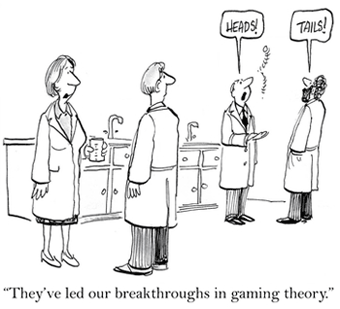
Most peoples lives are structured like a game.  Games are a form of play with rules and different levels of competitiveness.  The goals typically determine how competitive the game is.

Consider, throughout your life you are measured whether through tests at school, or for skills and competency (swimming, driving), performance at paid work or even unpaid work and the list goes on.

Judged Against Others

Most of these tests or assessments are to judge you against others.  That is you are competing against other people and your results determine if you win.

Think of competing for a job or a post secondary education, a spot on a professional sports team.  All these are competitive activities, based on rules and result in winners or losers.

How important is it?

Some of the games we play are not particluarly critical and our desire to win may be low or even non-existant but pretty well everyone gets caught up in a game that really matters to them from time to time.

So, whats a good strategy to win the game?   Before I consider playing to win, I wonder why I am playing at all and if it is the best thing for me.

Do I need to compete to achieve my personal goals and what is the impact on doing so?  Largely over time I have come to the conclusion I am personally better off not playing.

My competitive moments are not against others but against myself. Its not a game because there are no other players and the winning determination is soley at my discretion.

This is not to say I don’t play games, I do, they are only for fun and enjoyment.  My life is not a game, it is not a competition, it is not a series of achievements that enable me to label myself a winner.

My life is focused on my own enjoyment, as long as I don’t impinge on the enjoyment of others.


Behaviour Values

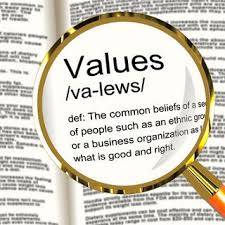
Your personal values are the things that you believe are important in the way you live and work.  For the greatest level of internal serenity the  way you behave should be in accord with your values.

When others believe your behaviour is wrong and ask you to change,  assuming your behaviours are consistent with your values (i.e., your integrity is intact) there is a problem.

Behavioural Issues

I heard an interesting story the other day about a frustrated mother attempting to stop her nine year old daughter from lying.  After one confrontation the daughter demonstrated an amazing level of maturity.

“Mom”, she said “ The issue is not my telling lies, rather its the fact you don’t want me to”.  Out of the mouths of babes.  What the young girl was questioning was why she needed to adopt her mothers value.

Tell the Truth

Truth telling is generally accepted as an intuitive value that should be commonly held.  Yet frequently people lie to avoid embarrassment or confrontation.  This is generally considered acceptable.

For example, I can’t make the party because I have an appointment might be an excuse you use to avoid attending a party even when there is no appointment.

Who is Right

Behavioural expectations can often be subjective and mostly based on the expectors value system.  This can cause conflict and stress people by expecting them to shift their value system and conform.

Often majority rules is used as a justification for this.  Polite society must have some boundaries.

There is no definitive answer to the issue of different perception of values and their associated behaviours but it helps to recognize this ambiguity does exist and needs to be dealt with.

W.A.I.T.

I attended a communications workshop today a came away with some new concepts.  These ideas around how to understand your own communication behaviours are worth sharing.

The communication spectrum

In a very simple model, your communication behaviours can be mapped to your level of confidence and comfortability.

On the left side of the spectrum you feel very vulnerable, typically your participation in meetings and conversations is limited.  On the far right of the spectrum you you are happy to speak out to the point of appearing aggressive and dominant.

Those on the far left focus on others while those on the far right focus on themselves.  Behaving in a balanced way focuses your communications on whats best for everyone.

Speak and Listen

Balanced communication require constant awareness.  You must be attentive to all things going on and behave accordingly.  This cannot be intermittant but rather perpetual.

When you are speaking on a subject, occassionally pause and think to yourself W.A.I.T .  This is the acronym for why am I talking.  It is a great self check to prevent you talking too much.

Self Aware

Be clear about how you feel, (i.e., assertive) but also empathetic of all others who are participating in the communication is critical to keeping your behavior balanced.

if you are talking for yourself it usually has little effect and  creates a barrier to your ability to gain the greatest benefit form shared discussion.

Treat your communication focus on we and us not I and you.  The results will really please you.

Planning

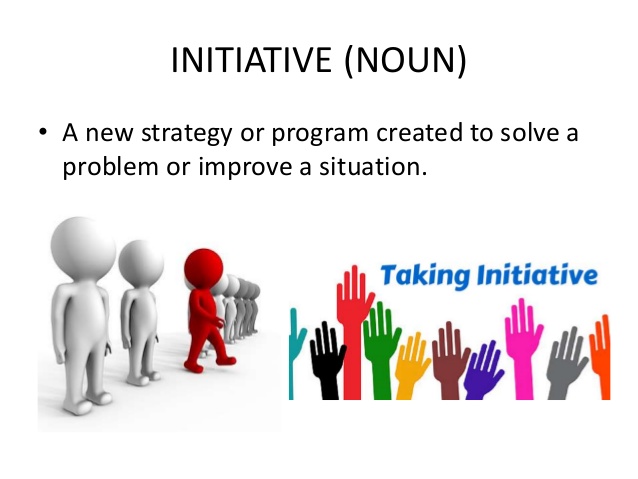
I am a firm believer that planning always accounts for at least 60% of the effort  and duration associated with any successful initiative .  In this context the term  initiatives represents the work to deal with a particular problem or for achieving a particular purpose.  

Initiatives require a plan and if not formally developed, documented and used, both the effectiveness and duration of the initiative are negatively impacted.

Building a plan.

In its simplest form planning entails determining what needs to be done, priority, timing, dependencies and resources.  Plans predict outcomes and since the predictions can be influenced by many factors changing plans as work progresses is normal.

(Only magicians with crystal balls that work magically don’t have this need for changes).

Without a plan it is impossible to measure how effectively the work is being completed.  For those that don’t like planning this is a key benefit, it is hard to be held accountable.

The fact accountbility becomes subjective is good for those responsible for the work, not so much for those expecting superior outcomes.

Making Decisions

The most important benefit associated with plans is actually not how efficiently work can be done (as opposed to chaotic progress) but rather the ability to make good decisions.

The questions, should we do this or that or even undertake this initiative at all can be well informed by predicting what it takes to do it.

Of course comparing the effort and duration associated with different options can be a really good start to determining the best option.


Trust

Our lives involve interacting with others.  Even hermits, whom by definition limit their interactions, do need to deal with others to a point.

Whether we are getting things done through others or they through us, trust is a critical consideration.  This even applies to neutral transactions or information sharing.

Trust Me!

Trust represents our  belief in the reliability, truth, ability, or strength of things.  That can apply to ourselves, someone or something else.

Practicing a high level of trust in those you are interracting with can lay a foundation for a good relationship.  Trust is often not one way, belief that others trust you tends to support your trusting them.

Trusting other people or things is a risk.  The results might not be as expected and potential issues or problems can be mitigated through the practice of limited levels or no trust at all.

This is a double edged sword as a lack of trust can cause a negative reaction and associated bad outcomes.   The balance of trust granted in any situation is a critical factor in the final denouement.

Confirm not Control

By establishing the truth or validity of a thing unobtrusively (i.e., confirmation) you can mitigate the risk of being too trusting.  Handled in a straightforward on hands off way  this check does not diminish the perceived trust.

Conversley,  getting involved and directly managing outcomes (i.e., contolling) can eliminate perceived trust and any associated benefits.

Fenced In

We are surrounded by barriers.  These range from our own internal inhibitions to those defined by our governments (and everything in between).

Building Fences

To some extent building barriers, for example a fence around your house (or a moat around your castle) is a natural human behaviour.  The fence defines our boundaries, it says to others this is my space, don’t violate it.

The extent that each of us uses barriers depends on our personality (e.g.  introverted or extroverted) but it is also a learned behaviour from our childhood.

Typically, in most cultural settings the parents set examples and provide guidance to their children around respecting others boundaries while expecting their own barriers will be accepted.

Leaping Tall Buildings

There is a time and place when finding ways to break out of both the physical and mental blockages, that follow us through life, can be very beneficial.

Hindsight and remorse are behaviours that highlight times when pushing the boundary might have been a good choice.  Times when you are thinking things like “I wish I had done that”. or “Wow, if only I acted I could have been rich.”

Recognizing that fences have a purpose  but sometimes climbing the fence is justifiable can help you navigate the barriers that exist throughout your life travels.

Balance is the byword, precipitously leaping tall buildings at the wrong time could  hurt (perhaps badly), however missing the opportunity can be painfull as well.

Think through the pros and cons before vaulting the blockade but it it make sense don’t let arbritrary walls slow you down.

Connecting the Results

People, both individually and in teams spend a significant amount of time and effort working to accomplish something.  Hopefully the achievement is both admirable and creditable.

The process of accomplishment usually starts with conception – what is the goal.  This is the ideation phase.  Planning is next, that is how are we going to proceed?

Once the plan is in place execution occurs and voila, the results are heralded as an accomplishment.  In the case of a group accomplishment this often entails back patting and declarations of achievement (i.e., we did it).

Measuring the Results

During ideation and planning work, the reasons for pursuing a particular achievement are paraded as motivators.  In essence the point is “I/we are going to accomplish this thing because it is worth doing”

Sadly, although the tasks arising from the idea are often completed the desired results are not achieved.  In these cases just the fact something was accomplished is paraded as success.

Checking the Achievement

Wondering how actual results mapped to the imagined benefits of a number of accomplishments I once totaled all the monetary benefits from a years worth of initiatives at a large corporation.

The value of increased revenue estimated for all the completed projects was less than the company’s total revenue for the company. Clearly, for some of these initiatives what seemed like a good idea at the time did not turn out to be all it was sold as.

For me, over this just highlights the value of confirming the accomplishment rather than just assuming it.  This is not to punish but rather to guide future directions.

Whatever you are seeking to accomplish, personal or business, check how you did before leaping to the next attempt.  Completion is not necessarily accomplishment.

Self Motivated

If one of your go to behaviours includes being  motivated to act simply based on your own enthusiasm toward getting things accomplished, you are self motivated.

In essence this means you would typically  be demonstrating  a high level of initiative, that is the ability to assess and start things independently.

Self Managing

Leaders seek people to join their groups who both act without being asked or told (initiative) but also can self manage, that is being fully responsible for thier actions.

Peoples behaviour will always create an  impact and without acknowledging and accepting responsibility for that impact (i.e., outcomes) of your behaviour there is a higher risk of bad behaviour (i.e.,  you don’t worry about the results, it is someone elses responsibility).

Initiative alone, without self management, can produce unexpected and even unwanted results.

Oversight

Demonstrated initiate coupled with satisfactory self management can result in a high performing team or group.  The hands off style of leadership can be very effective with these teams, and micro-managing can be detrimental.

The teams productivity is high because the work self motivation typically results in a high level of personal satifaction by those that practice it.

One failing I often see with hands off management of highly motivated groups is the mistaken belief that given the skills and abilities of the group members oversite is not needed or can be a minimal levels.

Granted one of the benefits of self motivated, self managed teams is that direct oversight is not needed.   This does not mean leaders and mangers do not need to be well informed.