Tag Archives: issue resolution

Resolving Issues

Conflicts between humans are normal.  Expecting to live in a conflict-free environment is probably desirable but not realistic.  For most of us encountering an important topic or problem for debate or discussion is a daily occurrence.

Interacting with others to resolve issues can involve emotional responses and can lead to distress not directly associated with the issue.

Focus on the Problem

It is not unusual for us to support our positions by attacking our opponents.    This usually fails and just causes the discussion (or debate) to escalate.

The real issue is lost in the blame game.  It is human nature to be first to ensure it’s clear someone else created the problem.  Unfortunately, while this might feel right, it definitely is not the best way to achieve issue resolution.

When discussing a topic, if you are really seeking a solution, it works best to focus on the problem.  Discussion points that include names or pronouns (e.g., you, he, she, them) typically contain some attack or validation at the expense of others.

Adversarial

When the conversation includes comments on other peoples behavior, no matter how accurate you think your perspective is, the other person might not agree with you and even if they do it could be perceived as an insult.

The solution to working with others collaboratively is relatively simple.  Without reference to other actions or faults, the focus stays on point, ie, how to address and resolve the issue.

When you believe you about to referencing another person, this almost always involves a name or pronoun.  Catch yourself before it’s too late and you are more likely to attain your objective.
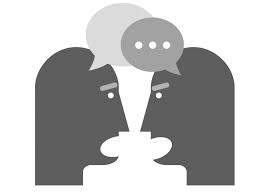
 

Focus on the problem not the person

Years ago I came to the conclusion that often discussions escalate into a focus on peoples personalities, leaving the issue real issue behind.  As a result, it becomes a form of argument.

In this case, the argument is not an exchange of diverging or opposite views about the issues but rather becomes a reason or set of reasons,  focused on the other parties shortcomings.  These are disguised as being about the issue.

Attack

In reality these points are formulated with the aim of explaining why the other person is wrong.   This justification become the topic of discussion and the root cause becomes irrelavent.

I have have learned to recognize the use of a pro-noun typically means the discussion is getting off course.Unfortunately without diagnosing the problem, but focusing on the other people the argument quickly becomes personal and though it probably was not intended it degenerates to attack/ defend, in essence a battle.

Ironically if you pause and focus on the aspects of the discussion outside of the interpersonal, I find the perspectives on the actual problem are usually in sync.

That is, although the conversation may become heated the differences are almost exclusively related to the personal attacks (i.e., your behavioural justifications).

In fact, after careful and reasoned thought, you will probably realize both parties are identifing a identical issue, root cause and solution.  It just sounds like that is not the case.

I have have learned to recognize the use of a pro-noun typically means the discussion is getting off course.  When this happens I stop talking, think about what the issues actually is and refocus the discussion.