All posts by steve@kerrzone.com

Simplicity is Beautiful

Assessing and rating beauty is very subjective.  We consider a combination of qualities, (e.g., shape, color, or form), relative to their impact on our aesthetic senses, primarily but not exclusively, sight.

This can involve a complex analysis which could be concluded in a moment or taken over hours or days to settle into our consciousness before we proclaim if it is a thing of beauty.

Simple yet Complex

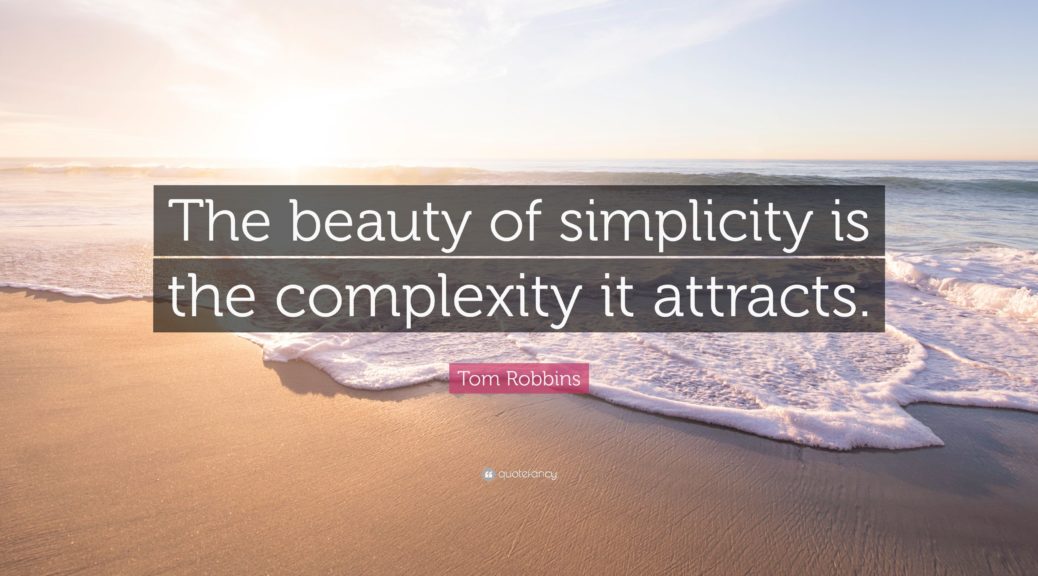
Typically things consist of many different and connected parts, both real and imaginary.  Those that are plain, natural and easy to understand (i.e., simple) contain an intrinsic beauty only because they are simple.

Appreciating simple things, embracing their beauty and allowing it to enhance our lives is something we often overlook.  In the bustle and drive of life itself, it is usually the more complex things we concentrate on.

The pause to appreciate the beauty of simplicity will frequently be refreshing but the value is not always, if ever, really apparent.  We often don’t recognize the value of simplicity.

Even the simple things may exist on multiple levels but little to no effort is required to comprehend and enjoy the beauty.  Yet, we frequently pass it by, treating the common place and routine as unimportant.

To Our Detriment

Unfortunately passing by those things of simple yet elegant beauty  without pause or recognition is a missed opportunity.  Things  do not need to be challenging in order to be fullfilling.

Observe, take moment, enjoy and embrace  the obvious, you won’t regret it.


Taking Accountability

Assigned someone accountability for an outcome (e.g., improved sales, on-time delivery, enhanced team morale) can set an expectation that might or might not be accepted.

However, if someone takes accountability on their own accord, that is by taking the initiative, the potential for success is much higher.

Remember what you perceive as acceptance of accountability might actually be just simple acquiescence or even worse passive-aggressive behavior (appearing compliant while actually not in agreement at all).

Accountable Behavior

When someone accepts accountability, it is usually very apparent through their behavior.   So much so, I have observed situations where someone is assumed to be accountable just because of how they are acting, even though they are not the assigned accountable person.

In these cases, the accountable resource could be so lethargic or apathetic  relative to executing their responsibilities, the person who takes charge (on their own volition) is just assumed to be accountable.

Believing you are accountable is much more powerful than being told you are.  Self-motivated people do not need organizational power to act.  Their behavior speaks louder than their role.

Empowerment

Strong leaders create an environment of empowerment to nourish self accountability.  Few restrictions on activities encourage you to take on more.

Taking ownership and getting things done can be invigorating.  Feeling empowered to do it just removes a barrier to action that many of us want to undertake anyway.

So get off your but, take charge and make it happen.  JUST DO IT.

Bureaucratic Boredom

Many of us are involved with large organizations, whether for profit or not, we provide our time and effort to support the institution’s goals, voluntarily or otherwise.

Typically large organizations have some administrative bureaucracy built into their operations.  This can range from internal governance to regulatory or external requirements.  Bureaucratic behavior is probably be embedded in the organizational culture.

Putting in Time

Large organizations with heavy bureaucracies often end up with a  percentage of people that are going through the motions.  For a lot of them boredom has set in, but their daily activity is something to do ( fiscal compensation if not a volunteer role is also a motivating factor to put up with the boredom)

Leaders of large organizations particularly those with administrative operations that lean toward the bureaucratic can and should address contributor boredom proactively. For both organizational and the team members benefit.

Motivational Practices

  • Ongoing communication of why everyone’s contribution is important and successes achieved.  This is recognition needs to reach to everyone and does not work as a motivator if just focused on the organizational level.
  • Team building through regular fun activities.  Involve everyone in games and celebrations outside of the organizational context.  Let people release tensions and recharge.  Demonstrate organizational contribution is more than just day-to-day drudgery
  • Encourage innovation and creative thinking.  That creates a culture of empowerment that does not set boundaries and force everyone into a boring and mundane box.
  • Change (for the better) should be constant.  Change always includes some challenge and challenge is motivating.

Artificial Intelligence

Back in the 1940’s Allan Turing prophesied the computers would ultimately develop to the point humans would not be able to distinguish between a computer or another human.

This ultimately led to the annual Turing test where a set of judges interacted with humans and computers and had to identify which was which.

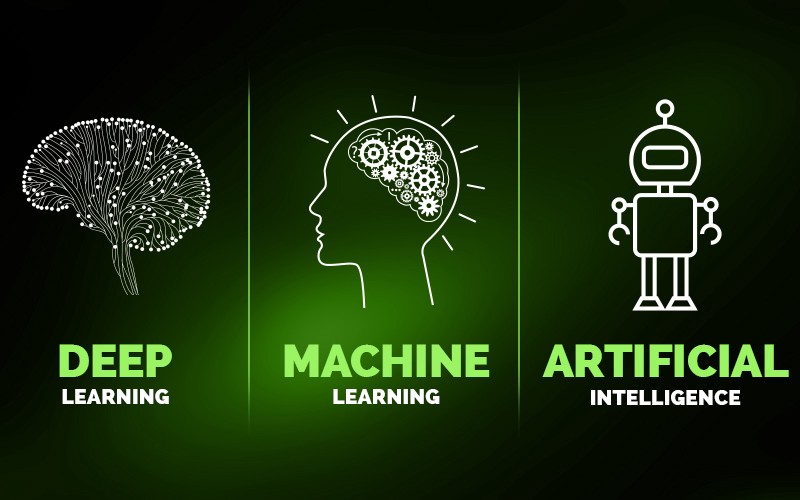
Ultimately this test is for artificial intelligence.  That is, computer systems able to perform tasks that normally require human intelligence, such as visual perception, speech recognition, decision-making, and translation between languages.

Machine Learning

Although not specifically included in the definition, a key aspect of intelligence is the ability to learn.  Currently, for the burgeoning artificial intelligence field, teaching computers is a slow process.

At this stage, the learning is still at the “rote” level.  Self-initiated deductions are limited to programmed logic.  The potential for the development of logic, to enable creative thought is still a way down the road.

Enhanced Computer-Based Programs

In my humble opinion, a lot of what is touted as artificial intelligence is just more efficient and faster review, analysis and recommendations from a large amount of data.

Creating new ideas and concepts, reacting in unusual or innovative ways are underpinnings of true intelligence for me that to date there has been little sign of us replicating, outside of science fiction.

Can humans develop equipment that replicates, even improves on human thoughts?  Maybe but for me, the jury is still out.

Full disclaimer, this post was written by a living, breathing, thinking human.  Or was it?

Reaching Understanding

It is not unusual to misinterpret or misunderstand incoming communications.  What we hear, read or see is impacted by our personal filters.

The way we develop our thinking processes and behaviors have been demonstrated to be strongly influenced by our environment (i.e., nurture vs nature).

Adversarial Reaction

My own sad experience is frequently we react based on what we understood.  This can often be critical or derogatory and insult the communicator.

They do not immediately conclude the issue is not disagreement but rather a misunderstanding.  Responding or questioning ideas or thoughts of others based on your perceptions is normal, however, to be effective the probing should be open-ended.

Otherwise, it is not unusual for the discussion to become an argument.  I am fascinated by how frequently these arguments are resolved by both parties acknowledging they are saying similar or identical things, just in different ways.

Seek to Understand, then React

Although it is not always the natural way to respond it usually results in a more collaborative discussion when clarifications are crafted as seeking help rather than questioning what has been shared.

An example of this approach could be  ” When you describe X, I am a little confused about the detailed expectations and rational, can you provide a bit more explanation”.

As opposed to “That is stupid, makes no sense, this is what I would do”.  Ultimately the resolution to the differences could just require a better understanding by all parties of the issues, recommendations, and associated benefits or drawbacks.

Before reacting, give it some thought.

Resolving Issues

Conflicts between humans are normal.  Expecting to live in a conflict-free environment is probably desirable but not realistic.  For most of us encountering an important topic or problem for debate or discussion is a daily occurrence.

Interacting with others to resolve issues can involve emotional responses and can lead to distress not directly associated with the issue.

Focus on the Problem

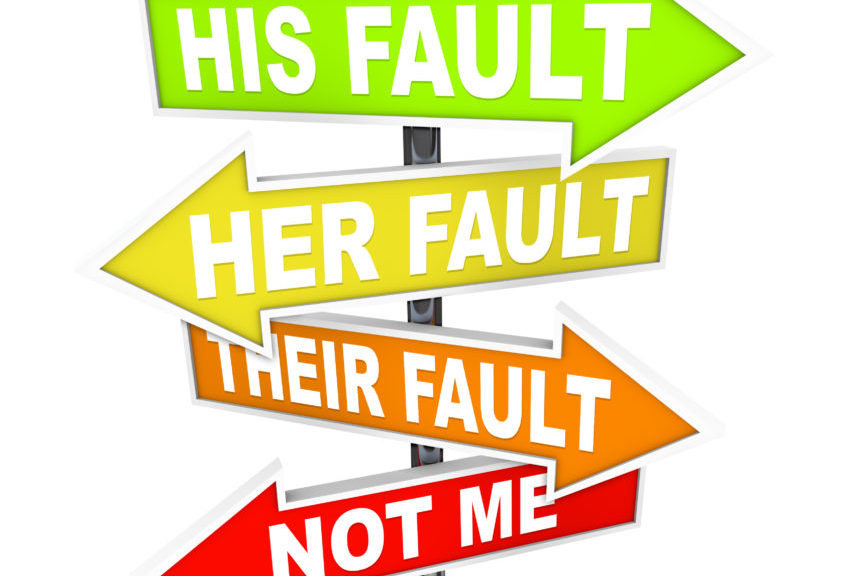
It is not unusual for us to support our positions by attacking our opponents.    This usually fails and just causes the discussion (or debate) to escalate.

The real issue is lost in the blame game.  It is human nature to be first to ensure it’s clear someone else created the problem.  Unfortunately, while this might feel right, it definitely is not the best way to achieve issue resolution.

When discussing a topic, if you are really seeking a solution, it works best to focus on the problem.  Discussion points that include names or pronouns (e.g., you, he, she, them) typically contain some attack or validation at the expense of others.

Adversarial

When the conversation includes comments on other peoples behavior, no matter how accurate you think your perspective is, the other person might not agree with you and even if they do it could be perceived as an insult.

The solution to working with others collaboratively is relatively simple.  Without reference to other actions or faults, the focus stays on point, ie, how to address and resolve the issue.

When you believe you about to referencing another person, this almost always involves a name or pronoun.  Catch yourself before it’s too late and you are more likely to attain your objective.


Wasting Time

In simple terms devoting time to a useless activity is a waste of time.  I would expand this to include time and effort spent on low priority, low impact items.

In our lives, when we wait another day we waste another moment.  Everyone’s lives will end, your moments are limited.  It is trite to say so but make every moment count.

Recharging

It is important to acknowledge those moments we spend recharging (e.g, sleep, meditation, inactive) are as important as those active moments when we are challenging, stretching, searching, learning, growing.

These moments, when in essence we are recharging our batteries, are not wasted time.   The balance between living to the fullest and be ready to live to the fullest (i.e., resting) is different for everyone.

Focus on the Mostest

Given our limited number of living, moments will expire choosing how to spend your time should focus on your personal goals.  For most people, this entails some form of achieving maximum pleasure.

Things that make us happy, provided they don’t make others unhappy provide the greatest value.  Sometimes we can’t be sure what the value of something will be, these things we should not shy away from.

However, mundane tasks we choose to undertake to fill time are often just a waste of time.  Is that something we really want to do?  Instead of wasting time, maybe we could just undertake a recharging activity (perhaps a moment of rest and silence).

This recharging prepares us to charge forward and seize the moment and opportunity to experience the joys life offers when we can.

Using your Hidden Power

Perhaps it is a bit of an overgeneralization, however, my personal experience is everyone has capabilities that remain unused for most or even all of their lives.

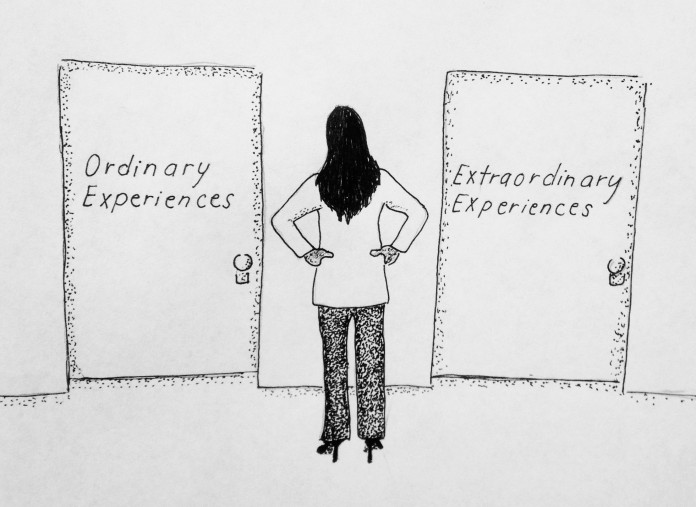
These hidden abilities are often related to things outside our comfort zone.   That is they are not a situation where one feels safe or at ease and without stress.  Just the opposite.

Satisfaction Guaranteed

The power to overcome obstacles and achieve great things is usually available to you.  Embracing and unleashing these powers which lie dormant, perhaps  even purposely buried by social and environmental constraints, can be extremely pleasurable.

It requires effort and self motivation to gain the confidence to use unfamiliar and uncomfortable skills and behaviours.  Going outside of your “go-to” behaviours is never easy.  It is however almost always satisfying.

Stretching Yourself

It can be frightening to try something new, to boldly go where no one has gone before.  Lots of things can go wrong.  There could be physical and mental anguish involved.

The benefits of expecting yourself to perform beyond expectations, are not always obvious.  This limits the motivation to do things we are not sure we can do.

Hence, as I noted a majority of us just stay in our comfort zones, safe and secure.  It may be we do not even realize we have hidden talents.  We are not motivated to seek them from within, rather to rely on others to see us through.

Sadly by not doing everything we are capable of, by self imposing unneeded constraints so much valuable and joyfull life experience can be missed.

What will be will be

With the recent death of Doris Day and associated public remembrances, I was reminded of one of her keynote song performances, from Hitchcock’s film ” The Man who knew too Much”

Que Sera Sera, literally translated from French to English as What will be, will be (Whatever will be, will be in the song lyrics) has always been a really cool pragmatism for me.

The future is not ours to see

Although I have not come across any connection between this song and Paul McCartney’s “Let it Be” both include references to a wise mother providing advise to a troubled soul.

Personally, I have found this technique of acceptance which involves convincing myself it is what it is and it will be what it will be,  is a great way to basically just let it be.

This is a very practical approach to avoiding needless worry. We are not able to see what is coming and although influencing the future to achieve our desires can be tempting, and a valid approach sometimes it is smarter to just let it be and see what happens.

Not a Universal Approach

Of course, letting whatever will occur or just letting something be is not always the best way to proceed.  There are cases where influence and impact behaviors are better used.

Submit and hope or not even submit, just hope or not even hope just let it happen are approaches best used when things are out of your control or  it’s not worth the effort.

In those cases, remember, whatever will be, will be.


Disinformation

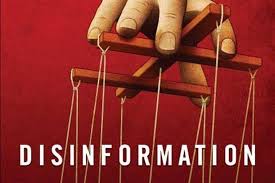
Misinformation is the sharing of false or inaccurate facts.  It may be unintentional.  When spread deliberately to deceive it becomes disinformation (i.e., a subset of misinformation).

Sometimes misinformation can consist of a very accurate statement but not the whole story.  On the surface, the statement is easily believable because of the element of truth.

Relating what you know, which might lead to incorrect conclusions but not intentionally, is quite different from purposely only telling part of the story to create results that map to your agenda (i.e., disinformation).

For Example

You might be a contractor building a new home.  Although the laying of the foundation went well and finished on time skilled worker and material shortages you are aware of are about to become an important factor.

In your status updates to the homeowners you elect to report only on the success, (i.e., the foundation) keeping the bad news about future prospects to yourself.

The desired effect is a positive response by the future homeowners and a potentially difficult discussion is avoided.  This disinformation will work in your favour to a point.  If you can resolve the issues before the next report all could work out fine.

If not it could be worse than sharing the full information up front.  Disinformation can lead to declining trust and even punitive action if discovered.

Caveat Emptor

Technically this translates to buyer beware.  I take license and extend it to information consumer beware.

Although those that practice disinformation are not of high moral standards or strong believers in integrity, they do exist and we need to shield ourselves from becoming their target.

Hence don’t readily accept all information shared with you.  Questions, probe, analyze and check.  To work disinformation needs willing recipients.  You want to avoid being one.