Tag Archives: deceit

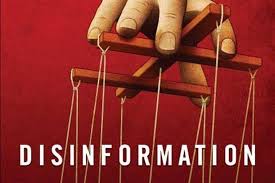
Disinformation

Misinformation is the sharing of false or inaccurate facts.  It may be unintentional.  When spread deliberately to deceive it becomes disinformation (i.e., a subset of misinformation).

Sometimes misinformation can consist of a very accurate statement but not the whole story.  On the surface, the statement is easily believable because of the element of truth.

Relating what you know, which might lead to incorrect conclusions but not intentionally, is quite different from purposely only telling part of the story to create results that map to your agenda (i.e., disinformation).

For Example

You might be a contractor building a new home.  Although the laying of the foundation went well and finished on time skilled worker and material shortages you are aware of are about to become an important factor.

In your status updates to the homeowners you elect to report only on the success, (i.e., the foundation) keeping the bad news about future prospects to yourself.

The desired effect is a positive response by the future homeowners and a potentially difficult discussion is avoided.  This disinformation will work in your favour to a point.  If you can resolve the issues before the next report all could work out fine.

If not it could be worse than sharing the full information up front.  Disinformation can lead to declining trust and even punitive action if discovered.

Caveat Emptor

Technically this translates to buyer beware.  I take license and extend it to information consumer beware.

Although those that practice disinformation are not of high moral standards or strong believers in integrity, they do exist and we need to shield ourselves from becoming their target.

Hence don’t readily accept all information shared with you.  Questions, probe, analyze and check.  To work disinformation needs willing recipients.  You want to avoid being one.

 

Re-use

The wrongful appropriation or stealing of anothers language, thoughts, ideas, or expressions (i.e. intellectual property) and the subsequent representation of them as one’s own original work  is considered deceitful.

In the case of written documents this is called plagerism and is considered academic dishonesty and a breach of journalistic ethics.  In the case of patents or copyrights the practice is illegal.

Copying

Copying others work with permission and attribution can be effective reducing your time of rework (i.e., doing something yourself  that others of have already been done ).

Automation is founded on this very principle.  The first time something is created or processes  can involve significant time and effort.

Once the “how” has been figured out, replicating the process can be much faster, take less effort  and provide consistent and sustainable quality.

Exercise Caution

While imitation can be a form of flattery for the originator without acknowledgement of their role it is a form of theft.  Replicating others efforts can be useful and effective, but misused can have significant negative impacts.

People can be upset if you use their ideas or outcomes, particulary if it’s at your benefit and their expense.  However, if all benefit it can be a win/ win situation.

So re-using the output of other people can be a way to work harder, not harder.  It can also be viewed in very negative ways with serious undesirable consequences, unless proper permissioning and attribution have occured.

Politics

Politics is the process of making decisions that will apply to a group.  The associated human behaviours can range from those exhibiting high honesty and integrity to those that do not (to say the least)

Niccolo Machivelli was a renowned 14th century author (The Prince) and political hack.  His most famous novel depicts the practice of politics quite realistically.

For the Greater Good

In Machiavelli’s view, as expressed in his epic novel The Prince, the practice of politics is by its very nature, focused on the decsion makers needs versus those the decisions are in aid of.

Machiavelli certainly had extensive experience working with the governing parties of fourteenth century Italy and much of this knowedge is shared in the book, probably quite accurately.

Interestingly though, these political practices are most likely not shaped in malice but rather practicality.  One of my favourite Machiaveli quotes is “It is a double pleasure to deceive the deceiver”

Nicely said.  Deceit, intrigue, gossip, manipulation are all prevelant and natural human behaviours.  The opposite behaviours like integrity, honesty and openness are the less natural ones requiring concious effort to practice.

Not Bad, Neccessary

People often talk about political or so called Machiavelian practices as less honourable and to be distained.  The unfortunate reality is these are both natural and effective behaviours.

I do not counsel their use indiscriminately but rather realistically as needed.  Forsaking them can impact your ability to achieve your goals and perhaps even your desires.