Tag Archives: misleading

Red Herring

Something that is misleading or distracting from a relevant topic or important discussion can often lengthen discussions and delay conclusions.

A red herring may be an unintentional logical fallacy or in some cases, it could be a purposeful misdirection  (e.g., a literary device that leads readers or audiences toward a false conclusion).

Staying on Track

Recognizing and highlighting red herrings during an earnest discussion (whether group or individual) is a key facilitation skill.  Identification of a red herring is the first step to calling a halt.

Unfortunately, however well-intentioned misleading distractions only make achieving acceptable conclusions more difficult and can even lead to lower quality results.

Keeping a discussion on target is not only a helpful skill but can be critical to achieving a successful resolution to the topic under review.

Focus on the Objective

There can be some subjective analysis as to whether points raised constitute a red herring.  Most likely the progenitor of the comment considers it both important and valid.

Identifying red herrings in a way the discussion does not get derailed or “go down a rat hole” is an important skill.  Be gentle, not adversarial.   Focus on the objective.

The discussion has a purpose and objective.  Red Herrings may be valid points but the key is they do not focus on the purpose nor are they likely to help achieve the objective.

Identifying and disarming discussions that are getting off track (missing the purpose and objective) can be done most effectively by reiterating the goal.

Use care though that your intervention is facilitative and not argumentative.
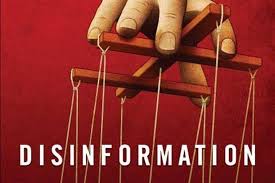
Disinformation

Misinformation is the sharing of false or inaccurate facts.  It may be unintentional.  When spread deliberately to deceive it becomes disinformation (i.e., a subset of misinformation).

Sometimes misinformation can consist of a very accurate statement but not the whole story.  On the surface, the statement is easily believable because of the element of truth.

Relating what you know, which might lead to incorrect conclusions but not intentionally, is quite different from purposely only telling part of the story to create results that map to your agenda (i.e., disinformation).

For Example

You might be a contractor building a new home.  Although the laying of the foundation went well and finished on time skilled worker and material shortages you are aware of are about to become an important factor.

In your status updates to the homeowners you elect to report only on the success, (i.e., the foundation) keeping the bad news about future prospects to yourself.

The desired effect is a positive response by the future homeowners and a potentially difficult discussion is avoided.  This disinformation will work in your favour to a point.  If you can resolve the issues before the next report all could work out fine.

If not it could be worse than sharing the full information up front.  Disinformation can lead to declining trust and even punitive action if discovered.

Caveat Emptor

Technically this translates to buyer beware.  I take license and extend it to information consumer beware.

Although those that practice disinformation are not of high moral standards or strong believers in integrity, they do exist and we need to shield ourselves from becoming their target.

Hence don’t readily accept all information shared with you.  Questions, probe, analyze and check.  To work disinformation needs willing recipients.  You want to avoid being one.