All posts by steve@kerrzone.com

Making Threats

One method of motivating action is through an expression of intention to inflict evil, injury, or damage.  By threatening others with a serious consequence you expect they will conform to your wishes.

Putin, President of Russia, just recently threatened the world with use of nuclear weapons if Russian territory is attacked, (this included areas of Ukraine under Russian control).

Demonstrating Weakness

Threats are rarely effective and usually simply reinforce the resolve to overcome the aggressor. Needing to resort to  a threat clearly sends a message one is afraid of the consequences and unsure of their abilities to be successful in the normal course.

In the case of Putin’s threat he is trying to stop the Ukrainian counter offensive.  This approach is unlikely to work and in reality is probably more encouraging to the Ukrainians than anything else.

Will Sanity Prevail

Predicting the future is a difficult task, in this case we must all fervently hope that the majority of Russians will prevent such  a insane action from being actually executed by Putin.

I believe it is highly unlikely the nuclear option would actually be used, firstly so close to home and secondly because the consequences would obviously be much more severe than  just losing some recently acquired territory (taken illegally and by force).

U.S. President Biden’s reaction was simple and straightforward.  Nuclear conflicts have no winners, everyone loses. This is a very true and valid point.  Interestingly Putin agrees with this.

Between a Rock and a Hard Place

This most recent pronouncement is a clear indicator Putin has his back to the wall and he has no room to manoeuvre.  We can only hope he is deposed soon and has no opportunity to continue to conflict pain on others for his own self satisfaction.


Determination

I recently saw a post that reminded me failure is not an indicator of future success.

Take note:

  • Tom Brady wasn,t selected until the 6th round of the NFL draft (199th pick) due to slow foot speed, lack of arm strength,  couldn’t throw a tight spiral and said he couldn’t improvise if a play broke down
  • The greatest basketball player of all time, Michael Jordan, was cut from his high school team.
  • Walt Disney was fired from his job at a newspaper early in his career–they said he lacked imagination.
  • Jerry Seinfeld was booed off stage in his first stand-up comedy appearance.
  • Sir James Dyson suffered through 5,126 failed prototypes before he landed on the first working Dyson vacuum.

There are many, many other examples, both of famous personages  and not so famous people, that reinforce the concept, determination and persistence do lead to success.

Personal Experience

In the mid-2000’s, I was in a career rut and needed a change. In the past I had sought to move myself in different directions with middling success.

This time, I decided to persist until I made the career move of my dreams.  It took over approximately 350 direct and indirect applications over 7 months, resulting in more than 50 interviews (some I rejected myself, some I was not successful).

Ultimately, I did secure the job of my dreams, senior director of a large application development  and support team.  This only occurred through perseverance.

Simple Advice

Like the advice in the post I recently read, directed to an individual searching a career change, don’t be disheartened by failure, the odds   are in your favour for success in the long term, keep on going, you will get there.

Nobody Cares

Humans are social animals and intrinsically we believe in the existence of empathy, the ability to understand and share the feelings of  others.

This often misunderstood as caring for others.  In reality, nobody cares about you, except you.  Perhaps this a harsh reality most of us will deny but at heart ours is a society of of self serving misanthropes.

Respecting Others

Polite behaviour and giving the appearance of caring for others are simply the actions of a self seeker.  To get what we want and need requires the cooperation of others and appearing to care is a pre-requisite for this to happen.

Whether you consciously acknowledge that life (it) is all about you, or even consciously try to deny this fact, for everything that affects you, at least unconsciously you will seek personal satisfaction and pleasure in some form.

Motivation

While external factors can influence our behaviours and motivate us to act in certain ways, all motivation is filtered through our own consciousness, that is, we decide how to react, other people or things cannot make this decision  for us.

The outcomes of our decisions might not always meet our expectations and we may reconsider and change approaches as a result of external events, however, ultimately the things impacting our lives are always about us and no one else cares, except as it impacts them and their desires.

Cynical

In a word, everyone is cynical, believing that other people are motivated by self-interest.  We might not a knowledge this openly but being distrustful of others sincerity or integrity should be part of your reality.


That’s Correct

A position that is free from error which aligns with the facts is defined as being correct.  Truth is based on facts that can be proved as accurate and valid.

Therein lies the rub, facts reality and accuracy is subject to interpretation.  This means all facts can be challenged so that which is true in theory must be proven by logic to become a law. Unfortunately logic can be questioned.

The World is Round

Grass is green, the earth is a spherical shape, vaccines are beneficial; these are all examples of statements for which arguments relative to their accuracy exist and proponents and opponents exist for both the statements and their  opposites.

Regardless of the fact the majority believe these declarations to be true and proven facts the flat earth society, colour blind people and anti-vaccination groups exist and argue their fallacy, even though the logical enumeration of the facts is overwhelmingly supportive.

Consequences

Sadly, the different interpretation of the facts can be impactful.  I might choose to not circumnavigate the earth if I believe it is flat, limiting my travel options and associated potential joy.

Or I might decide not to reduce my chances of getting ill from a serious disease perhaps even leading to my death or perhaps infecting others, leading to their death.

The subjectiveness of arriving at the truth is an underpinning of human beings ability to think freely and is of great value but not necessarily without consequence.

Embrace the Whole

Differences of factual interpretation are real and should be encouraged.  It is not necessary to agree on the positions each of us may take but rather focus on the outcomes and finding ways to collaborate on positive consequences.

That is don’t argue the facts but rather work together to make the resulting outcomes better whatever you believe to be true.

A little Disease Philosophy

Disease is a fact of human life.  Logically precautions should be taken to avoid catching a disease and should these fail ways to mitigate the diseases impact should be deployed.

Currently we are have been an official World Health Organization declared pandemic for a little under two years.  The pandemic declaration refers to a disease which is prevalent around the world, in this case covid 19 and variants.

Mitigation

With the advances in communication and viral science the response to the covid 19 pandemic has been better and more effective than any other pandemic in human history.

This fact is often overlooked as the disease continues to spread and people continue to need hospitalization and a number have died.

However relative to other deadly pandemic’s given our advanced  technology and other capabilities to avoid getting sick the impacts have been well managed.

Although not everyone views this to be the case because they have no recent experience to compare to.

What’s Next

Predicting the future is always a bit of a perilous game but I will take a chance.  The virus has mutated to a more transmissible variety but the impacts are lessened.

Thus, the pandemic is posed to become just another disease among many and our mitigation practices will again revert to the standard before the pandemic began.

This is not to say the risk of catching covid and the associated impacts will disappear, rather just reach acceptable levels of likelihood and impact.

Spanish Flu

Considering the Spanish flu epidemic of 1918 to 1920 as an example  I predict 2022 as the year the covid pandemic slowly becomes a part of history and the virus becomes categorized as just another illness.  Oh but what a fun ride it has been.

Pandemic or Disease

A pandemic is a disease that affects a large number of people over multiple countries. I wonder what is the metric defining a large number of people, thus determining a disease is epidemic versus just a day to day illness.

As more and more people around the world become vaccinated against the current covid pandemic, what is the point it becomes just another disease and extraordinary restrictions currently in place can be lifted?

Caution is Prudent

Personally I agree guarding against illness by cleanliness, distancing, masks, testing etc are all practices that make sense.  They  do mitigate (but not remove) the possibility of us catching a disease.

However, the question is what level of risk mitigation is appropriate when the likelihood and impact of the risk is considered.  Before the covid pandemic the practices most followed to prevent catching some illness were generally far less than current.

The level of caution around illness prevention has risen greatly over the last tow years.  This can be attributed to the increased risk of becoming ill (covid is very communicable) and the impact (covid can lead to death).

Acceptable Risk

A key question for me, of late, is what is the measure that will allow us to declare the temporary risk mitigation restrictions of the last two years no longer needed by society as a whole.

The rate of transmission and the severity of covid cases would seem to me to be reasonable measures.  The tricky part is what the exact metric would be, surely not  zero transmission and hospitalization, but if not that definitive than what?

My concern is not enough thought has been given to this measure or clear communication of the goal we seek.  Without drawing a bar we could just continue in pandemc mode for years or decades.  Does this make sense?


Sycophant Bias

One of the rarely acknowledged bias most of have to some degree is a preference for association with others who exhibit sycophant tendencies.

Those who behave with a tendency to serve others while improving their own lot (i.e., a servile self-serving flatterer) often do well in organizations often rising to senior leadership positions.

Those of us not subject to the flattering behaviour because we are considered to offer little to the persons self-serving side are usually not as enamoured.

How can they be in charge?

On occasion (more often  than you might think) I have interacted with the average competent person who has risen to senior leadership roles (or perhaps not even that competent) and wondered how this could happen.

Selection for key roles is merit based, is it not.  In fact personal bias to chose people we like is a very real factor when hiring or deciding to vote or support someone.

Lip service and perhaps some rationalization toward competency is applied but in reality the sycophant bias (liking people who suck up) plays an unconscious factor which many would deny, however it really can influence our decision making.

Tactical Approach

Selecting and promoting sycophants can be rewarding in the short term and as a tactical action somewhat effective.  Typically though longer term strategic expectations of leadership become very disappointing.

This result is reinforced over time by the self-serving nature of the incumbent.  You may like what they do but in reality it is not for your benefit, it is self serving and over time this becomes more apparent as they continue to thrive within the organization while you do not.

Caution toward acting on your personal bias to associate with people you like, it might not be the best approach.

I think I can.

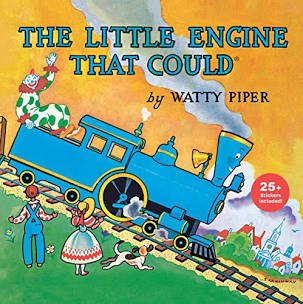
A childhood story book that still resonates strongly with me today was “The Little Engine that Could” by Watty Piper.  A simple story of how obstacles can be overcome through the power of positive thinking.

The little steam engine of the story starts off being unable to pull the train up the hill.  Motivated by positive thinking ranging from I think I can, morphing to I know I can  results in success.

Persistence will be Rewarded

The moral of the story is not to give up even if success takes time and multiple attempts.  You can do it.  Of course this not always true, but by being persistent you will at least get you as far as you can go.

About six months ago I decided to implement secure socket layer (ssl) security for this website.   While it may sound simple, this was not the case.

My journey to Security

SSL enables viewers of the website to be sure of the owner and data transfers to and from the site are encrypted to ensure the information transferred cannot be intercepted.

To do this the web server needs to be certified by a trusted third party.  There are a number of ways to do this.  To make a long story short, six months ago I chose the simplest method and thus began my journey of persistence.

As is so often the case with technology the unexpected rears its ugly head and what should have been simple led me down a long path of encountering and resolving unplanned difficulties, lots of them.

However, finally I prevailed and not only is this site now accessed through https (i.e., ssl) my mail server is now a separate sub- domain (best practice) and all are using a content delivery network (Cdn)  called cloud-flare.

Persistence paid off, I can and did do it.

Engaging Criticism

From time to time I find that other people will express their disapproval of something I did based on my perceived faults or mistakes.

Being critical of other’s or perhaps even self critical is normal human behaviour; dealing with criticism effectively is however very difficult and in my experience relatively unusual.  Yet it is one of the key emotional intelligence attributes which I observe  in highly effective people.

Embracing Criticism

Being able to accept others ideas and suggestions, regardless of how hurtful they may be, can provide us with leverage to either improve ourselves or others.

Overcoming the instinctive emotional reaction of anger or annoyance is extremely difficult but conscious analysis of the critical information enables us to respond in the most effective manner.

Using Information to your Benefit

In this context accepting criticism is not meant  to imply agreement but rather acknowledgement that it exists and needs to be dealt with.

Ignoring the criticism without consideration or responding with an instinctive emotional reaction will typically not provide the best result.  Most often this leads to adversarial behaviour.

Embracing the critics and either adopting their suggestion or gaining their understanding and cooperation (i.e., support) for your actions is far more effective.  Albeit much harder to accomplish.

Avoid Antagonism

Most often criticism is the beginning of the end.  It leads to conflict based on anger and dislike.  Collaborating effectively with others requires the ability to use criticism (perceived or real) in a positive way to avoid going down a rat hole.

Those with high levels of emotional intelligence recognize criticism from others will always occur at some points in time, using it for benefit rather than battle s always the best approach.

The beginning of the End

The College Woods neighborhood in Riverside, Edmonton is made up of 115 homes built mainly between 2002 and 2004.  The neighbourhood was largley completed and occupied by 2005.

However, six lots or so were sold to independent builders and those houses were constructed from 2005 up to around 2014 with the exception of one lot which remained empty.

New Neighbour’s are coming

The empty lot was three doors south of our current home. Finally, I guess property values reached an acceptable point for the purchaser and the lot sold and building commenced.

Looks like our neighbourhood will, after 19 years, be completly built out.  This does seem to me to be a long time for an empty lot to sit and I am bit surprised the city did not encourage the owner to build, for the increased tax revenue.

Canadian Housing Markets Reasonable

There has been a lot in the news lately about the hot housing markets in Canada although given the large amount of available land in Edmonton, to mention nothing of Northern location, itis not really a hot spot.

We have noticed, as a personal anecdote, that houses in surrounding area that were sitting on the market for years suddenly sold this summer and our neighbours listed and sold their home within three months.

Pandemic Economy Impacts

Probably  the Spector of rising interest rates and higher inflation is at least one of the factors driving this behaviour, thus it is country wide albeit at different paces depending on geographic location.

For us this is the end of a era, that is an incomplete neighbourhood , but also this is likely a sign of the current economic state.  I wonder what is next.