Tag Archives: war

Making Threats

One method of motivating action is through an expression of intention to inflict evil, injury, or damage.  By threatening others with a serious consequence you expect they will conform to your wishes.

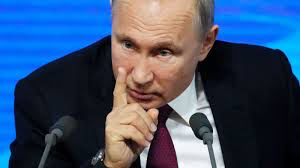
Putin, President of Russia, just recently threatened the world with use of nuclear weapons if Russian territory is attacked, (this included areas of Ukraine under Russian control).

Demonstrating Weakness

Threats are rarely effective and usually simply reinforce the resolve to overcome the aggressor. Needing to resort to  a threat clearly sends a message one is afraid of the consequences and unsure of their abilities to be successful in the normal course.

In the case of Putin’s threat he is trying to stop the Ukrainian counter offensive.  This approach is unlikely to work and in reality is probably more encouraging to the Ukrainians than anything else.

Will Sanity Prevail

Predicting the future is a difficult task, in this case we must all fervently hope that the majority of Russians will prevent such  a insane action from being actually executed by Putin.

I believe it is highly unlikely the nuclear option would actually be used, firstly so close to home and secondly because the consequences would obviously be much more severe than  just losing some recently acquired territory (taken illegally and by force).

U.S. President Biden’s reaction was simple and straightforward.  Nuclear conflicts have no winners, everyone loses. This is a very true and valid point.  Interestingly Putin agrees with this.

Between a Rock and a Hard Place

This most recent pronouncement is a clear indicator Putin has his back to the wall and he has no room to manoeuvre.  We can only hope he is deposed soon and has no opportunity to continue to conflict pain on others for his own self satisfaction.


Trade War

On its own war is defined as a state of armed conflict between different nations or states or different groups within a nation or state.

A trade war does not include armed aggressions (which typically has life or death consequences) but all of the other aspects of widespread conflict including unpleasant results apply.

Illogical

War, whether violent and destructive with associated loss of life or just destructive making lives miserable rarely have outcomes that are worth the cost.

The trade war results in negative impacts for all participants and even for the innocent bystanders (the global community).  Waging this kind of operation has an emotional foundation but if logic were applied there would never be a war of any kind.

In the television series Star Trek, the fictional Vulcan race was culturally based on pure logic.  As a people, they could not think and act in any way that was not logical.  Hence, no wars, of any type, ever.

Justification

The current US versus China trade war is based on fairness.  The US accused the Chinese of not operating with fairness in the realm of trade.

Fairness defined as impartial and just treatment or behavior without favoritism or discrimination.  Unfortunately, all of these descriptors are very subjective.

What one person, group or another entity view as just or without favoritism could easily be quite different from others perspective.  So ultimately the trade war is justified by a biased opinion leading to emotional angst between all the stakeholders.

We can see how this can lead to war.  How illogical.


Trade War

Canada has announced retalliation against the steel and aluminum tarrifs the U.S. has decided to enforce against Canada.  Laughably the U.S. rational for the tariffs is national security.

I refer to this as  laughable simply because the tight political and geographic alignment between Canada and the United States makes the consideration we pose a security threat simply ridiculous.

Nobody Wins

Free trade should be a prized practice and lack thereof disdained.  For me this is very much like the basic philosophical misalignment between communist economies and capitalist.

Human motivation is a very real factor in these two models.  At a very high level, conceptually, the reward incentive is reduced in a communist economy because everyone shares.

When effort is not tied to gain there is less incentive to work hard and therefore output suffers.  In the capitalist model effort is linked to results.  If you work harder, your gain is greater.

Free trade works like capitalism, what you put into it affects what you get out, without having to worry about artificial constraints.  If the government is influencing your ability to profit, through trade restrictions, this may have a short term positive effect but in the long term,  like most purely communist economies, all will crumble.

Why Fight

Ultimately everyone looses in a war, whether physical or a trade war of wits.  War is bad for the human condition and those who believe it is a way to achieve what is right are in fact very wrong.

Free trade or restricted trade, it is what it is (albeit free trade is obviously better).  However war is very bad no matter how you look at it.

The Leadership has Spoken

I had a interesting discussion about ethics at lunch today.  I was not alone, so this post is not about me talking to myself but actually dialoguing with others.

Follow the Leader

Often in our societies its the government that provides (dictates?) our morality and thus the associated ethical behaviour.   The crusades goal of recapturing Jerusalem was obviously moral and ethical (obvious to the leaders and their pions).

Conclusion, murdering others is a moral and ethical behaviour if the cause is just.  Justice as defined subjectively by the leader and accepted by their followers (pawns?)

Really!!!!

My wife does not agree with this assessment.  Perhaps the winners of a conflict will position themselves as moral practioners of ethical behaviour but this is in fact just self justification. War is wrong!

Checking in with the Greeks

Plato postulated, at it’s core,  human nature was based on three main objectives:

  • seeking knowledge
  • seeking power (victory/reputation)
  • seeking wealth (money, material gain)

By there very nature the practice of these behaviours clouds humans abilities to define morals in a consistent and sustainable way.

We each have a different mix  of beliefs underpinned by our very natures.  That is our individual  drive for knowledge, power, and material gain.

There are of course infinitesimal ways these attributes can be weighted.

The Result

Murder is morally wrong, my ex colleague opined at lunch today.  At least we can agree on that.  My counter is “except in self defense or pursuit of a just cause”

And so the slippery slope of morality and ethical behaviour begins.  Is it within the realm of human beings to solve this difficult question definatively.

I like Plato’s answer,  in essence he said, we can seek to define and achieve morality but we will never attain that goal.  The three fundemental aspects of human behaviour make it impossible.

Disclaimer

The aforementioned  philosophical discussion about plato and comments from my lunch companions and wife are my interpretations and may not accurately reflect their feedback.