Tag Archives: conflict

Making Threats

One method of motivating action is through an expression of intention to inflict evil, injury, or damage.  By threatening others with a serious consequence you expect they will conform to your wishes.

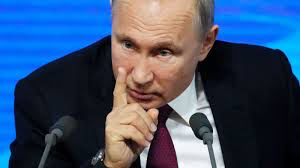
Putin, President of Russia, just recently threatened the world with use of nuclear weapons if Russian territory is attacked, (this included areas of Ukraine under Russian control).

Demonstrating Weakness

Threats are rarely effective and usually simply reinforce the resolve to overcome the aggressor. Needing to resort to  a threat clearly sends a message one is afraid of the consequences and unsure of their abilities to be successful in the normal course.

In the case of Putin’s threat he is trying to stop the Ukrainian counter offensive.  This approach is unlikely to work and in reality is probably more encouraging to the Ukrainians than anything else.

Will Sanity Prevail

Predicting the future is a difficult task, in this case we must all fervently hope that the majority of Russians will prevent such  a insane action from being actually executed by Putin.

I believe it is highly unlikely the nuclear option would actually be used, firstly so close to home and secondly because the consequences would obviously be much more severe than  just losing some recently acquired territory (taken illegally and by force).

U.S. President Biden’s reaction was simple and straightforward.  Nuclear conflicts have no winners, everyone loses. This is a very true and valid point.  Interestingly Putin agrees with this.

Between a Rock and a Hard Place

This most recent pronouncement is a clear indicator Putin has his back to the wall and he has no room to manoeuvre.  We can only hope he is deposed soon and has no opportunity to continue to conflict pain on others for his own self satisfaction.


Perspective

An individuals perspective is simply your point of view, that is, your attitude toward or way of regarding something or some situation.

Pespective can be objective or subjective depending on the underlying facts, or even a combination of objective and subjective inputs, in the case of a complex assessment.

Right or Wrong?

Perspective can drive conclusions and in extreme cases this can result in diametrically opposite analysis with both parties thoroughly convinced they are correct.

For example, during the US civil war that began in 1861, a persons perspective on slavery was largely driven by geography (North or South).

Southerners viewed slavery as an economic necessity that was morally and ethically acceptable.  The residents of the Northern states did not hold this view and a serious and violent conflict resulted.

In this case, the perspective was based on the situation.  The type of farming industry in the south  (cotton plantations and such) thrived due to the climate.  These type of crops were less viable in the climates of the Northern states so did not grow there.

Also the sales of these crops were low margin and relied heavily on manual labour.  Without the relatively inexpensive labour achieved through the practice of slavery the industries profitability would be severly impacted.

This issue was not prevelant in the Northern states (industry leaning more toward manufacturing), and so their perspective of the moral question around one human enslaving another was totally different.

Conflict Resolution

Understanding the complexities of perspective, giving consideration to  their role in creating a conflict and using this knowlege to achieve a peaceful resolution for all parties can be an effective tool in your facilitation tool kit.