Tag Archives: planning

Following the river

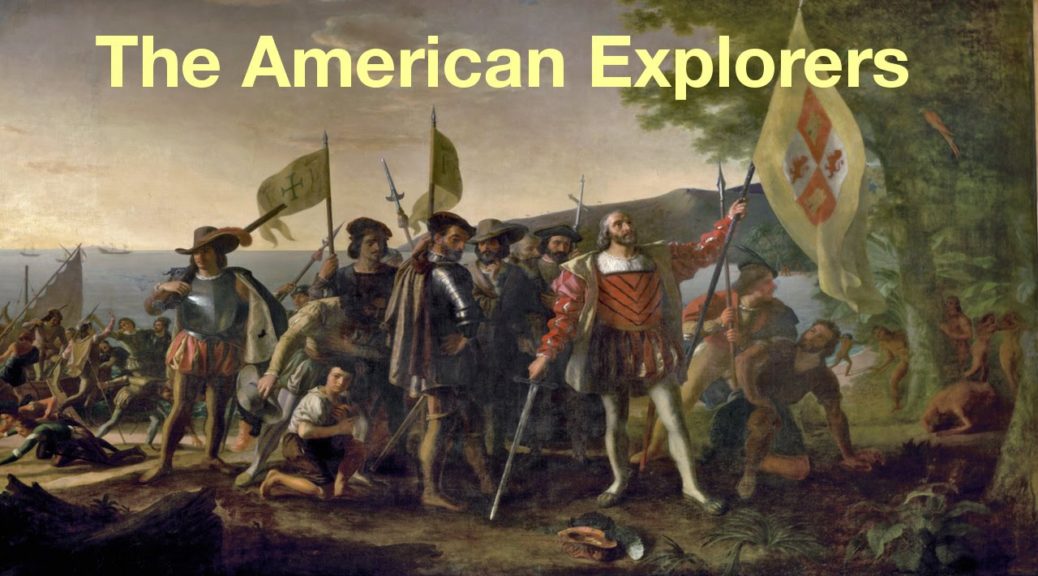
When European explores began their overland journeys to the western parts of North America in the 16th and 17th century travel by water was a common practice.

Of course this limited the explorers and settlers that followed somewhat, to places the rivers went or the lakes were.  The philosophy was, follow the river, it will take you somewhere.

Making Maps

Using rivers and lakes allowed greater distances to be covered faster and supported the development of maps.  Of course the destinations were not planned, beyond going where the river went.

Eventually portages between bodies of water and ultimately land bound trails increased the scope of exploration and maps covered the entire continent.

The initial approach, basically follow the river into the unknown, fascinates me.   I am a firm believer in planning which starts from the premies of knowing where you are going (the destination).

The first European explorers and the settlers that followed them basically figured it out as they went along.  Looking back in history this proved to be a viable approach, that is it worked.

Careful Plan versus Sketchy Concept

The successful exploration of North America, albeit a high risk high reward situation, does demonstrate that working toward a conceptual goal ( with a multitude of unknowns) can lead to sucess.

This leads me to balance careful planning wth a less structured course.   That is just following the river into the unknown, going where it goes and figuring out how to overcome obstacles as they arise.

While this does not resonate with me at a basic level, intuitively it makes sense to balance planning with chaos for the best overall results.

We can do it

Believing a future outcome will be successful should be based on reasoned analysis.  Hoping for good results is optimistic but might not be practical.

Optimism can raise your and others spirts.  It can be used to motivate yourself and others. The danger occurs when optimism creates a false belief resulting in lack of preventative or mitigating actions.

Beware of False Assessments

Hoping for the best and proclaiming everything will be okay makes us feel good.  We place our trust in the proclaimer and allow our fears to be assuaged.

This is fine if everything does work out.  We are saved the anxiety associated with a false worry or even panic which could lead to inappropriate response.

The downside is, by not preparing for negative impacts, because our false hope has led us to believe everything will be alright, by the time we realize mitigating action is needed, it could be too-late.

Be prepared

Although it takes effort,  preparing for bad outcomes (although potentially a wasted effort) is a better way to eliminate fear and worry.

This principle can be stated as: “Consider what can go wrong, don’t assume all will be fine”  This proactive approach creates a framework for resolution founded on logic not luck.

Disasters are for the Unprepared

Being ready to address issues, knowing anything can and will occur is not an absolute safeguard against disaster but it is a far better approach than hoping nothing bad will ever occur.

This is a proven methodology, which when put in practice, as it has been by multiple organizations over decades, clearly works.  So why hope for the best, plan for it!


The big picture

The immediate present is often the focus of our activities.   Being present in the moment obviously has value.  The downside to this tactical approach is that does not prepare us for the future.

Dealing with the “now” cannot be avoided.  Planning is a way to make the results of current actions better.  It also makes it easier to act because the approach is already thought out.

Be Prepared

Robert Baden-Powell, founder of the boy scouts clarified the organizations’ motto (be prepared) as applying to both mind and body.  That is to think out and be physically ready beforehand to take on any issue or circumstance that might occur.

Preparation (advance planning) is key is to do the right thing at the right moment.  Acting and then reacting or reworking depending on the results can be agile but might not be as efficient or effective as taking the big picture into account and being prepared in advance.

Iterative Planning

Planning in advance is unlikely to take into account every possible circumstance.  Developing a view of the big picture must take in account its fluidity.  Things change with time.

Planning should be an iterative process with enough built-in flexibility.  It is important to both be prepared but also have the ability to react to circumstance.

Being ready is simply a tool to assist in acting in the best way possible without surprise, fear or uncertainty.   Being prepared, that is having a plan and a vision of the best strategies, should not be treated as a straightjacket.


Visualization

Visualization is a communication technique.  It is a very effective way to communicate both abstract and concrete ideas and has been employed since the dawn of humanity.

The key to effective visualization is the ability to create mental imagery.  Basically the message is converted by enabling the recipient to view the concept without physically seeing it. 

Maps

Maps have long been used by people to present geographic information that allows the visualization of locations, for example terrain, boundaries, landmarks.

Maps are a great visualization tool  that can be used to determine things like plan of attack (historically this was an important use), travel plans, ownership and so on.   

The key here is not the physical map (just a tool) but the ability of the viewer to create a mental image of the unknown based on the map.  This increases the likelihood decisions based on the information will be good ones.  

The Minds Eye

While tools, that is images or templates are valuable in the process of visualization the technique relies on a persons ability to “see with their minds eye”

A physical presence is not needed to actually view the object of visualization.  You may be in an empty room and see it in your mind as furnished.  Based on the mental imagery you can build a design plan that will be appealing to you without a lot of trial and error.

Not Always Easy

The technique can be very powerful but is not always easily executed.  You need to train your mind to see things without using your eyes.  This is a great skill and well worth cultivating but you will probably need to practice to create proficiency.

The first step is accepting the value of visualization and the second is focusing your mind on the concept you want to visualize.  That will get you started. 

Clear Sailing

Clear sailing is a common English idiom used to describe a situation that is free of obstacles or challenges.  This can be especially relevant after said obstacles or challenges have been overcome.

In this case the challenges (or as optimists say – the opportunities) are identified, plans to overcome them are created and then executed.  Once completed, with a sigh of relieve a state of clear sailing is declared. 

Historic Reference

Travel by sailing ship was a common practice in the 19th century and earlier, it was not until the early 20th century that self powered ships (steam, gas or otherwise) became common.  

Sailing ships were very much at the mercy of the weather.  Motive power was derived from the wind and if there was no wind then their was no power.  

Additionally of course the level of sea turbulence (a factor dictated by weather) also determined the ease of a journey by sailing vessel.  Rough weather led to rough unpleasant trips, even dangerous ones. 

Planning to avoid rough sailing, or if it was encountered overcoming it, led to clear sailing and ultimately today’s idiom which is based on the conceptually meaning but does not necessarily apply to sailing alone. 

Setting yourself up for clear sailing

The concept of clear sailing can help with planning.  The primary goal of any plan, first and foremost (a little redundant emphasis) is for execution to proceed smoothly (i.e., smooth sailing).

Keeping this objective top of mind during planning can make it more likely for risks to occur to you as you draft the activities, schedule and resources.  Remembering the trip will not be clear sailing if things go wrong, focus tasks that contain on low risk, high probability of success. 

And then, sit back and enjoy clear sailing. 


Planning

I am a firm believer that planning always accounts for at least 60% of the effort  and duration associated with any successful initiative .  In this context the term  initiatives represents the work to deal with a particular problem or for achieving a particular purpose.  

Initiatives require a plan and if not formally developed, documented and used, both the effectiveness and duration of the initiative are negatively impacted.

Building a plan.

In its simplest form planning entails determining what needs to be done, priority, timing, dependencies and resources.  Plans predict outcomes and since the predictions can be influenced by many factors changing plans as work progresses is normal.

(Only magicians with crystal balls that work magically don’t have this need for changes).

Without a plan it is impossible to measure how effectively the work is being completed.  For those that don’t like planning this is a key benefit, it is hard to be held accountable.

The fact accountbility becomes subjective is good for those responsible for the work, not so much for those expecting superior outcomes.

Making Decisions

The most important benefit associated with plans is actually not how efficiently work can be done (as opposed to chaotic progress) but rather the ability to make good decisions.

The questions, should we do this or that or even undertake this initiative at all can be well informed by predicting what it takes to do it.

Of course comparing the effort and duration associated with different options can be a really good start to determining the best option.


Incremental Strategy

Projects can be executed in a variety of defined approaches.  Waterfall being an sequential approach and agile being iterative, or variations of each of these are the most common practices.

Similar approaches can be applied to both creation and execution of an organizations strategy.   Strategies are just plans to achieve defined objectives.

Defining Objectives

The first step in any strategy is to define the goals and objectives.  Simply put what is the strategy intended to achieve.  These can be can cover one or many topics for example; financial, repetitional, risk aversion, resource focused and so on.

In a waterfall approach to strategy the objectives are determined first and then the plans to achieve them.  An iterative approach could be better defined as an incremental strategy.

We will figure it out

Incremental approaches to strategy appear at first to be contradictory to the definition.  Strategies are plans and incremental plans seem almost not to be plans but rather just acting in the moment.

It’s a Framework!

While strategies clearly identify what success is, that is when you reach the strategic objective you are successful.  If success is identified in an iterative way, are you not just making it up as you go along.

Of course yes that is the intent of both a project executed iteratively and and strategy approached this way.  The benefit is the ability to mold the ongoing goals according to what make sense at the time.

Rather than committing to a 3 to 5 year strategic plan the committment is to a framework which is reviewed, balanced and corrected iteratively as it makes sense to do so.

Don’t just laugh out loud at iterative strategies, there is some method to the madness.


Revenue, Expense and Service

Most organizations, whether run for profit or otherwise, live or die on the balance between funds for operations, cost of operations and the quality of the resulting  product or service.

This applies regardless of the organizational function, e.g., government, corporate, charatible, educational, other non profit and so on.

Of course, governments are a bit of a special case in that they seem to be able to overspend without dire consequence, to a point anyway.  That is governments have a much larger tolerance for deficit spending than most other types of organization.

Getting the Balance Right

Given there are only three parameters, it might seem easy to set the organizational goals.  Simply put, maximize revenue, minimize cost and give the stakeholders what they want, i.e., the product or service provided by the organization should exceed the users expectations.

Not surprisingly, in practice, it is far more complex.  Before maximizing revenues or minimizing expenses both the sources and the integration income, cost and quality come into play.

Reducing cost could reduce quality, resulting in a lower price for the product or service and thus lower revenue.  Or higher quality could result in lower demand due to a higher cost of goods leading to lower sales due to affordabilty issues.

There are in fact a wide myriad of combinations and scenarios to consider.

Also revenues can come from a variety of sources, many which are somewhat out of the organizations control.  Things like donations, government handouts, revenue from sales of goods or services, investment income and the list goes on.

The point, developing clear and simply strategies and execution plans for managing the intricat dance between income, expense and outputs is not easy.

Ultimately though, no matter how difficult, of all the things an organization does, strategizing, planning, executing and monitoring expenses, revenues and quality is the most critical activity to ensure organizational success.


Proactive or Reactive

Generally a pro-active response requires more effort than just accepting the default or status quo approach.  Reactive reponses generally have an urgency associated with them  and are often more like a band aid.

That is they cover the problem temporarily but do not necessarily resolve it.  A pro-active approach requires planning which in itself adds effort.

Default, going with the flow or reacting do not involve any preparation.  Planning is not effortless, but the results are typically more satisfying.

Effort, duration, results

Spending more time and effort should produce better results.  This applies regardless of the product or service. However there is a caveat, both time and effort must be productive.

The act of just spending time or randomly acting on anything may or might not be effective.  The better approach is for it to be thought out (i.e., planned) for maximum effectiveness.

Pro-actively planning the approach, what, when and how is far more likely to result in successful achievement of the objective.

Repeatable and Sustainable

Another often overlooked benefit of the while thought out action is the ability for yourself and others to repeat it over a long period and expect consistent results.

This is the underlying concept of many activity models like ITIL, CMMI, Cobit or 6 Sigma. These models provide a framework for planning.

Ultimately the pro-active approach produces better quality, time after time.  This concept can be applied to anything you do whether it be a trip to the grocery store or a trip to the moon.

Unplanned but not unprepared

A colleague shared an interesting thought with me today.  It was the title of an on-line article he had recently seen  “Unplanned but not unprepared.”

On first blush it sounds like an oxymoron.  Planning is about preparation, so typically, if you don’t plan then by definition you are also unprepared.

This thought intrigued me and some investigation was warranted.  The title refers to a short story about someones career.  In that context it makes a lot of sense.

Simply put, the object of the story did not plan her career but was ready to embrace the opportunity as it unfolded.  In a word, it was serendipitous ( I stole the word from the story).

Embrace the opportunity

Personally I have great faith in the power of planning.  Planning lays the groundwork for success and without it the outcomes might be positive, might be negative but simply are not highly predictable.

However, even if not planned, embracing opportunity, that is taking a chance while  relying  on hard work (not luck), can be a very fullfilling approach.

This is not to say planning and fore thought should be cast aside, rather, that opportunity should not be ignored just because it was unexpected.

Reacting in the Moment

The unexpected throws me off.  I like to be ready, to be prepared.  This of course requires planning.  Surprisingly though some of the best events in my life just happened.  I embraced them and all turned out well.

So really, like all things there is a balance including times when things are not planned but you act prepared and take advantage.  Be ready, you never know.