Tag Archives: managing change

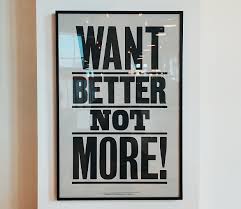
Continuous Improvement

Everything is constantly changing.  Sometimes in small increments and sometimes change is very rapid and the impacts can be  of a greater magnitude.

By definition working to achieve or produce something better than it previously required a change.  This will be a change for the better (or at least that is the intent) but still, it is a change

Little Steps

Constantly getting better intuitively makes sense.  Making changes in small increments is most often better than the big bang approach.

Moving rapidly and doing everything all at once has been demonstrated through numerous studies to initially reduce productivity and quality as people worry about the impacts of the changes.

As you seek to move forward try not to step on those in front of you or leave a trail of crushed bodies behind.   Continuously improving in small increments is a solid approach to achieving better results with minimal disruption.

Often the changes can happen seamlessly relatively noticed by those impacted the most.  Ultimately better results are achieved by stealth.

Minimal Impact/ Maximum Gain

The concept of continuous improvement is associated with change management.  Rather than modifying processes, practices, and behaviors all at once  thus creating greater stress and resistance the goals are slowly progressed toward in increments.

It is important to have the overall goal in mind and even mapping out the steps fully help make sure the result is coherent and integrated but this does not mean the change needs to occur all at once.

Continuous improvement is continuous changes and thus becomes the norm so that in a way it is not really a change but rather the usual.

 

Building Resilience

At various times in our lives, virtually everyone goes through a process of adapting in the face of adversity, trauma, tragedy, threats, and other significant sources of stress.

Situations that require the practice of resilience as a major part of perseverance through the unsettling change are unavoidable.  Our ability to adapt and move to the other side has a natural and learned component and strengthening this skill enables us to move on.

Get Through It

While it is important to get past a change without adverse effects on our health (mental or physical) this is not a process to be rushed nor ignored.

Just hoping it will resolve itself with time often leads to the deeper internal stress which festers.  Likewise rushing to get it over with does not address the root cause and again might not really resolve problems.

We need to move through the change leveraging planning, communication, and problem-solving skills to help us overcome the stressful and adverse impacts.

Focus on Opportunity

Our innate resilience can be a counter to change resistance.  However, it is important to bolster your level of resilience by behaving in ways that enhance the change experience.

Ask questions, seek clarifications, speak out clearly (but calmly) about how you feel.  Sharing can elicit helpful feedback from others which can guide you in ways to help yourself.

Plan how you will behave rather than react.  This gives you time to think through scenarios and is more likely to result in positive responses from others, as opposed to them experiencing explosive behavior on your part.

Studies have shown we can enhance and grow our resilience skills.  Change is inevitable, strong resilience will be needed from time to time and you will thank yourself for being ready.

Change and Communication

Most if not all people enjoy and embrace routine, that is the familiar.  That is not to say many do not derive pleasure from the unknown or unique activities but on the whole constancy is appreciated. 

If everything was well understood and constant it would be a bit of a boring life.  That being said, most of us do enjoy consistency of simple routine tasks.

For example, your daily travel routine, where you park your car, the time you eat breakfast. This need for routine does not detract from the excitement of say taking a trip to an unknown location, we like that too.  

Supporting Change

With a basic understanding of resistance to change it is possible to plan ways to help both yourself and others to embrace the unknown.  That is to recognize the value and so have fun changing it up. 

The key to making change work, probably 90% of the approach, is communication.  Two-way communication by those promoting the change (could be you) and those on the receiving end (also could be you) is critical.

Being a Part of the Change

hange includes unknown factors, things we have not experienced or practiced regularly or at all.

Understanding the reasons to alter our behaviour and believing we are at least able to voice an opinion, can make the change very palitable. 

Change is exciting.  It is invigorating and constant.  Believing in the power of change, accepting and embracing it, can be a powerful and pleasurable experience.