Tag Archives: objectives

Building a Strategy

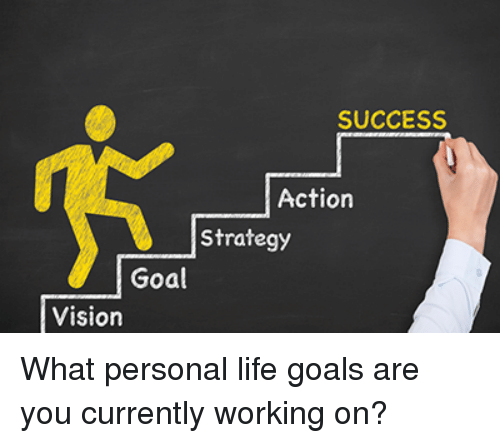
A strategy will define the approach to achieving your needs but considered in the context of the bigger picture (e.g., personal life, business life, social life)  over specified time horizons (e.g., immediate, mid and long term).

Your strategy defines the top-level goal (e.g., obtain a post-secondary education) at a conceptual level  including what are the key objectives (e.g., type of education, cost considerations, quality expectations, etc) over a specified time frame (e.g., the next 1 to 5 years.)

Just Do It

Often strategies are considered a waste of time.  Why spend time figuring out the future when I can just plunge in.  Of course, often hindsight raises its ugly head and we wonder if we could have made better choices.

Well thought out strategies define our expectations but more importantly the supporting rationale for them.  Contemplation now can avoid pain later.

How to Get There

The strategy is directional.  It includes not only the objective but the key attributes of it.  These can be easily used to develop the actions that need to be undertaken to meet those goals (e.g., acquiring funds, educational pre-requisites,  health considerations )

Strategies help us avoid figuring things out on the fly, always fun but not always effective.  Making it up as we go along can be invigorating but also lead to regrets.

Flexible

Most importantly, treat your strategy as flexible.  Things change both for you personally and environmentally.  As the context changes so should the strategy.

Without a strategy, I wish you good luck.  With a strategy, luck is not needed. your success is planned.

Seeking Direction?

Life encompasses growth, ongoing activity, and continual change preceding death.  From birth to death each of us is on a conceptual journey where our experiences lead to new understandings. 

Our journey can be passive (go with the flow), active (control the outcomes) or a combination of approaches.

 Whether  you choose to control or influence your outcomes, or let someone else do it,  a key factor is what direction are you headed.

Finding Your Way

Your direction is dependant on where you are headed, that is what is the objective or goal?  Sometimes you my have an idea but need some help.

In these cases we often look to our leaders to provide some ideas or indications, even suggestions of our destination.  Ultimately we choose but our leaders can help us make that choice.

Of course in some cases the leaders directions are firm and prescriptive and we just need to go along for the ride.  The more motivating approach occurs when leaders encourge and advise but leave the choice to us.

Passive/Aggressive

When the leaders pronounced direction is not to your liking you may choose to appear to accept the direction (passive reaction) but through your actions do everything to acually go a different direction (aggressive).

Ultimately the path you travel and the destination you reach  are most pleasant when it’s where you want to go.  

This applies regardless of whether you devised your own direction or it was provided by a leader or even just through circumstance.

Play the game for yourself

Showing up and participating might get you a pass but if you want to win more is needed.  Viewing life as a game (yes, a tired and worn out analogy) places your role as a competitor.

Being part of the play can be very enjoyable.  I wonder though if something is missing.  If we equate success to winning, achieving your goal (i.e., success) should be a win.

Just being not enough

If your objective is just to show up, it probably is not a real objective and probably is not enough.  Building on the game analogy my suggestion is to study the rules, players and potential outcomes.

Based on this analysis, as your goal pick an outcome that will maximize your enjoyment, without negatively impacting others.  Don’t kid yourself, maximizing your enjoyment requires more than just showing up.

A servicable performance should never be taken as a complement.  The feeling of real accomplishment is like a stimulating drug, it feels good.  That is just basic human nature.

Play to win every time

The very key to the ideas proposed in this post is repeatable consistent behavior.  Whatever the activity of the moment never mail it in.  This is of little benefit to yourself.

Seize every moment with gusto, not unfocused energy but rather excitement and purpose.  I cannot think of any occassion when just going with  current is a worthwhile approach.

Strategic Alignment

Today I had a discussion with my colleagues about strategic alignment.  Typically in organizations there is some heirarchical structure.  Strategy must bridge this structure.

Overriding strategies start at the institutional level and cascade down.  The overall strategy is by its very nature more indicative or directional than specific.

For example, the three year strategy institutional strategy could be to reduce costs while maintaining a constant revenue.  Although this can be simply stated, of course, the execution plan is more complex.

Reaching All Levels

A litmus test for organizational alignment lies with results.  Strong alignment throughout the organization is far more likely to contribute to the overall strategic objective.

Defining strategies within any section of the organization that will contribute to the overall organization goals can be difficult because there is some subjectivity inolved.

For example, cutting staff in one department might appear to support a cost reduction strategy, and is easily measured at that level ( staff were reduced or they were not).

The rub is, the staff reductions could seriuosly impact revenue, which maintaining flat was the other part of the strategy.  Simply put, aligning the strategies of parts to the whole is not easy.

Thinking Strategically

A potential assist to the pitfalls of strategic alignment is to expect everyone to think strategically with the institutional high level goals in mind.

Years ago I attended a seminar where the speaker highlighted what this kind of thinking looks like.  He was doing an organizational assessment at Boeing, probing employees about their work.

He asked a janitor he interviewed what his job was.  The janitor replied, “I build planes”.  Hard to argue that employee was not thinking about the companies strategy and didn’t get at.

At there very core in every aspect of the company, in fact, as simply put by the janitor, ultimately the employees build planes.

Exploring Investing Some More

My last described the investing process in three simple steps with a brief summary of each steps.  These formed a simple framework for successful investing using a real estate flip as an example.

Step 1 – Selecting the investment

There are numerous types of investments and as many if not more styles (i.e., how you select and maintain your investment.). There is no rule that you need to pick one style and follow it exclusively.

You can keep multiple portfolios each managed with a different style, or mix and match styles in one portfolio, keep to a single style or all of the above.

Most importantly, don’t fall into an approach accidently or by default.  Consciously map your investing style to most likely match your objective.

That is where the selection process starts.  State your objectives.  Making lots of money with zero risk of loss is a great objective, unfortunately it is not realistic nor is it specific.

A better example of a realistic (but agressive) objective would be; a net annual return of 15% averaged over 5 years with losses in a single year never exceeding 5%.

Picking  a Style

The goal is a risk averse approach to achieving an agressive return (in the context of a low interest rate environment). This type of clear and readily measurable objective can guide both your style and types of investment to select.

I will pick this up tommorow, exploring style and investment options together with how they can map to your goals.