
Tag Archives: achievement

Finding your Talent

Each of us is born with a natural aptitude or skill.   Our challenge is to identify what it is and then leverage that ability to the maximum.   In many cases the latent talent is overlooked and sadly unused during a persons lifetime.

Talent is a special gift granted us through nature but which needs to be grown through nurture to reach it’s full potential.  Unfortunately there are many talent suppressors in our environment and it is rare for to see them blossom.

Perseverance

Human life can benefit from a wide range of skills and abilities ranging from mental to physical.  One person may demonstrate an aptitude for soccer while another excels in performing kerrculations (calculations).

These natural abilities are inherent within of genetic makeup but do require effort to become both apparent and to excel at them (i.e., training and practice).

When exercising our latent talent we must practice both patience and perseverance.  While the opportunity exists for us to demonstrate amazing capabilities by exercising our special talent it is not easy, natural but hard.

Motivation

One of the leading reasons our hidden talents often stay hidden is lack of motivation.  Just being able to excel does not equate to excellence.

We must both have the innate talent and the desire to practice and persevere in order to leverage and excel at our talent.  Surprisingly, given the presence of our gift is natural and unassuming we often do not seize upon it and the lost opportunity leads to waste.

Some of us our fortunate to encounter coaches and mentors to help  unleash our hidden talents while others do not even recognize what they are capable of and so it goes to waste.  It is your choice, do you really want to miss out on your chance?
Effectiveness

Do you ever wonder about your own ability  to utilize all of your skills, talent, and energy to reach a self defined goal or set of goals you set from time to time?

If you are not the goal setting type and just meander from event to event depending on the way the wind blows your level of personal effectiveness is probably not top of mind or even in your mind.

How Effective Am I?

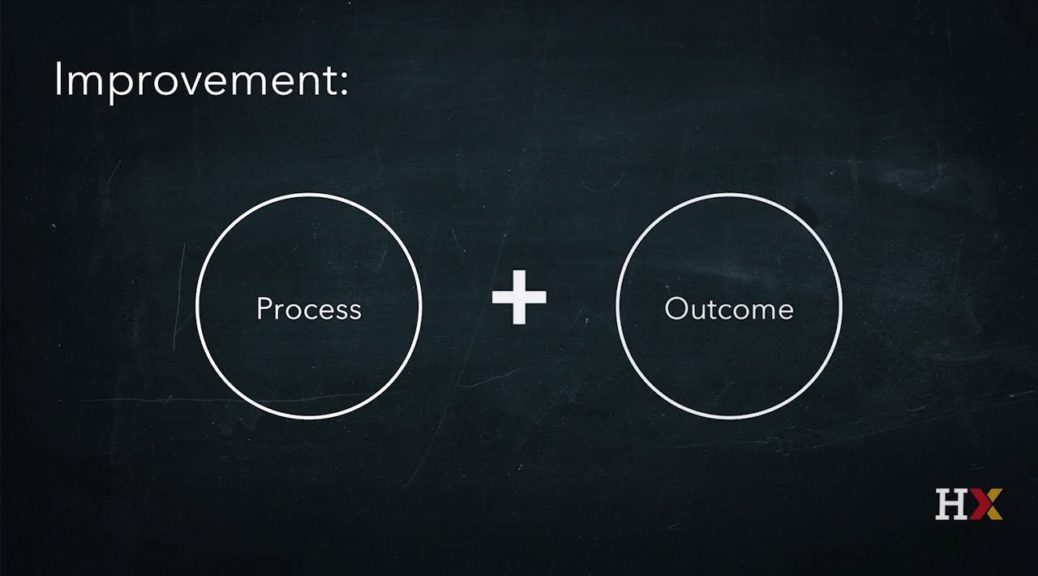
Measuring effectiveness entails more than examining outcomes.  How you arrive at your goal can be both as important and fullfilling as the actual achievement.

There is a piece of ancient wisdom that concludes “getting there is half the fun”.  Being efficient typically refers to how you achieve your goals  with minimum wasted effort or expense.

In essence this is a personal value equation.  That is, things that cost less but provide the same satisfaction, growth opportunities or net worth, versus equivalents that cost more, have the greatest value.

Defining Your Effectiveness

Likely if you leave a trail of bloody and dead bodies behind you in the course of pursuing your objectives, although, you might be satisfied with the accomplishment, will others be?

Examining your own morale’s and personal values may well even cause you to view your achievement as a pyrrhic victory.   You would need to be a bit sadistic to enjoy the carnage around you.

Was I effective?

Measuring your own effectiveness begins with being clear about your own personal behavioral expectations.  Things that are most important to you like clarity in communication, empathy for those you are interacting with, etc.

Once you know your key behavioral limitations defining measures that demonstrate your adherence to these practices can begin.  The results can help you modify the way you get things done, thus improving your personal effectiveness.


Are we Finished?

Measured progress toward personal goals is wasted if you quit before the ultimate end is achieved.  This assumes you know what the desired outcome is.

A boss I worked with years ago (one whom I really admired) would frequently prompt us during strategy and planning sessions with a simple question, “What does done look like?

 Clarity

For me the question was about both clarity and measurability.  If you are not crystal clear as to the destination how can you assess whether you have arrived or not.

This is a simple intuitive concept, yet I frequently observe (more often than not) people declaring success by morphing outcomes  to appear as meeting the goals.

Example of Project Success

One of my favourite examples  of slipper goals is measuring project success based on schedule and budget.  Frequently unexpected events occur and schedule or budget are modified accordingly.

In the end the project maps to the final timeline and budget, albeit miles from the original schedule and cost.  Without baselining it is easy for this success measure to be achieved but is this really what done was intended to be?

Accountability

To be truly accountable for outcomes you must be both fully in agreement as to what they are as well as buying in to their achievability Iif you aren’t convinced success is within your grasp can you really get it done?).

Absolute clarity as to what done is coupled with buy-in to feasibility will  not guarantee you will arrive where intended but it really increases the odds.


What or How

Our goals can usually be described as the answer to the interrogative request  “What?”.    The response describes the nature, origin and identity of something.

Focusing only on the tangible and measurable part of what we wish to achieve is often at the expense of the how.  That is, the way or manner in which we behave to attain our objective.

Success without Substance

Unfortunately achievements that leave behind a field of dead bodies can be questionable.    In the movie Kill Bill the heroine exacts her revenge leaving unimaginable carnage in her wake.  Did she ultimately win?

To really be happy with your results it is important to consider how you proceed to get what you are after.  Without carefully considering how you can get what you want to ensure it is not at an unacceptable cost you may tarnish your success with regrets.

This may raise questions about the goal itself.  Was it worth it?

Plan before Leaping

We may feel we need something, the object of our desire.  This emotional tag can cause us to charge ahead without fully thinking out the practicality and feasibility of our approach.

Without forethought and a plan of action we may fail but in fact even worse we might get what we sought but given the cost suddenly we have no taste for it.  We may even be saddened by events.

Success is not simply accomplishing our purpose but rather doing it in a pleasurable and satisfying way is needed for us to be able to claim true success.

Persistence

Sometimes it is difficult to achieve your goals. Firm or obstinate continuance of your efforts, in spite of the difficulty or opposition being experienced may be in order.

Persistence can be an admirable trait as long as it is well thought out. Persistence for it’s own sake could be characterized as stubbornness.

That is, having or showing dogged determination not to change one’s attitude or position on something although there may be good reason to do so, does not make sense (i.e., stubbornness should be avoided).

Achievement

Being persistent can be a key underpinning of many great successes, however, knowing when to quit is critical. The proverbial banging your head against a concrete wall in frustration is typically not a useful approach.

The keys to the effective practice of persistence are:

  • Achievement of the goal is feasible (it can be done within the constraints you are under)
  • The value equation is positive, that is the outcomes merit the expenditure of persistent effort that will be required.
  • The application of common sense, i.e., stopping based on changing circumstances or revising approach

Determination

One facet of persistence is the exercise of determination. Demonstrating a firmness of purpose based on logical analysis is key to persistence.

Most importantly this is not blind determination at all costs. To be most effective it should be apparent the motivation underlying the desire to achieve is well reasoned.

Being determined does not equate to never giving up but rather not giving up if that is appropriate based on the circumstances. Showing determination when success is unlikely is most likely a waste of effort.

Challenge

Many psychological studies have demonstrated the value of doing a task or job that requires a great deal of effort and determination.  In fact, lack of challenge in your daily activities can impact your quality of life. 

Challenging activities can provide the underlying reason to act and are a real motivating factor.  The basic desire to do stuff, take actions of some sort to achieve objectives, is a basic part of human nature.

Satisfying Outcomes

Usually, the things we undertake have a purpose.  Achieving this outcome provides satisfaction of achievement but the difficulty of being successful is a key contributing factor to the level of pleasure derived from the achievement. 

Simply put, successfully completing a challenging activity is more satisfying than one that is relatively easy.  Our personal development and growth is related to the levels of difficulty. 

Throughout our lives we have desires and we undertake actions to attain these goals, but just achieving the goal is not the only measure of success.  We do not feel as satisfied or even satisfied at all if the achievement required no effort on our part.   

Making Changes

Sometimes when we are not challenged by the things we do, it is easy to fall in the trap of just carrying on.  The effort of effecting a change is not perceived as fundamentally required to increase our personal happiness. 

The lethargy and overall feeling of boredom become acceptable.  Over time this has a negative impact on our health and if we don’t snap out of it and make a change the impact on our overall health can be quite detrimental. 

Connecting the Results

People, both individually and in teams spend a significant amount of time and effort working to accomplish something.  Hopefully the achievement is both admirable and creditable.

The process of accomplishment usually starts with conception – what is the goal.  This is the ideation phase.  Planning is next, that is how are we going to proceed?

Once the plan is in place execution occurs and voila, the results are heralded as an accomplishment.  In the case of a group accomplishment this often entails back patting and declarations of achievement (i.e., we did it).

Measuring the Results

During ideation and planning work, the reasons for pursuing a particular achievement are paraded as motivators.  In essence the point is “I/we are going to accomplish this thing because it is worth doing”

Sadly, although the tasks arising from the idea are often completed the desired results are not achieved.  In these cases just the fact something was accomplished is paraded as success.

Checking the Achievement

Wondering how actual results mapped to the imagined benefits of a number of accomplishments I once totaled all the monetary benefits from a years worth of initiatives at a large corporation.

The value of increased revenue estimated for all the completed projects was less than the company’s total revenue for the company. Clearly, for some of these initiatives what seemed like a good idea at the time did not turn out to be all it was sold as.

For me, over this just highlights the value of confirming the accomplishment rather than just assuming it.  This is not to punish but rather to guide future directions.

Whatever you are seeking to accomplish, personal or business, check how you did before leaping to the next attempt.  Completion is not necessarily accomplishment.

Measuring Success

We have many ways of measuring achievement.  The measure can be aligned with the objective directly or peripheral factors.  Also it can be highly objective or subjective or somewhere in between.

For example if you are  playing a game of golf the measure could be your score or it could be your score against the scores of others.  Both of these are pretty objective measures.

However, it could be how you feel.  This is a more subjective measure not necessarily related to your score but rather how much fun you had.   Did your level of enjoyment meet expectations?

Measuring your Daily Activities

Most of us spend our days performing  activities involving mental or physical effort, i.e., work.  (To clarify financial compensation is not required to classify  spending your time as work).

What is the success measure relative to this work.  Like the golf game, there are multiple measures.  You can objectively assess if the goal of your activity was achieved and to what level.

The subjective measure of accomplishment can also apply.  Was it a good outcome, high quality, appreciated, etc.?

However, Over the long term, I would argue, the subjective measure of enjoyment and happiness is the most important.

If you are laughing and having fun the lack of more concrete success, while not desirable or to be encouraged, can be overlooked and absorbed to some extent.

This is not to propose that achieving what you set out to do is not important, but it should not be at the expense of your personal happiness.

Influence versus Manipulate

We all have power to influence others.  You are exerting influence when you effect a change (the change you desire) on the character, development, or behavior of someone or something, or the effect itself.

Manipulation is simply influencing a change in a clever or unscrupulous way.  Manipulation characterizes the way influence is applied.

Unscrupulous  practices are not about being fair or moral.

Unscrupulous behaviour is targeted at getting what you want without a huge amount of constraint on the behavioural practices beyond the fact they generally do not employ brute force but are rather well planned intelligent and ingenious (i.e., clever).

Effective Manipulation

I often have discussions with others who immediately classify manipulation as inappropriate while influence and impact skills are considered powerful positive tools.

This is not surprising as unscrupulous behaviours have a negative connotation.  On the other hand, manipulation is really just a sub-set of influence.

Additionally it is important to note the determination of  “fair” and “ morale” can be very subjective.  Manipulation can often just define influence behaviour where you have chosen not to let arbritrary constraints hold you back.

Influencers follow the rules, manipulators rule.  Often the rules are framed to be in favour of those you are trying to influence.  Playing within these boundaries will most likely lead to failure.

I acknowledge manipulation is a technique I use, but for me , the key is not to practice it in nefarious ways or with obvious disregard to morales, fairness or others beliefs.

Rather the point is to be clever, not evil, not  disrespectful but really clever.  And it works.

Griity People

Why are some people successful while others are not.  What distinguishes a top leader, manager , sales person, student, athlete and so on.

Are there specific attributes associated with success.  Things like, intelligence, emotional maturity, physical capability?  Intuitively the answer is yes, but is there something else?

Is there an attribute that is always present to a high degree, which is a critical underpinning to skills and capabilities.  This is a question phycologists have been exploring for years.

Being Successful

I recently heard about some interesting studies of sucessfull salesmen, athletes and students that found the top performers sometimes had high intelligence and/or strong emotional maturity and/ or powerful physicality, but not always.

These factors might be present, or might not (just average or low levels).  This leads to the conclusion these factors are not necessarily or perhaps not at all determinent of success.

Grit

The one attribute that was present in high levels, in every case, was grit.  The higher your grit , the greater likelihood you would be successful.

Being a gritty person means that the one tends to stick to their goals despite numerous issues, problems, setbacks and failures. The person has firmness of mind and unyielding courage.

The theory is when you treat life as a long term journey, not a series of side trips, struggles are the norm and something to overcome.   Something that in fact can and will be overcome.

There is no need to start over or stew and wine over a bump in the , and there will probably be many, those with grit just soldier on to success.

Aquired Attribute

While only a theory, and techniques how to teach or learn grit are still in early development phases just believing in the value of grit is a start on your path to continued accomplishment and success.