Not Me!

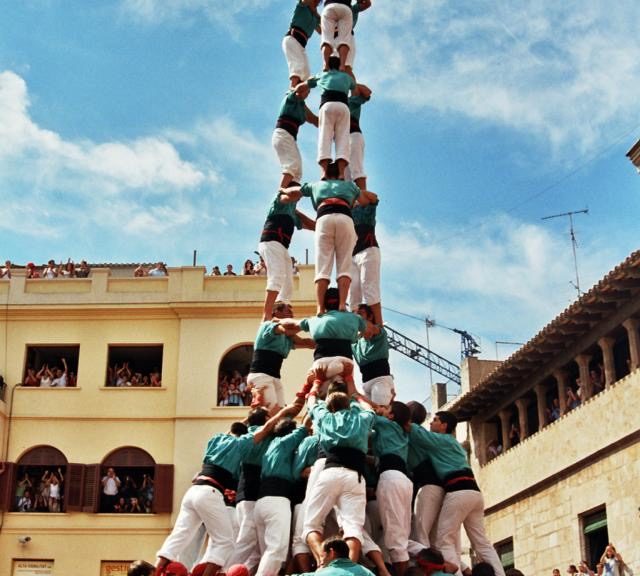
I fondly remember a very collaborative team I was part of more than a decade ago.  Our boss used to gather us together regularly and discuss upcoming activities and opportunities.
His goal was to assign work in a very democratic way.  The team would somehow collectively come up with the best assignments.  This approach did not elicit a lot of volunteers and often ended up with our boss just making the assignments.

Will the Spaghetti Stick?

Early on as I learned to cook I was taught to test when spaghetti was ready by throwing it against the wall.  It stuck, it was ready (spaghetti was a favorite dish of mine because it was so easy to prepare).

Tossing the ball (and hoping it will stick) might lead to successful outcomes, but passing the ball in a planned and scheduled way is far more likely to work well.
My aforementioned boss often tossed the ball into our court and regularly found it just bounced back.  His choice to work as a thoroughly integrated team through full-on involvement of everyone was well-intentioned if not well executed.

Rigidity Sucks

Setting the approach in stone and firing the ball at the troops demanding specific action or just tossing the ball and praying are two useful analogies to illustrate the best approach might well be somewhere in the middle.

Be prepared.  Do some planning advance but include both flexibility and real (not lip service) opportunity for feedback before casting the approach in stone.

Group determinations are the hardest to achieve but usually, they are the most satisfying.
It’s too hard

Is it really a difficult task or is that just an unproven conclusion?  Think about it, almost always there is a way to simplify.  Classifying something as too challenging for us to complete easily is largely a subjective assessment.

That is not to. say some things are not more difficult than other things for everybody however setting a standard difficult level (e.g., simple, medium, hard) is not an exact metric.   People’s perceptions and capabilities are a significant factor in difficult levels.

We can do anything

Years ago I had a debate with some colleagues about “do-ability”.  The argument was basically given unlimited resources (i.e., time, money, people) anything could be accomplished.

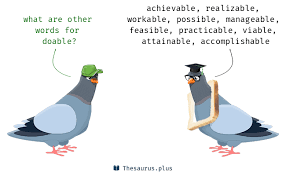
I did then and still do now,  disagree with this.   Feasibility, that is the state or degree of something being easily or conveniently accomplished, is a very real factor in do-ability.

Some things are just not practical, the magnitude of the resources required is in reality neither probable nor possible to employ and so the task really cannot be accomplished within the application of common sense or logical reasoning.

Difficult Choices

While we probably cannot do anything there are many things we choose not to do because of perceived difficulty not reality.  If it is possible we should do it, assuming there is a prize or motivation for doing so.

Determination of difficulty should not be based on how we feel (perception) but rather a consideration of options, particularly with a focus on things of which we are capable of.  This will include things that are not obvious on first consideration.

If you want to do it, nothing is too hard.  Sounds a bit like the aforementioned we can do anything and probably is not true, but it is a great tag line for self-motivation.

Get ‘er done

Force, that is the use of power whether physical or mental (or both) is one way to get results.  Make the decision and then like the Nike motto, “Just do it”.

However, I would argue overcoming obstacles through mental acuity provides solutions that are of a higher quality and realized with greater efficiency although the use of brute strength is a popular practice.

Do it Right

Just achieving the goal through the fastest means, with perhaps a field of bloodied or even dead bodies left behind,  is a way of getting things done but is not sustainable.  Those that helped and experienced the pain are unlikely to seek a repeat.

Also pushing hard to get a thing done often achieves a lower quality result.  Taking time to think through the best way to achieve the goal, rather than charging ahead like a bull, usually does require a little more effort but the outcome is likely both better and sustainable.

Collaboration

We can be successful on our own and this is probably where the Nike motto best applies.  Pushing ourselves and just doing it for a total isolated individual task (like running a foot race) does not on the surface require collaboration.

Most things though require some interaction with others.  To  work with another person or group in order to achieve or do something sounds simple.

However to do it in an efficient way that results in the best possible outcomes is a fine art.  As a general rule collaboration cannot be forced and when it is there can often be backlash, even if it is not obvious.

Collaboration is a great way to accomplish goals, it is best practiced with cooperation and consultation versus the  “Just do it “ approach.


Friday Yet?

Many of us work for others and receive compensation for doing so.   A common full time work schedule is Monday to Friday 9:00 am to 5:00 pm.

There are of course multitudinous variations to that schedule and variances in employment types from part-time, contract to seasonal only.  This post focuses on the common but applies to all the situations.

Working for the Weekend

Throughout my working career I would occasionally run into those who asked on Monday; Is it Friday yet?  Or of course, I oft encountered those who practiced the mantra TGIF (Thank god it’s Friday).

For the majority of people working for fiscal compensation whether derived from others or directly from your own efforts is standard practice.

Don’t Waste It

Work (in this context)  usually takes up a large percentage of our waking hours (40% to 50% for most) and goes on usually from your early twenties to mid to late sixties.  (65% to 70% of your life).

Given the majority of our lives are spent working we are far better off to both enjoy and derive pleasure from it.  To do otherwise draws into question (at least for me) what our life goals or purpose is.

To detest the work we have chosen to do such that we are just working for the weekend (analogous to working for time-off) and for the money deserves a real wake-up call.  You need to get out and make a change.

There is no excuse for not enjoying what you spend most of your time on, it is a choice.  At the most basic level choose to enjoy what you are doing.  It is totally within your capability to do so.

OR

Make a change to doing something you enjoy doing, life is too short to do otherwise.

Don’t Rush It

Sometimes it is worthwhile pausing to reflect before acting to provide yourself time to consider options and be sure you have chosen wisely.

Functioning under time constraints is enjoyable for some and often many digital games and puzzles incorporate time as a constraint, to make the game challenging and because there is an audience for it.

Examinations and other tests often include completion time frames, many seem to come alive in these scenarios and embrace them.  They thrive on the excitement.

Not Me

I believe there is a proper balance between rushing to decision and letting it languish for a long time.  Time constraints make me nervous and I question whether the choices are well enough reasoned.

The pressure can help somewhat with the flow of ideas and building a sense of excitement however if given all the time needed you may well come up with better solutions, or at least enjoy the path to arriving at them more.

This is not to suggest taking a long time before acting is better.  Certainly, this can lead to analysis paralysis and has its own set of complications.

How Much Thought is Best?

Every situation is different and the context drives what is the appropriate time to spend on analysis to come up with the best solution.  As noted spending too long can be just as bad as spending too little time.

Considering all alternatives also might not be beneficial.  This can lead to brain capacity overload, followed by frustration and ultimately less than optimal solution.

My advice, when deciding how to proceed, give it time, not too much, not too little but just the right amount.  Often, you will just know intuitively when you have spent the optimal time on something (but you must take the time to do so).

Clearing your Conscience

Taking action to salve your conscience may benefit others or it could just be a selfish act.  Most likely though it is a little bit of both.   Doing it solely for vindictive purposes may weigh on your conscience and create a vicious circle.
Each of us is guided by our inner feeling or inner voice relative to the rightness or wrongness of our behavior.  Sometimes we act on this directly, sometimes we ignore and let it fester for a while but ultimately it always affects us in some way.

Focus on You

Our conscience is with us until we die.  When we override the voice in our head or values we hold dear in our hearts the action we chose remains embedded in our brain and we need to live with it.

From time to time this can mean we try to heal our feelings by taking actions to resolve those things that are eating at us from the inside and just won’t go away.

In some cases, these things we finally chose to resolve will not only help us but can spill over as beneficial actions for others.  For example, if you chose to out a bully through public identification,  this could have drawbacks on you (the bully might not like it).

However, the good news is that it could put a stop to the bullying behavior, that is saving others from past or future pain.    For you, doing the honorable thing should resolve guilt feelings a salve your conscience, although there may be some short term pain.

Making Assumptions

From time to time most of us will accept something as true or as certain to happen, even though we do not have absolute proof (it is possible definitive evidence of the truth does not exist.

Making assumptions can be expedient but it could also result in inappropriate behaviour or doing the wrong activity because things we not actually as you assumed them to be.

Speculation

A close cousin to the making of assumptions occurs when we form a theory or conjecture without firm evidence, i.e., speculate.  Combining speculation with assumptions can lead to a very dangerous combination.

Basically, inadequate quality of facts and inconclusive information leads us to actions that appear to be supported by feelings or beliefs that we can firmly trust, although in fact they are based a bit on smoke and mirrors, (i.e., what appears to be, not necessarily what is).

Easy and Simple

The prime motivation for acting on speculative information and assumptions is simplicity.  It is easier to assume you know the answer and proceed than step back, dig in and investigate.

We can achieve our goals by knowing how to proceed and assumptions provide us with that direction.  Sometimes it works and of course, our level of false confidence drives our ability to make assumptions comfortably.

The thinking goes “We are good at this, it’s unlikely we are wrong.  Why wait, why do more work?  Let’s get it done.”  Unfortunately, this approach does not always work out.  Worse when it misfires you can really make an ass of yourself (or worse).

Courage

Showing strength in the face of pain or grief or taking action that is frightening or might undermine your self esteem requires courage.   Courage does not mean the absence of fear but rather ability to manage yourself appropriately when scared.

The practice of courage can be dramatic and inspirational or it could just be relatively mundane.  Behaving with integrity often requires courage, that is doing the right thing even if it is hard to do so.

Anxiety

Circumstances do not lead us to worry.  When we give way to anxiety or feel unease it is because we chose to allow ourselves to dwell on difficulty or troubles not about what is going on around us.

Exercising courage often simply means you focus on what really matters, that is your personal goals.  Dwelling what might be or what scares us, which can be very real things, detracts from our ability to be courageous.

It’s about you

Acting courageously may result in the admiration of others, even being classified as a hero.  This should not be a motivation for behaving with courage.

Being tenacious feeds your self esteem, that is behaving according to your personal values even in the face of potential adversity strengthens your inner peace.  Ultimately you feel better about yourself.

The worst impact of succumbing to a bully is not immediate or imminent pain they may inflict but the lingering impacts on your self worth.

Standing by your personal convictions may cause you immediate pain and suffering.  However, feeling good about yourself is   something that will last through the long term, ongoing mental stability will far outweigh passing periods of physical pain.