Tag Archives: social media

Being Ghosted

With the advent of a multitude of social media technologies over the last decade, that enable us to connect with others quickly and easily, a new descriptive term has arisen “ghosting”.

While ignoring contact attempts from others with whom you wanted to severe relations has long been a human behavior, ghosting adds the twist that you are being ignored but can see the object of your communication attempts continuing to connect with others.

Accidental or Intentional

This is not just you perceiving being ignored.  You can see they are present and chatting/responding to others.   Ghosting is a definite signal you have been cut off.

Normally, keeping in contact with someone is a two-way street, traffic needs to flow in both directions for it to be effective.  Ghosting ends that definitively.  A silent message is sent to you.

Social Media Dangers

Not only can you see that you have been ghosted but so can others.  What was once a private matter which you could deal with internally now becomes very public.

The ability to communicate with a broad audience rapidly and openly has many benefits, sending a message you no longer like or want to associate with someone is probably not one of them.

Returning the Message

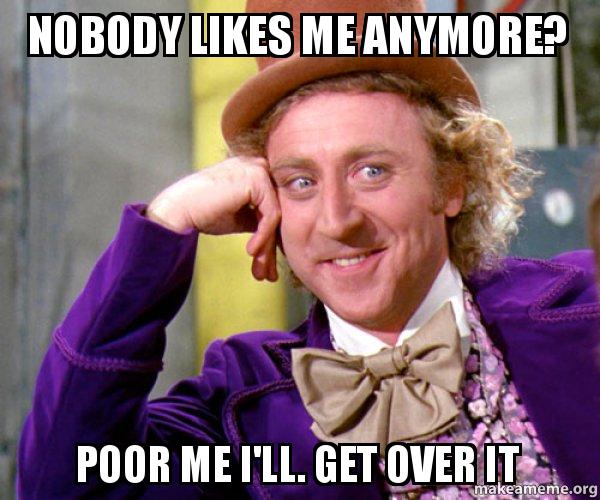
When you have been ghosted by someone the opportunity presents itself to return the message.  Take a picture of yourself smiling and in a happy posture and send it with the text, “Nobody likes me anymore – Poor me, I’ll get over it”

The critical point here is don’t let ghosting depress you, it really is not about you but rather the insensitive and rude behavior of the ghoster.


Is that what you really think?

Cultural expectations can drive how we communicate with each other.  Etiquette is the term for  describing expected/polite behaviour in your cultural grouping (i.e,. your social setting).

Traditional forms of written and verbal communications are constrained by this cultural code.  Meanings are be softened or expressed indirectly so as not to offend.

In this senario, when someone communicates more openly than polite expectations allow,   the phrase “ tell me what you really think” is sometimes used as a sarcastic or humerous reminder or caution.

This is a rejoinder to respect the boundaries of polite society relative to ongoing discourse.  The principle is, we should avoid offending others.

Enter Social Media

A very interesting consequence of the easily created and distributed forms of social media is this faceless and indirect format has less limitations (i.e., facebook, twitter, linkedin to name a few).

I am regularly reading comments where the social media authors describe the behaviour of others in no uncertain terms.  The really unsettling part is the viewers of this content often ascribe a validity to the authors assertions that, for me anyway, is  questionable.

While I might, on occassion, slag others or euphimistically “throw them under the bus” as a rule, I always do it to their face.  This gives them an opportunity to rebutt or correct my statements.

Using social media as a platform to vent, spout off self righteuosly  or self identify as a subject matter expert, is just self demeaning to the originator..

Difficult conversations, behavioural justifications or personal attacks, however justified you believe they are, have no place in open forums.