Gotta Serve Somebody

On Bob Dylan’s 1979 album Slow Train Coming is a interesting tune proclaiming our need as humans to serve somebody.  The album is full of religious overtones and serving God is the apparent focus of the song.  After all if you have to serve somebody why not God.

Personally though I wonder if first we should always serve ourselves.  It becomes a bit of a circular argument but perhaps serving ourselves requires us to serve others.

Find the Balloon

I read the other day about an interesting experiment and associated conclusion a post secondary professor conducted with his psychology class.

Each student was asked to blow up a balloon and then write their name on it.  The professor mixed all the balloons in a large open room and tasked the students to find the balloon with their name on it in 5 minutes.  No one was able to complete the task.

Then the professor told everyone to take a balloon and find the owner, within five minutes everyone had their balloon.

The professor concluded there are some things best achieved by relying on others but when you do depend on others good things will come back to you.

Serving the Purpose

Rather than serving somebody perhaps what is best served is your own purpose.  I interpret this as the deeper meaning of the Bob Dylan song as well.

Whether we leverage others, do it ourselves or through some combination of self and others achieving our purpose will bring us satisfaction and joy.

It is unlikely this can be attained without others, per the balloon example help others and let others help you.  The rewards will be worth it.
 

Managing Personal Risk

Going for a walk on a crisp cold day following a thaw can be tricky, one must be careful not to slip on the ice and possibly break something or worse.

This raises an interesting question, what is the best way to determine whether to eliminate your risk and not walk (although this could have other health impacts) or is a walk on an icy day an acceptable personal risk.

Benefit

The primary consideration of any undertaking should start with the simple value equation.  That is considering the benefit versus the cost.

In my very real example of going for a walk on an icy day the primary benefit is health based both physical and mental.  The magnitude of the benefit varies widely depending on each persons current state but each of us can subjectively assess the benefit to us.

The direct cost is zero, their may be some indirect costs which probably are mostly related to the results of injury or some related incident like a dog bite or catching some disease from another walker.  If these risks don’t occur the walk is likely free.

Likelihood and Impact

If the value equation suggests proceeding makes sense a more rigorous analysis of the risks is called for.   In particular if the risk event occurred how bad would it be and of course how likely is it to occur in the first place.

In the case of walking on an icy day falling and hurting yourself, (potentially quite significantly) is higher than on a warm dry day but can be mitigated by walking carefully.

However, perhaps your experience with walking on ice is limited and thus the risk is not that easily mitigated.  In that case perhaps foregoing the walk makes sense.

Assess and Proceed

The key to effective personal risk assessment is to actually do it.  This is a very effective way to limit negative impacts as you wend your way through life’s journey and it works.


Finding your Talent

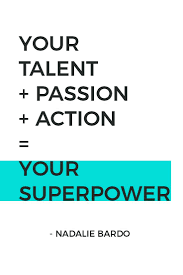
Each of us is born with a natural aptitude or skill.   Our challenge is to identify what it is and then leverage that ability to the maximum.   In many cases the latent talent is overlooked and sadly unused during a persons lifetime.

Talent is a special gift granted us through nature but which needs to be grown through nurture to reach it’s full potential.  Unfortunately there are many talent suppressors in our environment and it is rare for to see them blossom.

Perseverance

Human life can benefit from a wide range of skills and abilities ranging from mental to physical.  One person may demonstrate an aptitude for soccer while another excels in performing kerrculations (calculations).

These natural abilities are inherent within of genetic makeup but do require effort to become both apparent and to excel at them (i.e., training and practice).

When exercising our latent talent we must practice both patience and perseverance.  While the opportunity exists for us to demonstrate amazing capabilities by exercising our special talent it is not easy, natural but hard.

Motivation

One of the leading reasons our hidden talents often stay hidden is lack of motivation.  Just being able to excel does not equate to excellence.

We must both have the innate talent and the desire to practice and persevere in order to leverage and excel at our talent.  Surprisingly, given the presence of our gift is natural and unassuming we often do not seize upon it and the lost opportunity leads to waste.

Some of us our fortunate to encounter coaches and mentors to help  unleash our hidden talents while others do not even recognize what they are capable of and so it goes to waste.  It is your choice, do you really want to miss out on your chance?

Being Creative

Sometimes great success can be achieved through creation of ideas relating to or involving the imagination, usually original ideas.  However the key to successful creativity is our ability to leverage the unexpected in a positive way.

Creative solutions will usually create surprise leading others to astonishment or shock.  Whether astonished or shocked it is the uniqueness of the experience that opens the opportunity for personal gain.

Creating Demand

Things that are ordinary or usual will typically have average demand.  By associating excitement with your idea the probability more people will support it or want to acquire the outcome is higher.

Others are more likely to feel enthusiasm or be eager to adopt your concepts if they are out of the ordinary.  Mostly this stems from the fact they are more likely to take notice in the first place.

Being creative goes beyond developing things that are one of a kind or just original but must also have associated with it some drive to motivate demand.  Others must perceive the value of the creation.

Avoid Constraints

True creativity leverages constraints if any are present or simply originates from the void and explodes with presence that is unavoidable to notice.

In and of itself constraints are viewed as an opportunity although hard rules must be understood and carefully manipulated so as to avoid negative consequences.

That is to say pornography as a social and psychological commentary could be viewed as a creative endeavor and accepted as such but must be carefully engineered so it is not misinterpreted as just pure porn.

Being creative can bring you pleasure and make others view you positively, there is a strong case for doing so.

Newspeak

In his fictional novel titled “1984” which was actually published in 1949 author George Orwell introduced a new language called newspeak.

Orwell’s idea was to invent a language that focused on a political agenda.  The concept has fascinated me since I first read the book in the late 1960’s.

Perception is Power

In essence the idea of using language to control peoples perception of the message is a very powerful idea.  Basically contrary to the popular saying it does matter if you say pot’e’toe or pot’a’toe. Supposedly the same object they could be viewed as different.

I recently saw an example of this (not in the political arena but just day to day) that reminded me how easy perception can be manipulated and what a powerful tool it can be when used to manage others.  (I do wonder if it is ethical though.)

Cubicle or Workstation

Many of those who worked in offices pre-pandemic were housed in cubicle farms, a demeaning and unpleasant concept.   However, when you refer to these same office spaces as personal workstations a much brighter picture is perceived.

Through slight of hand we can change how groups of people feel and react implying by messing around with the words and referring to things  in ways that soften the message even though nothing is changed.

Euphemisms

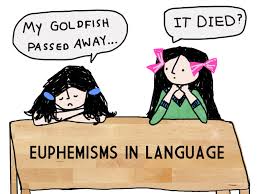
Learning about the concept of newspeak from George Orwell founded my skepticism and frankly distaste of cases where a mild or indirect word or expression was substituted for one considered to be too harsh .

For me, when a person dies, they are dead, not passed on or gone to a better place.  Facing reality is really important, hiding the truth by speaking indirectly is of little value to anyone.

Social Constraints

There are things within our societies that limit us from doing what we want.  These social norms are sometimes carved in stone, that is legally bindings with penalties for contravention.

The more challenging social norms are value based and sometimes our perceptions of right and wrong do not map to those of others, leading to bad feelings or other forms of conflict.

Social Distancing

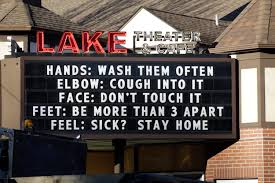
A recent example of this that springs to my mind is the newly minted concept of social distancing which has been invented to assist us in limiting the spread of covid 19.

Social distancing is the new norm, yet I personally perceive it to be loosely practiced by so many people of encounter these days, that is in the outdoor or work space context (Where I live indoor social events are against the law based on a declared health emergency.)

My wife and I go for a walk daily and are constantly annoyed by those that do not move to single file on a narrow path or move to the side so we can move by each other with a six foot distance.  What is not to get about social distancing, it should be the norm?

Let’s all Live Together People

While I am a big proponent of live being all about me, it is my life, we all need to realize (including me) live without others is not possible and getting along, that is accepting some behavior standards is not only the polite thing to do it is the right thing to do.

The consequences of not social distancing are not readily apparent but it not just about breaking behavioural norms it can lead to some very negative results, even death.  So fellow walkers, be courteous, be aware, take care.

Sincerity

Good customer service requires more than just saying the appropriate phrases and satisfying the customers requests. The quality of being free from pretense, deceit, or hypocrisy must both be true and perceived as such.

I had an interesting experience today well making some adjustments to my policy with a large ensurer.  Although I was assured I was a valued customer and the agents goal was to treat me as such, I perceived this not to be the case.

Make it Real

Today,  I quickly felt the agents script to be phony, geared not at truly satisfying me but more as a screen to prove he was doing his job as prescribed (in case the call was monitored) .

I was just one more call to be walked through smoothly using stock phrases and answers.  On the surface the interaction was polite but really felt unnatural.

Truely satisfactory service requires a high degree of empathy between the responder and requestor.  Key to a positive service experience is understand how you feel and guaging responses on that basis.

Make a Connection

It might  be a bit surprising to say, even if the  objective of your request is met, without experiencing the human connection, (i.e., the agent or advisor really gets you) your overall  satisfaction level will not be great.

When dealing with others remember the best results will always come when you have chemistry with each other (to coin a common acting term.)

Even when encountering a stranger, as a service interaction so often is, focus first on knowing your customer and second on results.  The results actually will flow naturally with this approach.