
Tag Archives: trust

Clearing your Conscience

Taking action to salve your conscience may benefit others or it could just be a selfish act.  Most likely though it is a little bit of both.   Doing it solely for vindictive purposes may weigh on your conscience and create a vicious circle.
Each of us is guided by our inner feeling or inner voice relative to the rightness or wrongness of our behavior.  Sometimes we act on this directly, sometimes we ignore and let it fester for a while but ultimately it always affects us in some way.

Focus on You

Our conscience is with us until we die.  When we override the voice in our head or values we hold dear in our hearts the action we chose remains embedded in our brain and we need to live with it.

From time to time this can mean we try to heal our feelings by taking actions to resolve those things that are eating at us from the inside and just won’t go away.

In some cases, these things we finally chose to resolve will not only help us but can spill over as beneficial actions for others.  For example, if you chose to out a bully through public identification,  this could have drawbacks on you (the bully might not like it).

However, the good news is that it could put a stop to the bullying behavior, that is saving others from past or future pain.    For you, doing the honorable thing should resolve guilt feelings a salve your conscience, although there may be some short term pain.
The key to leadership success

The responses to the current covid – 19 pandemic provide an opportunity to observe and rate leadership.  The crises present a chance for leaders of all types (whether political or otherwise) to exercise their power (earned and granted) to good or bad effect.

As observers, we can gauge the effectiveness of the leader’s efforts and use this information to build on our existing personal inventory of effective leadership strategies.

It’s Not What You Do

Not surprisingly for me, the most effective leaders are leveraging the power of the populous.  It is not what the leaders do individually, rather what things they are able to motivate everyone to do collectively.

A key response to stopping the spread of the illness is to keep those who are disease-free away from carriers.   Of course, this is a herculean task when carriers are not easily identified nor is the transmission vector well defined.

This task requires consistent behavior among the entire populous (even the leaders) and the best leaders are the ones able to do this.  Again it’s not what they do but what they are able to get everyone to do.

Faith/ Trust

The second key observation I have made relative to those leaders with the greatest success is they are believed and trusted (i.e., the covid-19 spread is flat versus an exponential curve).

The actions being asked of everyone are both disruptive and full of unknowns.  Will they resolve the problem?  What are the impacts of these actions and how will we ever overcome them.

Leadership is not only about facilitating actions to achieve successful results but engendering faith that those results will be achieved.


Your Cut Man

More than 30 years ago a work colleague shared an analogy with me about expectations we should have of our leaders.  It was as accurate then as it is now.

The basic theme is a core attribute effective leaders must always demonstrate fully completely.  The analogy defines a required practice for leaders to gain and retain power whether granted or earned.

Core Belief

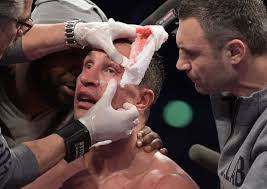
To achieve personal high performance requires support you can trust.  Take the role of “cut-man” in boxing.  During the match the cut man is always in the boxer’s corner, wiping the blood from cuts he receives during the match, providing motivational support.

However, the fight is proceeding the cut-mans role is to enable the boxer to fight the best fight, win or lose, whatever blows or attacks are made the cut-man is in the boxer’s corner, on his side.

The boxer is able to believe to his very core that he can trust in the support of his cut-man.  The knowledge is critical to him being able to continue particularly under what might become very adverse heavy slogging.

The analogy typically resonates with each of us so that in the face of adversity we can fight the best fight because we are confident someone has our back.

Without Cut-Man

Unfortunately, sometimes the leader you are associated with is not a good cut-man.  Although you will probably strive to overcome this deficiency it is probably likely that you won’t be able to achieve your maximum potential.

We all need somebody.  Perhaps it is time for you to cut and run, maybe greener pastures with a solid trustworthy supportive leader are worth seeking.

Say what you do and do what you say

Being perceived as having a high level of integrity and thus building trust is not difficult.  Believing that you need to commit to actions and then complete those actions is the simple personal value that covers this.

Accepting responsibility for something requires communicating what you plan to do.  This does not mean committing to the outcome (which sometimes is out of your control) but rather committing to an activity, something fully in your control.

Passive/ Aggressive

Being agreeable or apparently accepting of a change, task or directive with no intention of undertaking the action, or even undermining it, is classic passive-aggressive behavior.

This approach could be described as “say what you do but don’t do what you say”.  This method won’t inspire trust but then it is not intended to.

To sabotage an unwanted change or objective is the goal and this technique is easier than being candid or blunt about how you feel.  It is certainly a way to avoid confrontation but does include significant reputational risk.

Not Locked In

A common concern I hear about the straightforward approach to “a promise is a promise”  it does not allow flexibility if things change and you are unable to fulfill the promise.

I beg to disagree.  The promise lays a foundation for expectation.  Ongoing discussion and communication resulting from changing circumstances are a reasonable and widely accepted way to keep expectations realistic.

Most people recognize expectations around an initial commitment can change as a result of circumstance.

Wording to this effect is often embedded in contracts and agreements where opt out of risk event clauses are inserted to ensure delivery on a promise does not become an impossible task.

Politics

Politics is the process of making decisions that will apply to a group.  The associated human behaviours can range from those exhibiting high honesty and integrity to those that do not (to say the least)

Niccolo Machivelli was a renowned 14th century author (The Prince) and political hack.  His most famous novel depicts the practice of politics quite realistically.

For the Greater Good

In Machiavelli’s view, as expressed in his epic novel The Prince, the practice of politics is by its very nature, focused on the decsion makers needs versus those the decisions are in aid of.

Machiavelli certainly had extensive experience working with the governing parties of fourteenth century Italy and much of this knowedge is shared in the book, probably quite accurately.

Interestingly though, these political practices are most likely not shaped in malice but rather practicality.  One of my favourite Machiaveli quotes is “It is a double pleasure to deceive the deceiver”

Nicely said.  Deceit, intrigue, gossip, manipulation are all prevelant and natural human behaviours.  The opposite behaviours like integrity, honesty and openness are the less natural ones requiring concious effort to practice.

Not Bad, Neccessary

People often talk about political or so called Machiavelian practices as less honourable and to be distained.  The unfortunate reality is these are both natural and effective behaviours.

I do not counsel their use indiscriminately but rather realistically as needed.  Forsaking them can impact your ability to achieve your goals and perhaps even your desires.

Believe

Ninteenth century German author and statesman Johann Goethe said “Man is made by his belief.  As he believes, so he is “.   That is, the things you have trust, faith and confidence in define who you are.

This implies people without beliefs are undefined.  Further if you know what someone believes you can predict how they will behave.  You can anticipate their responses.

To a large degree my own interactions with others prove this to be true.  The caveat is assuming you can accurately assess others beliefs.

Purposeful misdirection is a very real technique people can employ to gain advantage.  For example, one  might protray a strong belief in justice while in practice behaving soley in favour of their own personal gain, regardless of fairness.

Followers

Often followers fall into the group of those with undefined beliefs.  In these cases what appear to be their own beliefs are in fact those of another they are copying.

It is often hard to distinguish followers from true believers but this group is a favorite of unscrupulous leaders.  The follower can be manipulated into professing the leaders beliefs, thus supporting a cause that defines not themselves, but rather the leader.

Reason to Believe

If nothing else motivates you, the critical reason to believe (in something) and acknowledge that belief internally is because your beliefs will define you.   To ensure personal accountability and ownership of your life you must believe.