
Tag Archives: balance

Not Me!

I fondly remember a very collaborative team I was part of more than a decade ago.  Our boss used to gather us together regularly and discuss upcoming activities and opportunities.
His goal was to assign work in a very democratic way.  The team would somehow collectively come up with the best assignments.  This approach did not elicit a lot of volunteers and often ended up with our boss just making the assignments.

Will the Spaghetti Stick?

Early on as I learned to cook I was taught to test when spaghetti was ready by throwing it against the wall.  It stuck, it was ready (spaghetti was a favorite dish of mine because it was so easy to prepare).

Tossing the ball (and hoping it will stick) might lead to successful outcomes, but passing the ball in a planned and scheduled way is far more likely to work well.
My aforementioned boss often tossed the ball into our court and regularly found it just bounced back.  His choice to work as a thoroughly integrated team through full-on involvement of everyone was well-intentioned if not well executed.

Rigidity Sucks

Setting the approach in stone and firing the ball at the troops demanding specific action or just tossing the ball and praying are two useful analogies to illustrate the best approach might well be somewhere in the middle.

Be prepared.  Do some planning advance but include both flexibility and real (not lip service) opportunity for feedback before casting the approach in stone.

Group determinations are the hardest to achieve but usually, they are the most satisfying.
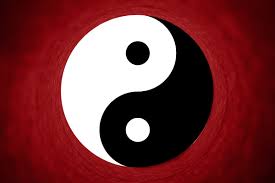
Finding the right balance

I had an interesting discussion today about balancing competing interests.  This is a topic I have touched on in previous posts but it is always interesting with many points to consider. Today I build on past thoughts I have shared on this subject.

The English language contains a large number of interesting sayings that in an of themselves are contradictory.  In fact, they really just highlight the importance of finding the optimal balance .

For Example

  • “You have to spend money to make money” In fact, considered literally spending is the opposite of making so doing one to increase the other seems illogical.
  • “We need to increase revenue while decreasing costs”  This seems the opposite of spending to make money, but how can you increase revenue without doing something more (which typically increases costs)
  • “Take er easy and just get it done”  Slowing down and relaxing does not intuitively seem the best way to accomplish something.

Yin versus Yang

Ancient Chinese philosophy includes the concept of Ying and Yang. In brief, the concept defines yin and yang as cosmic dualities by which the universe is governed.  They represent sets of two opposing and complementing principles or cosmic energies that can be observed in nature.

Finding the optimal balance between these competing energies, which is building on the complementary parts and reducing the opposing parts, is key to your happiness and peace.

The concept of Yin and Yang is simply a real recognition that in all things the extreme approach is unlikely if ever the best way to proceed.

Balance in everything will lead to health, wealth and happiness.

USMCA

For those of you not tracking the long and boring NAFTA re-negotiations, the United States, Mexico and Canada decided to do away with free trade.

They did arrive at a trade agreement which was renamed the U.S. , Mexico, Canada Agreement (USMCA) at the request (or perhaps insistance) of the U.S.

The removal of “free trade “ and from the title was quite appropriate.  Although still about trade it is focused on rules and restrictions, not free exchange of goods.

All about me

From the start of negotiations the U.S., through it’s stalwart spokeperson Donald Trump, declared the objective was to get the U.S. what they wanted.

The win-win negotiation principal arising from research at the Harvard business school, was disregarded.  

Historic results have shown this approach is typically not sustainable and while it does provide some immediate satisfaction ultimately things will turn out badly.

Already, cracks

It is probably precipitous to say the current stock market sell off is due to the U.S. trade stance, however anticipation of the impact on the world wide economy is surely a factor.

The problem with the my way or highway approach is it only works when backed by power.  The bully’s approach only works as long as the opponents give in. 

With any luck the coming U.S. mid-term elections will change the political power structure and sanity will return.  At least one can hope.


Freedom

Freedom is the power or right to act, speak, or think as one wants without hindrance or restraint.  Freedom is a choice, not a right.  If you choose not to be constrained, then you will not be. 

Some argue the ability to make a choice can be overridden.  When the exercise of the power needed to be free meets a stronger power, your freedom can be diminished.  That is the strength overcomes resolve. 

Take It

If you choose to behave without hindrance or restraint there should be no need to request or even demand the right to do so, rather it is a case of exercising your prerogative to act as you see fit.

Realistically, there are obstacles to this approach and caveats that should be considered.   Social and cultural considerations are valid constraints on your freedom. 

Choosing freedom does not mean disregarding your environment.  Consideration of others is a cornerstone of appropriate behaviour, albeit a subjective assessment to some degree. 

It is reasonable to have an expectation the behaving freely is a choice you can make but to take this approach without recognizing the impacts on others is not recommended.  

Overcoming Opposition

As alluded to earlier, others may exercise their power and this can appear to effectively limit your options to act freely.  For example, armed aggressors may threaten to harm you for not following their dictates. 

You may choose to fight this aggressively or passively, whatever you decide it is your choice, not theirs.   The point, you do not need to accept the limits on your freedom but you can choose to do so.

In some cases the consequences drive your choice to adhere or not, but it is still your choice to accept rather than overcome the constraints.

Boxing the Information

It is a very natural human behaviour to classify, categorize and assume knowledge based on structure and context.  That is to say we tend to “box” stuff.

Bias and stereotyping are common sub-practices that incorporate this “boxing” behaviour.  For example, many people consider the female sex physically weak, dark skinned people are more likely to be criminals.  Asians are smart and really value post secondary education for their children.

These bias or stereotypes are simply a way of categorizing information quickly.  They are not necessarily true and certainly they represent an extreme.

In reality, extreme absolutes are rare.  Most things balance somewhere in the middle.

It does not require much effort to behave based on preconceived notions.  Unfortunately reasoned and balanced analysis does require conscious effort (it’s hard) .  As a result, most of us follow the easy route and act on simplistic assumptions, they seem logical but are they?

Take time to Understand

Consider a situation where you are going for a job interview.  You dress to impress and prepare sharp and positive things to say about yourself.

You believe a structured approach to the interview is best.  You don’t want to be perceived as conceited or arrogant.  In essence you are going to behave according to the “box” you have put the hiring manager into.  You are going to act the way you think most hiring managers expect.

Why do we box our behaviour this way.  Why assume these contextual aspects.  Why not start by being yourself, after-all if the employer does not want you for whom you are, then everyone is being disserviced.   You are fooling the employer and yourself.

Standing out as unique, may result in a very positive outcome.

Be Different

It is harder and takes a conscious effort to pause and think the best way to react in a situation, as opposed to the perceived “box”.    The results from acting outside the box, the balanced approach, can often surprise, in a positive way.

This is not to imply being different, thinking and acting outside the box is a guaranteed way to success or that it will always work but if you don’t try it occasionally you will never know the benefits.

Control or Lead

Control is the use of power to direct other peoples behaviour while leadership is taking the initiative to influence or change behaviour.  Often controling and leading practices can appear similar.

Whether practicing control or leadership, the ultimate result is the same, causing a change.  The difference of these behaviours is how you facilitate the arrival at the end result.

Most perceive direct and forceful controlling behaviours negatively.  It’s assumed there are selfish motivations behind these actions, and it makes it harder to buy in.

Leadership practices , to some extent put wrappers on the controlling behaviours, making them more appealing and easier to accept.

A Fine Line

The two labels, leader and dictator are often easy to distinguish at an emotional level, unfortunately this relization comes when it is too late to effect change.

While admittedly an extreme example, Adolph Hitler was considered a great and inspired leader by millions of people until it was too late to reverse the damage caused by his dictorial practices.

A Control Void

Whether created through leadership or dictorial behaviours an absense of control can be more harmful than tight and unpleasant contols.  Germany under the Weimar Republic is an example of this.

The economy of the country was shot, moral degradation was everywhere and a sense of hopelessness pervaded the nation.  Life was not good.

The return of strong control, (aka Hitler’s government) resolved a lot of these problems, for a tome anyway.

Practicing control through consultative leadership using earned pwoer is certainly perfered, However a does of the dictorial extreme is not always out of place.  (Hence the value of Donald Trump).


Judging

When you form an opinion or reach a conclusion about a set of data you are judging.  The process may include both active or passive fact gathering as well as consultation with others.

Danger, Will Robinson, Danger

In the late 1960’s, “Lost in Space” was  a popular TV series modeled after the childrens novel “A Swiss Family Robinson” . The TV show was about a family lost in space (in the book they were lost at sea).

The TV family had a robot cleverly called Robbie (Robbie the robot).  The young adolescent member of the family (Will Robinson) often made decisions based on questionable judgements at best.

The flawed judgements were regularly identified by Robbie (the young masters protector)  who would ejaculate the catch phrase “Danger, Will Robinson, Danger”

This became a very popular catch phrase of the time, as sound bites from popular television shows often do.   Of course the audience recognized this as a clue Will was about to suffer the consequences of a bad judgement.

Judging

The act of judging represents a mixing of the objective (facts) and the subjective (assumptions and conclusions).  While we cannot live without making judgements, caution is advised.

Like Will, the  fictional intrepid space traveller, we all run the risk of adverse consequences resulting from our behavioural decisions, which are based on our judgements.

Unlike Will we do not have Robbie the robot around to warn us.  My advise is to think through the potential impacts associated with your judgements.

Consider the worst potential result and be ready to accept it before acting.  If it is unacceptable, reconsider the judgement and your approach.  This could save you some grief.


Making Mistakes

Life is full of mistakes.  When you make a decision and/or take an action that turns out to be wrong, it is a mistake.  Everyones makes mistakes.

Life without mistakes is highly improbable, but also would be awfully boring.  Making mistakes is not a goal but not making them shouldn’t be an objective either.

Embracing Mistakes

Mistakes can have negative consequences.  They can also uncover paths to success or provide valuable experiences that can be used to avoid even greater mistakes.

It can be exhilarating to attempt to scale the mountain, especially when you succeed.  Fear of making a mistake and perhaps not even trying could be as costly as the mistake itself.

Balance

A common theme in so many of my posts is finding the optimal balances between opposites.  In this case, the balance is effectively between caution (to mitigate the risk of a mistake) and boldness( to go where no man has gone before)

Too much caution and places where no one has ever been will remain unexplored.  On the other hand too little caution when bursting into the unknown may have dire consquences, even death.

Recovering from Mistakes

The most important part of any discussion of mistakes is how to behave when they occur.  First and foremost, always acknowledge the mistake and acquiesce to your complicity in it.

This is critical because a defensive posture envaribly magnifies the mistakes.  With acceptance, it is much easier to move to the next step – resolution.

Following acceptance, analyze the impacts and consequences of the mistake  and plan a course of behaviour that results in maximum mitigation.

Eustress – gotta have it (as opposed to distress)

Janos Sayle, working at McGill University in Montreal Canada discovered and documented two distinct kinds of stress.  A simplified version of  these types defines them as a stress reaction resulting from good news (eustress) or resulting from bad news (distress).

Living without eustress

A colleague commented today how it nice it would be to have no stress.  Relaxation, now that is the goal.  Personally I am not totally certain how beneficial this perspective is.

There have been numerous studies which appear to definitely demonstrate that retiree’s who do not experience eustress tend to die earlier than those that do.

Good stress is motivating.  Simply it give you a reason to live and so supports your desire to do so.  Bad stress can result in undesirable physical impacts, lack of good stress also does.

Wandering Aimlessly

Intuitively wandering aimlessly with no pressures, demands, purpose or constraints,( for example being a beachcomber traveling the world searching for the perfect climate, pace, culture)  might seem like an ideal situation.

In reality this is really not the case, even the beachcomber has some stressful activities – the search itself for the beach for example is not fully without stress.

Back to Balance

Of course the level of eustress must be managed and balanced with low stress situations (whether good or bad stress).  That being said though, there is a strong case for the benefit of experiencing some level of eustress .

Avoid it altogether at your own peril.


The art of balance

How can we we judge when something is enough or not enough.  The balance between too much and too little, to coin a phrase from the well known fairy tale about three bears, is just right.

Who Cares

Achieving that sense of contentment that comes with everything being just right is different for everyone.  It is categorically an individual measure.

When things are just right in your universe (i.e., all is in balance) other people recognize it.  Interactions with you are consistently positive and that aura of  “je nes se quois” (French literally meaning “I don’t know what”) sets you apart.

I would suggest this is a desirable state to both achieve and sustain.  For me, the key question is “How is it done?”

Seeking what you know, knowing what you seek

Not surprisingly reaching a state of perfect balance between too much and too little starts with understanding.

When considering what is an ideal point of balance for you, knowledge  of impacts and effects of a thing is needed.  For example eating chocolate constantly could impact your health negatively.  Probably be expensive in the long run as well.  Understanding  the enjoyment of eating chocolate against it’s less positive impacts represent the data you use to define your optimal balance for this activity (eating chocolate).

Obviously understanding and striking the right place for all your actions is extremely more complex than just the consuming of chocolate.  Thinking about the right balance for you in all things within your personal universe is ultimately the goal (e.g., introversion time, extroversion time, travel, humor, work, family activities, relaxation and so on).

Give it a try, the positive results from having a more conscious understanding of the balance of things in your life might surprise you .