
Tag Archives: readiness

Anticipation

Predicting what is probable relative to others’ expectations is the first step in being proactive versus reactive.  The anticipation and provision of other people’s needs and desires before they ask is a great way to impress them.

The primary purpose of this kind of pro-active behaviour does not necessarily need to be making others happy (although that is good) but rather can be simply to position yourself for gains by gathering their support.

Help Others/ Help Yourself

Personal enjoyment and self satisfaction can often go hand in hand.  For example I often find giving a gift and seeing others joy is often better than receiving one (and based on my observations I am not alone in this)

The act of gift giving is a win-win situation (everybody is happy.). Similarly providing help or acting before being asked has value both for the anticipator as well as the recipient.

Those whose needs you anticipate benefit directly from the outcome,i.e., they got what they wanted or needed with little effort on their part. You both feel a good and create a positive impression.

Self Directed

Will power is a highly valued personal trait for leaders.  This can actually apply to everyone as we use our initiative to get things done (albeit they should be perceived by the majority as worthwhile accomplishments)

By anticipating others needs and using our own believes and self determination as foundations to help ensure these are achieved, often even before they are clearly elucidated,  we demonstrate our leadership capabilities.

Don’t wait, anticipate.
Counting on the unknown

Nothing is known with certainty except for the existence of the unknown.   We can speculate, anticipate, predict and plan based on the things we know, but not the things we don’t.

Could things change?  Will the unexpected rear its ugly head?   Of course, these questions cannot be  answered with certainty.  We can determine the best or most likely scenario but always there will be an element of uncertainty.

Be Prepared

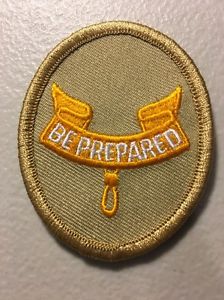
The boy scouts motto is “be prepared”.  Underlying this sentiment is the knowledge that no matter how rigorous your analysis and detailed planning the unexpected can occur.

In fact, the things we do not know might not impact our plans or goals.  Or, yikes, they might.  Being prepared is all about managing the risk of unknown factors having an impact on something.

This could be a good impact or a bad impact but either way, being ready for things we did not know about and consider helps ensure they do not derail the plan.

Mitigating your Risk

Anticipating impacts that might occur, that is guessing about the results of unknown factors to the best of your ability is a good way to be prepared to respond effectively, without panic.

The things you can do to resolve unpleasant surprises, mitigating actions, can be determined and prepared in advance.  Given they might never be needed spending a lot and time and effort is not the idea.

Most importantly is just having alternate ideas/concepts/tools etc. ready.  Awareness of the unknown and readiness to combat it is the key to being a good scout.


The big picture

The immediate present is often the focus of our activities.   Being present in the moment obviously has value.  The downside to this tactical approach is that does not prepare us for the future.

Dealing with the “now” cannot be avoided.  Planning is a way to make the results of current actions better.  It also makes it easier to act because the approach is already thought out.

Be Prepared

Robert Baden-Powell, founder of the boy scouts clarified the organizations’ motto (be prepared) as applying to both mind and body.  That is to think out and be physically ready beforehand to take on any issue or circumstance that might occur.

Preparation (advance planning) is key is to do the right thing at the right moment.  Acting and then reacting or reworking depending on the results can be agile but might not be as efficient or effective as taking the big picture into account and being prepared in advance.

Iterative Planning

Planning in advance is unlikely to take into account every possible circumstance.  Developing a view of the big picture must take in account its fluidity.  Things change with time.

Planning should be an iterative process with enough built-in flexibility.  It is important to both be prepared but also have the ability to react to circumstance.

Being ready is simply a tool to assist in acting in the best way possible without surprise, fear or uncertainty.   Being prepared, that is having a plan and a vision of the best strategies, should not be treated as a straightjacket.