All posts by steve@kerrzone.com

Marketing Yourself

When you promote something for gain  (personal or otherwise) your action can be described as marketing.  The thing you are marketing can vary from a  common product or service to actually promoting your own specific skills and capabilities.

Marketing yourself can be classified by some as arrogant, conceited, pompous, overbearing and so on.  The list of synonyms related to arrogance is surprisingly large.  Humans really like to quantify that type of behavior and on the whole, it is not considered complimentary.

Marketing yourself is probably exclusively for your personal gain and this is why it could be perceived as selfish.  Our culture pretends to value selflessness although the real priority for most people is “what’s in it for me – wiifm”

Balance

Promoting yourself successfully requires not only targeted messages which convey the value and rationale your abilities provide, i.e., the reason to engage with you – but also most importantly you must not be perceived as arrogant, this would only be detrimental.

Marketing your personal brand requires not only creating an understanding of how exceptional you are but doing so in a way that displays great humility (a trait is considered of value though most don’t even know why it is of value.)

It’s not the message, it’s how it is conveyed

The balance of arrogance and humility is surprisingly easy to achieve.  The key here is not the content but rather the way in which the content is communicated.  Self-depreciating humor allows the message to be made with clarity but in a way, the recipient can accept without the danger of perceived conceit.

Along the same lines delivering the message with care being aware of the recipients reaction and stepping back if and when your target is losing receptivity.

Bottom line, don’t hesitate to market yourself but do so intelligently with care.

There is a way

If the path to your goal is blocked, seek other ways.  Philosophically, I sometimes muse on the fact whether anything is possible.  The answer always seems to be in the interpretation.

For example, while I cannot walk on the water of a lake if I build a hidden underwater catwalk I could look like I was walking on water, although certainly not in the biblical sense.

Effort and Duration

With unlimited effort and duration possibly any goal is attainable however realistically could I avoid death regardless of how much time and effort was involved?

Taxes maybe.

To some extent the limitation to overcoming blockages lie in your mind.  For  example the train in  “The Little Engine that Could” (a popular childrens story) accomplished the impossible task only when it thought it could.

Make the Attempt

For me the key is not having an absolute believe in success, maybe I cannot do everything; However,  making the attempt only requires attitude and that is something completely in my control.

This is not to say your attitude should be without constraint, obviously attempting anything could have some negative concequences.

The point is more; don’t not try to find a way to overcome a blockage for fear of failure, rather take this approach when the risk of concequence is too great.

So can I do anything?  The jury is out,  but I am pretty sure I can make the attempt if motivated to do so.

What is time?

Time is a concept created by humankind and translated linguistically.  Taken from a common dictionary definition time is defined as “the indefinite continued progress of existence and events in the past, present, and future regarded as a whole.”

In fact, time is a construct created by humankind as a tool for control of behavior.

Without the concept, does time exist?

The Amondawa is an Amazonian tribe first exposed to outside influences in 1986.  Until then the tribe was, in essence, a force unto itself without any external influences.

Studies of the tribe determined the language included no concept of time.  Ideas like “working through the night” for example could not be expressed.

The association of time with events and process cannot be communicated using the native language of Amondawa.

Chaos!

Many would cringe at the concept of a world without time. How can we schedule our activities or work?  On the surface, the idea seems very anarchical.

On the other hand, is not time an arbitrary restriction?   In a sense wouldn’t the lack of measure (What time is it?, What should I do now?) provide a sense of freedom and lack of worry and stress that ultimately would be massively liberating?

Is Time Beneficial?

The Amondawa tribe lived (until the discovery by the civilized world) in pleasurable bliss.  The lack of time constraints and associated worry and stress caused no negative problems.

In our cultures, the measure of and adherence to time is a basic foundational behavior.  We are schooled in time from the day we are born, yet to what purpose?


Translating the Vision

I was listening to an interview with Tom Petty (deceased classic rocker from the Heartbreakers and the Traveling Willburys) when something very insightful caught my attention.

In repsonse to a question about song writing Tom noted he always had two versions, the one he visualized in his head and the written notes and lyrics on paper.

And to quote him “they were very different”.

Delivering what you Feel

Typically visions have an emtional foundation .  This applies whether you are visualizing a song, story, innovative product or service and so on.  The challenge is to use tactical methods to recreate the feeling you see in your vision.

Exceptional results are more likely achieved when the constraints of tactical delivery don’t restrict the emotional impact.  Translating what you see in your head to reality is not a trivial task but successfully doing so can be the difference between good, great and exceptional.

Visions

Tactical imperitives, time and cost for example, are real considerations and if you are to achieve your vision these constraints need to be both recognized and overcome.

However, to achieve your goal the key is not to compromise your vison but rather find a path that lets you deliver what you feel.   The intangible aspects of your vision are often the key differentiators and should not be overlooked.

Answers

The response to a questions is the answer.  By simple logic, if you seek answers all you need to do is ask questions.  Typically you would ask about things you don’t know.

Of course, therein lies the dilema.  If you don’t have knowledge about something, ( i.e., it is an unknown) how can you know what to ask.  Without the question, there is no answer and the unknown remains a mystery.

Question Types

Closed questions will get yes or no responses or limited information.      This type of question can be useful when you have a good sense of what it is you don’t know.

For example if you go to a store looking for hammers, asking “do you carry hammers?” or “where are the hammers located?” would be a good use of close ended questions.

On the other hand if you had a piece of work to do but were not sure  how to do it you are more interested in an informational focused answer.  The response can fill in unknown gaps for you, without limiting the scope.

This type of question is called open ended and is most useful when you are trying to find out some information  but you are not really sure what.

The key to getting answers is not really about just asking the question, but rather asking the right question in the right way.  How you phrase the question is very much a determining factor relative to kind of response you will receive.

Appetite for Risk

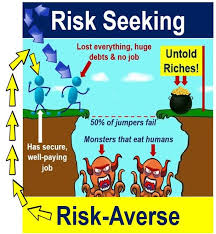
There are many behavioral attributes that have been identified as key leadership skills.  Often overlooked is the willingness to accept risks, albeit, not recklessly.

Sometimes the situation is bereft of information neededto assist in making an informed decision.  In these cases the critical balance leaders need to be able to navigate is between expedience and caution.

Intrinsic Risk

All activities have some risk associated with them.  That is some level of exposure to danger, harm or loss.  The level of exposure can vary widely but it is always present, there is no zero risk when it comes to deciding how to proceed.

For example, If you decide to cross a low  traffic road in clear weather with visibility for miles in both directions, there is still a risk (however small)  a car will appear and hit you resulting in your death.

The motivating factors, why is the decision before you in the first place should be the main drivers but the risk averse will often focus on the potential negatives resulting in delay and potentially causing the decision to never be made.

Balance on the Fly

The best leaders are able to quickly determine if delay is appropriate for reasons of insufficient data or lack of urgency or major risk or if accepting the risk balanced against the potential benefits is the best approach.

This ability to weigh the options in short order contributes to a leaders reputation.  Their track record in this regard builds both respect and confidence among those they interface with.


Empowerment

Authority surrounds us.  Our culture, and therefore our basic behaviours, are shaped by authority structures.   From political leaders to the police our lives are governed by external authority.

Basic authority is defined as the the power or right to give orders, make decisions, and enforce obedience.  Without this structure, whether from the head of household to leader in the workplace our lives would be chaotic.

It is a natural human trait to recognize and respect authority.  This is  basically a genetically inbred herd mentality present in all humans although influenced by nuture factors and therefore practiced to varying degrees, based on each individuals personal behaviour.

On the whole though, the majority of people need authority to function and respect and accept it’s presence.  Few (criminals and the like) adhere to authority less stringently (but still need some).

Empowering Others

Leaders and other obvious authority figures function most effectively when they are able to balance their power with those they interact with.  That is, power sharing or empowerment of others.

This practice does not diminish a persons authority but rather enhances it if the proper balance is achieved.   The major challenge is to determine where that balance lies so authority is maintained but results are enhanced.

A dictoral practice of authority is typically easier to employ (balance not needed).  Additionally this usually leads to immediate results although they might not be of the highest quality or sustainable.

For higher quality sustainable results over the longer term employing some level of empowerment is advisable.

I need a champion

In my experience,  in order to succeed with a major change, a senior level champion with a high degree of granted power is a must.

By  major change I mean something that includes some aspect of cultural modification.  For example a re-organization or systemic process revamping.

Why a champion

Change always includes some level of resistance.  Depending on the nature of the change, the ferocity of the resistance will vary but it is always present to some degree.

Without a strong supporter, with a granted power base, it is unlikely, perhaps inevitable for the change to fail.  The resisters leverage the lack

A strong champion does not guarantee success but in my experience lack of a strong champion (change sponsor) guarantees failure.  Without some senior level of granted or organizational power, which those affected by the change recognize as such, the change is doomed.

Change Facilitator/Manager

If you embark on the process of leading, managing or facilitating a change the first and most important step is to confirm the champions committment.

If you are not sure the driving force, the sponsor/champion is going to step up and fly the flag with you when the going gets rough, maybe it’s best to avoid the assignment.

Do you really need the frustration that accompanies weak support? Few will appreciate or thank you for your efforts and if the sponsor/ champion is not fully invested in making the change successful they won’t thank you either.

Why me?

Confidence is a critical skill for those that aspire to be exceptional leaders.  That is not to say with a high level of confidence you will be a great leader, other behavioural skills are needed.

However, the ability to practice confidence with an optimal balance to other leadership attributes is a foundational behaviour without which you can never achieve greatness.

Believe

Ask not “why me”, rather accept, analyze and trust your ability to rely on yourself to succeed.  Each of us have the capability to achieve our goals.

For the individual,  a key first step to positive results is full confidence in yourself.  If you don’t believe in yourself or your abilities others will sense it.

Without confidence your leadership capabilities (no matter how well developed) cannot be effectively utilized as others sense the indecision and question your leadership.

Arrogance

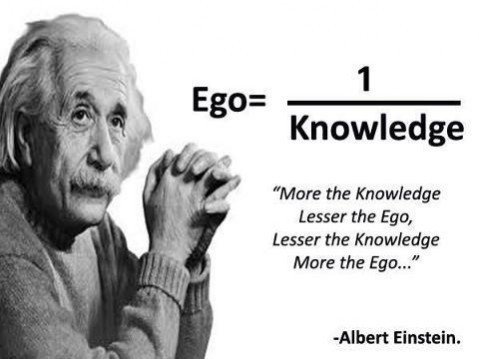
To be effective confidence must not be interpreted by others as conceit, pride. self importance, egotism, etc.  While demonstrating  confidence is crtical skill for leaders it must be done in a balanced way.

The use of self awareness skills to ensure the behaviour is not negatively interpreted is needed otherwise the effect can be more detrimental and thus lead to negative results.

Why Not Me?

Ultimately, in any set of circumstances the  best mental approach to start with is “why not me” as opposed to why me.  This simple shift in thinking moves you from insecurity to confidence and can make a huge difference in defining your leadership abilities.


Individual or Team Player

Teams need high performing individuals to achieve top results.  High performing individuals need strong teams to attain the best results.  Individuals can be successful on their own of course but, intuitively, support of a group of people enhances the opportunity  attain the greatest achievement.

Most organizations seek “team players” when they are adding additional resources.  This buzz word is used to describe a required skill.  What exactly does it mean?

Teams are?

To dissect the skill described by the term  “team player” the first question is what is a team?  Simply put, teams are groups that have come together to achieve a common goal.

Player describes a member of the team whom actively supports the achievement of the goal. This is different from a person participating within the group, but in pursuit of their own goals.

Teams largely composed of members that focus on their own individual goals rarely achieve their full potential.  The individuals might exceed their goals but probably at the expense of the players.

For Example

The 1984 Edmonton Oilers hockey team was voted by NHL fans as the greatest hockey team in the past 100 years.  The team had a large number of highly skilled performers, proven by their lifetime carreers.

They were rated as the greatest team ever because of everyones ability to focus on team versus personal success.  This fact is highlighted over and over by the stories, videos and testimonials about the team.

I believe having a group of team players feels good for the participants and enables superior performance.  Unfortunately, although often given lots of lip service, true groups made up of real team players are rare.