All posts by steve@kerrzone.com

Seeking Direction?

Life encompasses growth, ongoing activity, and continual change preceding death.  From birth to death each of us is on a conceptual journey where our experiences lead to new understandings. 

Our journey can be passive (go with the flow), active (control the outcomes) or a combination of approaches.

 Whether  you choose to control or influence your outcomes, or let someone else do it,  a key factor is what direction are you headed.

Finding Your Way

Your direction is dependant on where you are headed, that is what is the objective or goal?  Sometimes you my have an idea but need some help.

In these cases we often look to our leaders to provide some ideas or indications, even suggestions of our destination.  Ultimately we choose but our leaders can help us make that choice.

Of course in some cases the leaders directions are firm and prescriptive and we just need to go along for the ride.  The more motivating approach occurs when leaders encourge and advise but leave the choice to us.

Passive/Aggressive

When the leaders pronounced direction is not to your liking you may choose to appear to accept the direction (passive reaction) but through your actions do everything to acually go a different direction (aggressive).

Ultimately the path you travel and the destination you reach  are most pleasant when it’s where you want to go.  

This applies regardless of whether you devised your own direction or it was provided by a leader or even just through circumstance.


Acting too Quickly

Sometime our reaction to dissatisfying events or others negative actions or perceived attacks can be strong and heavily laden with emotion.  In these cases acting precipitously can lead to undesirable results.

Initial reactions are valid and can be useful in the moment but whenever possible a pause to reflect before taking action is a prudent risk management approach.

What Risk?

If your position is iron clad and your reaction appropriate the risk of adverse impacts is lowered;  However, the reality is our subjective assessment usually comes first and objective analysis requires a little more time and consideration.

Just in case your emotions are driving a subjective perspective of the event or other persons behavior, taking a moment  (even hours or days depending on the complexity) to make sure your response will lead to the outcome you seek is well worth the effort. 

This is really just basic risk management.  That is, there is a very real risk whatever you do (from nothing to a furious proclamation) will exacerbate and escalate the problem.

Suck it up

Some times you have unquestionably been wronged.  In these cases forcefully and clearly stating your position and expectations can be a valid approach.

Unfortunately, the other party or stakeholders might not hold the same perspective and your forthrightness could prolong the path to an acceptable solution (acceptable to you) or even deter it entirely.

It may not be as emotionally satisfying but in some cases it just makes sense to suck up your self righteousness plan an approach that is more likely to achieve what you seek, even if it offends your sensibilities a bit. 

After all what is more important a brief moment of emotional satisfaction of attaining your objective.


Accepting the Future

In his book Homo Deus, Israeli history professor  Yuval Harari explores the future in the context of the past.  His ideas prompted some interesting thoughts.

This post builds on some of the ideas in the book however, it is neither a summary or a review of the book, if you are interested you will need to read it if you have not already.

History as a Train

Consider historical human progress as a freight train moving ahead with increasing speed.  Occassionally progress is derailed but over the long term it steams ahead.

As a passenger on the train you can get off (this can be an orderly departure or a more forced one) or you can stay on for the ride accept and adapt to the changing environment as human kinds train forges ahead.

Going Faster

Intuitively, as humans capabilities progress, past advances feed future ones and the speed of progress is exponential rather than linear. 

That is, the pace and magnitude of change is probably measured in days and months versus the centuries, decades and years progress required in the past eons.

This increasing pace makes it harder to get off the train without consequence (although many still do) and it make it harder for those that stay on the train to adapt.

Artificial Intelligence

The near future holds major changes for all of us as artificial intelligence is leveraged to enhance human capabilities.

Human endeavors will change drastically as more autimation is employed and those of us staying on the train will be part of significant change.

The rest will be left behind.

Understanding

When we percieve or interpret a communication, event or object in the way it was intended, we are said to have understood.

The definition of understanding is fairly straight forward.  Philosophically the concept is a little more complex.  For example, what makes your percieved understanding correct, assuming it is different from mine?

Absolute Meaning

Does every communication or observed object have a singular and absolute meaning? Ergo, is their a correct intepretation or perception and incorrect one?

One way to answer this question is from the perspective of consequences.  Our interpretation may result in unexpected consequences from those we had logically and intuitively derived from our understanding.

For example, say a shop owner tells you to go ahead and take some merchandise.  You do so without paying and are arrested for stealing as you leave the store.

Despite your protests at this unexpected, and from your view incorrect, consequence, it is clarified you misunderstood.  

The merchant intended for you to understand the merchandise was yours for the taking if you compensated him (paid for it).  

Depending on the details of the communication arguments could be made for both perspectives and each parties understanding possibly has some validity.

Validation

While it is not always effective, the above exaggerated example highlights the value of validating your understanding.  

This can be through questions or actions but can avoid cases where misunderstandings lead to unexpected and perhaps unpleasant consequences.

Being Polite

The definition of politeness is behaving in a way that is respectful and considerate of others.  Unfortunately determining what is respectful and considerate is subjective and there is the rub.

Considerate behaviour should align with expectations.  Individual expectations can vary considerable and group expectations are formed from cultural bias.

What?

In English the expression what can be associated with body language indicating incredibility.  That is, the observered behaviour is considered outlandish or outside the norm.  

Such an expression, used about some action that is a  behaviour norm in another culture will fall flat.  Perception and expectation drive the interpretation of politeness.

Picking up the Garbage

In North America there are public garbage receptacles everywhere.  Still there is garbage randomly cast aside everwhere, just check your local park.

In Japan there are virtually no public garbage receptacles and despite this there is virtually no garbage in public places.  

In Japan, it is considered impolite to dispose of your garbage anywhere but home and the main deviation from this is the by foriegn tourists. 

The cultural norm of the country very much drives behaviour.  Of course that is not to say there are some impolite people but their occurance is rare.

Practicing Logic

While individual expectations and cultural bias is a reality the benefit of polite behaviour is the pleasure it brings to others, and so to yourself.

Understanding the context of behaviour norms  is valuable but most important is self awareness about the impacts of your beviour on others.

In the moment reacting to and meeting their needs and expectations can and should be more of an exercise in applied logic than guessing what the expectations are.


Living Longer

A recent study of average life span in the Akita prefecture of Japan revealed surprising results as to the root cause of the longevity.

Japan about 27 percent of the population in Japan is over 65.  This is the country with the worlds highest ratio of persons living long lives.

Physical Exercise and Diet

Most leap to that a long life is linked to health.  This make logical sense .  Building on my last post though, I ask the question, which is more impactfulon the length of yourlife, physical health or mental health.

Clearly it is a combination but focusing on physical activity or the things you eat and drink might not be the full answer.  The surprising result of the Akita prefecture research, reading was a significant factor. 

Mental Health

The study focused on behavioural differences beteewn the people of Akita prefecture and other areas and Japan.  The surprising difference, in fact the only significant difference was the level of reading. 

More books were bought or borrowed per capita than any other reagion.  Newspaper subscriptions were the highest as well as the number of reading focused cultural activities.

Types of food and beverages consumed together with the average level of exercise were very comparable by region.  

Mind over Matter

The conclusion is that while physical health is critical, keeping your mind sharp gives an edge, onaverage, to a longer life. 

Focusing on oerall well being means not just exercise sing your body but also your mind.

Total Exercise

Although when it is suggested we exercise most think first of regular activity focused on the physical parts of your body, e.g., muscles.

In fact it is well known that exercising through simultaneous physical and mental activites provides greater benefit to your overall well being.

Walking

While there are many well known mental and physical exercise programs, from supervised training at a gym to temples for meditation) often these are practiced separately.

Walking has always been my preferred exercise method as I can combine both the physical and mental.  (There are other combined forms, yoga being one of the most popular)

When I am walking in familiar territory the physical activity becomes unconscious or autonomic and so I can concentrate my thoughts on mental exercises.

The physical exercise relaxes my body leaving my mind more open to focus on a wide variety of thoughts, problems, visions and so on.

In the case where my route is not in familiar territory the mental exercise takes a different form, that is concentrating on the path I am taking, memorizing landmarks and such, but still constitutes exercising my mental capacities. 

Free Form

While a number of other exercise forms combine mental and physical (like the aforementioned yoga) there is usually a greater structure imposed on the exercise.

Walking can be very self directed both the physical and mental aspects hich is very much a part of its appeal to me a an exercise methodology.

If walking is your chosen method my only sugggestion would be to ensure you set golas to make sure you are practicing it enough to get the full benefits, both mental and physical.  

A target of 70,000 steps a week or more is considered the standard.


USMCA

For those of you not tracking the long and boring NAFTA re-negotiations, the United States, Mexico and Canada decided to do away with free trade.

They did arrive at a trade agreement which was renamed the U.S. , Mexico, Canada Agreement (USMCA) at the request (or perhaps insistance) of the U.S.

The removal of “free trade “ and from the title was quite appropriate.  Although still about trade it is focused on rules and restrictions, not free exchange of goods.

All about me

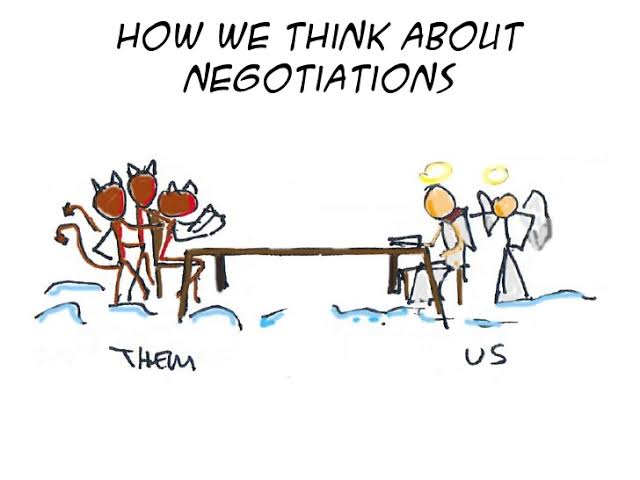
From the start of negotiations the U.S., through it’s stalwart spokeperson Donald Trump, declared the objective was to get the U.S. what they wanted.

The win-win negotiation principal arising from research at the Harvard business school, was disregarded.  

Historic results have shown this approach is typically not sustainable and while it does provide some immediate satisfaction ultimately things will turn out badly.

Already, cracks

It is probably precipitous to say the current stock market sell off is due to the U.S. trade stance, however anticipation of the impact on the world wide economy is surely a factor.

The problem with the my way or highway approach is it only works when backed by power.  The bully’s approach only works as long as the opponents give in. 

With any luck the coming U.S. mid-term elections will change the political power structure and sanity will return.  At least one can hope.


Listening to yourself

Unconsciously, we are constantly talking to ourselves.  This has been labled”self-talk” and refers not to verbal communication but silent conversations in your mind.

That is not talking aloud, but rather silently communicating internally, sometimes without being fully aware you are doing so.

A Powerful Influence

Self talk is typically more influential on your feelings, attitudes and ultimately behaviour than standard discussions (i.e., talking) with others.

Unfortunately self talk typically focuses on the negative.  It illicits and builds on things like anger, frustration anxiety, fear and so on.

It is rare for us to tell ourselves how great we are doing, promoting confidence even exploring topics that provide pleasure and self satisfaction.

It is rare for self talk to pep you up and assist with personal success, particularly in it’s unconscious form.  We don’t even realize how we are dragging ourselves down.

This can change if you take conscious control of your self talk.

Take Control

When you take control and direct your self talk in positive and up lifting ways it can be a very powerful tool.  You can influence how you think and behave just by having a conversation with yourself (silently of course).

Using self talk conciously enables you to make sure the message is appropriate for you and allows for the application of logic to make what you are thinking is likely to achieve the desired results.

The first step to owning your self talk is recognition.  Pay attention to what you are telling yourself.  This will let you question the direction you are giving and perhaps modify or even block the message.

Bargaining

Working to define the terms and conditions of a transaction through discussion is the classic definition of bargaining.   Typically you are working for your own benefit.

When the results are in our favor we typically call this a bargain.  The implication is a bargain is a result of negotiating favorable terms.

Winners and Losers

Logically, for any given transaction, if one person got a bargain, the other did not.  Of course both can percieve, from a subjective perspective, the transaction was in their favor.

The will occur when the participating parties have different priorities.  For example in a sale transaction if one party has price as a priority and the other timeliness both aspects could be satisfied and everyone feels they got a bargain.

Unfortunately this win/win scenario is not always possible and some times the bargain sessions and associated results or failure to achieve results at all can leave one or even both parties dissapointed.

Personally, when bargaining, I often find seeking a bargain that works well for everyone leads to the best results.  That is not just thinking about your priorities but giving the other parties some thought as well.

If I can’t win, I don’t want to play

Of course, seeking a solution beneficial to all is not a one way street and although it is a great perspective, I have found it is not always feasible.  

However, sometimes a party to the bargain is ruthlessly self centered and in those cases seeking a solution that works best for you can become the only viable option.