All posts by steve@kerrzone.com

The politics of fear

Today the US mid-term elections are underway.  These cover seat in the senate, house of congress, state governors and a number of other things like plebiscites and other miscellaneous elected positions like district attorneys. 

There is a belief based on polling to date that the Trump factor will be a key driver of the election results and the country may swing from a Republican party focus to Democrats (or reinforce Trump staying strongly Republican.)

The Caravan

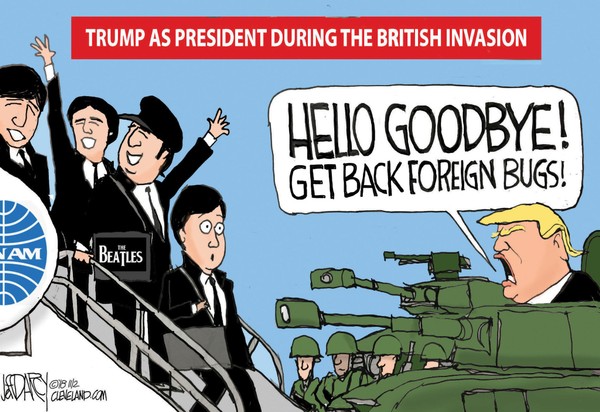
As many as 6000 Central American and Mexican refugees have formed multiple caravans that are winding their way to the United States. 

President Trump is treating this as a danger to the United States and is moving up to 15,000 troops to the Mexican border in a defensive posture to stop illegal entry into the country. 

This series of events is well publicized and personally I wonder if the timing was orchestrated to purposely gather some support for Trump and the republicans on the eve of the mid-term elections (admittedly a conspiracy theory).

The Fear Factor

Fear of invasion by maybe 6000 immigrants, albeit probably an irrational fear, is fabulous propaganda tool.  Fear is well known as an excellent way to manipulate the masses.

Groupthink is rarely logical and strong emotions like fear can be strong behavioral motivators.   Throughout his two years in office Trump has shown his preference to motivate through fear, on many occassions. 

My conspiracy theory is possibly far fetched, whether true or not, I really do hope the Republican party looses the majority in both houses today.  

Artificial Intelligence

Similar to the many public predictions about the impact of the internet, some 30 years ago, this year there has been a real focus on discussions about artificial intelligence and the major changes it will bring. 

Although we call it artificial intelligence (AI), to date, AI is really just the application of “brute force” computer processing to complete more complex tasks (e.g, playing a game, or recognizing a face).

My own vision of AI, based on the science fiction stories I grew up with, was robots that were able to mimic the processes of the human mind, only with fast processing and extra memory.

Black Box

To imitate the workings of the human brain, we need to understand how it works.  Since the actual workings of the mind are currently a black box, we are limited to emulating the outcomes using the mathematical processes which drive computer operations. 

That is, we can determine the outcomes of human thinking and build a computer that is able to replicate, even improve, on these outcomes. 

However, the way the computer accomplishes this is limited to the underlying framework of computing, i.e.,  mathematics. 

The logical part of our thinking process can be translated formumatically, the emotional and intuitive part, not so much.

Learning

As the development of AI has progressed a relatively new term is emerging, “machine learning”.  This is in recognition of one of the key capabilities of our brains. 

Continuous improvement in the outcomes of thinking is not possible unless coupled with learning processes.  As with basic intelligence, for the human mind the, the mechanics of learning remains a black box. 

Imitation

The human race is certainly developing the capability to emulate/ imitate the work of the human mind but our ability to replicate the actual processes (emotional and learning) is likely something that is far in the future. 

Expertise

Through a combination of training and experience we all develop specific expertise over time.  This is a skill and knowledge in a particular field.

In many cases professional credentials are associated with this expertise.  For example a journeyman plumber, medical doctor, certified accountant and so on.

In somes background and demonstrated knowledge (for example authoring a book or a specific role) are the only supporting evidience.

Skeptism

Sometimes experts rely on their background to support suggestions and recommendations.   In the Corporate world consultants advice is sometime taken based only on their reputation.

 Regardless of the nature of the experts input, (whether it is a repair, direct action or just a recommendation) it is wise to exercise some healthy skepticism.

Obviously training and experience are valuable indicators of  quality but regardless of the credentials there often are optionxs and the experts input is just one opinion.

Pet Peeve

I frequently notice those designated experts are annoyed if I do not immediately bow to their greatness.  How dare I question them, after all they are the subject matter expert.

In context, while training and experience are invaluable, they are not absolute.  Consideration of supporting arguments and logical analysis are still needed to supplement the expert opinion.

In many cases there is no single absolute right way.  In these cases debate and argument to support the expert conclusion is a reasonable expectation.

Sometimes I wonder is the so called subject matter experts need for their input to be accepted is as much about self justification as anything else.

Managing your Self Image

Not surprisingly how you perceive yourself is a foundational aspect of how others perceive you.  As with most things, it is the extreme aspects of how you see yourself that are most impactful, balanced behaviour is often overlooked. 

The mental picture you have of yourself is intricately in-twined with your values and personality.  It’s also impacted by the way you believe others view you. 

Self Worth

Your interpretation of the intent of other peoples actions can drive your behavioural responses to them.   You believe their actions represent what they think of you, coupled with how you wish to be viewed (your self image) if their is a gap, a strong emotional response can occur.

To a large extent the your mental image of what you are and how you should be perceived is unconscious and the associated emotion laden response might not be well thought out. 

In fact, without consciously realizing you may believe the others are making an attack on your self worth.  They think less of you than they should.  The reality could be quite different and their behaviour was just innocuous (to you it was ferocious). 

Think about it!

Pride, in the negative sense, can lead to an irrationally corrupt sense of your personal value.   In this case, your pride can be the driver of inappropriate behavior and in a vicious cycle of truth, this leads the others to develop a negative perspective of you, when in fact none existed before, you only thought it did.   

Is it real?

Halloween reminds me that things are not always as they seem.  This is a tenet of magicians, a key practice on April fools day and of course a halloween concept.

Dressing up as something you are not is a fantasy, it is not real.  A lot of people find it fun and enjoy the practice.  For me it has always been a bit of a chore.

It’s the Spirit

Unlike the common Halloween practices, i.e., wearing a costume, going door to door for treats or attending parties to display your proficiency at disguise, what I like about Halloween is the festive spirit.

Even if the concept of focusing on  scary, spooky and frightening activities does not appeal to me, the idea of celebrating some exaggerated aspect of life as a societal group has merit.

Holidays are intended to be a chance to behave outside of the norm, although still within the limits of legal and repectful behaviour.

It is this opportunity for innovation, surprise and fleeting change that make the practice fun.  

Taken logically, dressing  as something you are not, playing with exploding toys (firecrackers) and giving gifts (usually candy) to strangers are outside regular behaviour.

The holiday lets us (as a group) accept, embrace and enjoy these unusual practices, largely because we know, it is just for the moment.  

And then, back to the safe and mundane.

Impact and Influence

We can exert an effect on the character, development, or behavior of someone or something to cause a change.  The results of our influential behavior can have a strong effect on outcomes (i.e., a real impact).

Impact and influence are two of the most powerful tools in the leaders kitbag.  These terms become more powerful when described in the context of invisible influence leading to beneficial impact.

Success through Others

Successful leaders are determined by their accomplishments.  In some cases these are personal accomplishments but most often they are result of group and team efforts.

The leader is recognized as the catalyst but without the dedication and skill of a variety of other stakeholders, failure is likely on the horizon.

Leveraging the ability of others to effectively create an impact, using indirect guidance, is the art of influence.  A key to success is the invisibiity of the influence behavious.

Put another way, influencing other people to achieve great positive inpact without anyone recognizing what you are doing. 

Recognition 

The positive achievements lead to recogniton of those that actively did the work.  Without a strong and effective leader it is unlikely such outcomes would be achieved.

However, the leader is the background influencer whose satifaction lies not with receiving personal recognition for their part in the achievements.

That is to say, direct recognition is not needed, strong leaders know self gratification is enough.

It Ain’t Easy

I recently moved to a resale market home and we sold the house we were living in.  I don’t say we bought a new home because our purchase was of a house build in 2002 so 15 years old.

With this type of older home it is expected some handy-man work will be needed.  The magnitude of effort required will depend of course on  how well the home was maintained by the previous owners.

Easy Fixes

Over the years as a homeowner (this is our fifth home) I have always endeavored to fix the easy stuff myself, hiring skilled professionals for the most difficult items.

Our previous home was a new build and when we sold it, the home was only 10 years old so the need for me to exercise my handy-man skills was not large.  For this newly purchased home it was time for me to get back in the saddle.

In the first month and a half since we moved in I have re-discovered the pleasure of Murphy’s law as it relates to minor home repairs.  Having little experience with repairs during the last ten years I had forgotten, often the easy stuff, well in fact, often, “It ain’t easy”.

Things can and will go wrong

Simple things from changing a light bulb (it’s an odd bulb no longer manufactured) or the screw that won’t come out (because it is stripped) or the “snap it in” replacement smoke detector that doesn’t (the electrical connection has changed to frustrate us) or the plumbing fixture with the lost hex set screw  (now longer manufactured.)

How about the leaky faucet where the old valve is stuck (due to corrosion over time) or the natural gas barbecue fitting that was stolen (need to buy and install a new one).  And the list goes on. 

And the point, it is worthwhile and self fulfilling tackling these easy tasks, I do say leave the heavy lifting to the pro’s, but just remember often the easy stuff, just ain’t.

Attraction

For the majority of males and females there is a specific physical look that makes the opposite sex attractive.  

This look is often leveraged in fields like marketing (models) entertainment (actors) and similar activities.  The point is to use physical attraction to get our attention.

Instinctive

Although there is a clear personal aspect to what attracts each individual there are some common body characteristics (e,g.,shape and weight) for which the majority of people have an unconcious favourable bias.

That is to say certain body types have a universal attraction while others do not.  This perception is typically not taught or experienced but rather part of human nature (i.e., genetic)

We have a natural instinct for what basic physical appearance we find attractive in other people.  Of course, this is superficial and can be quickly overriden as you go beyond just outward appearance.

It is this inate instinctual bias of body types we must overcome to prevent insulting or disaffecting others.  Albeit our natural behaviour is to admire and covet percieved beauty.

Body Shaming

Currently, around the world there is an active cultural shift toward overriding our genetic coded behaviours and to recognize the superficiality of physical attractiveness.

That being said, cleary the body beautiful still has a place in our societies that is unlikely to be completely eliminated.  

Use of attractive people to send messages, support causes and sell stuff is part of every culture world wide.

 Many societies are seeking a balance and promote things like body shaming as a bad thing, but admiring the body beautiful is still a real strong and persistant behaviour..

Leaving the Past Behind

Don’t let yesterday impact your enjoyment of today.  When we carry historical baggage we can miss or overlook present moments of pleasure. 

Things like anger, frustration, worry or fear from past events can affect how we percieve and behave in the present.  Unresolved issues can override good things that are happening right now.

Let it go

The hit song “ Let it Go” from the movie frozen was probably very popular in part because so many of us identify with the sentiment.  Unfortunately recognizing the value of letting it go and doing it are very different actions.

I know I should not carry baggage and let it impact my today’s, whats the point.  Yet the knowledge that it is not helpful often cannot override the powerful human instinct for closure.

Think it Through

One technique to help you let it go involves the application of logic.  Think about the impacts of holding on.  Is there a benefit to be had.  If you can take action and resolve your issue, do it.  That is beneficial.

If you don’t see a realistic possibility of a satisfactory resolution, accept the fact that bad stuff happens (shit happens as they said in the sixties) and let it go.

The negative impacts of holding on far outweigh any benefits.  Your emotional baggage can suck you up in a vortex and tear you apart.  Just let it go.

Judging Behaviour

All our interactions with other people entail some interpretation of their behaviour.  In real time we decide what their actions mean and how we feel about it.

Overtime we categorize people we regularly interract with by type.  While a persons behaviour may vary by context out perception of their personality (go to behaviours) colors all our interractions with them.

Viewed by Extremes

In reality most  people balance their behaviors across a spectrum from one extreme to the other.  For example, moderating from flexible to stubborn so overall taking the middle ground..

Our classifications typically focus on one end of the spectrum or the other.   That is,  a person mght naturally fluctuate from one extreme to the other (e.g., flexible to stubborn).

We tend to classify them based on one end of the spectrum or the other.  Our perception is usually set as a result of a few limited interactions.

Misconceptions

Unfortunately our subjective behavioural classification boxes those we deal with by type (e.g., agressive, unreasonable, meek, childish, etc).

Whilemost people practice a number of behavioural variations across a spectrum of options we often leap to conclusions based on our pre-conceptions of the behavioural extreme.

Unfortunately this can negatively affect the effectiveness of our interpersonal communications.

Judging and categorizing others can be helpful to us in streamlining the communication process, but it can also create a risk of misunderstandings.

When we do not listen fully or think through what we hear and see there is a real danger of poor and ineffective outcomes.