Tag Archives: analize

Visionary Thinking

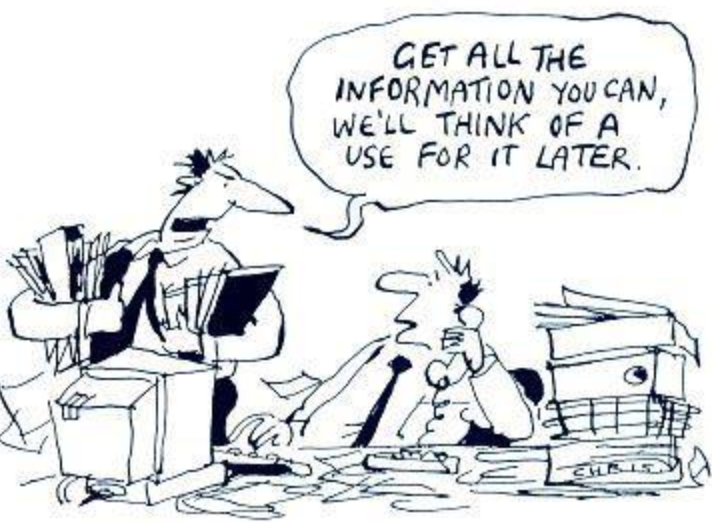
Typically, analytical thinking proceeds on a linear path.  Leaping to the end of the path without considering the check-points along the way can be innovative but risky.

Mixing a strategic thinker with an analyst and charging them with reaching a decision together can lead to some interesting results, that is, if they both survive.

Out of Step

When collaborators are approaching the problem from different perspectives, you can end up with a situation where some team members require patience while waiting for others to catch up to the obvious conclusion.

This can lead to arguments, frustration and could cause delays in moving forward to resolve the problem.  A result can be analysis paralysis.

This situation is way too common.  Stakeholders basically give up in frustration adopting the attitude  “it is what it is”, nothing I can do but accept the circumstances.

Bridging the Divide

In these situations it is important to first recognize the root causes of the delays.  Accepting the lack of a resolution can be an approach but it is seldom a good choice.

Collaboration among people with significant differences of perspective can be very difficult but not impossible.  The quality of the outcomes make it virtually always worth the effort to go for collaborative resolution.

Accepting the lack of closure because addressing the underlying disagreements, in a respectful and open way is too hard is never the best approach and just leads to frustration.

 

Acting too Quickly

Sometime our reaction to dissatisfying events or others negative actions or perceived attacks can be strong and heavily laden with emotion.  In these cases acting precipitously can lead to undesirable results.

Initial reactions are valid and can be useful in the moment but whenever possible a pause to reflect before taking action is a prudent risk management approach.

What Risk?

If your position is iron clad and your reaction appropriate the risk of adverse impacts is lowered;  However, the reality is our subjective assessment usually comes first and objective analysis requires a little more time and consideration.

Just in case your emotions are driving a subjective perspective of the event or other persons behavior, taking a moment  (even hours or days depending on the complexity) to make sure your response will lead to the outcome you seek is well worth the effort. 

This is really just basic risk management.  That is, there is a very real risk whatever you do (from nothing to a furious proclamation) will exacerbate and escalate the problem.

Suck it up

Some times you have unquestionably been wronged.  In these cases forcefully and clearly stating your position and expectations can be a valid approach.

Unfortunately, the other party or stakeholders might not hold the same perspective and your forthrightness could prolong the path to an acceptable solution (acceptable to you) or even deter it entirely.

It may not be as emotionally satisfying but in some cases it just makes sense to suck up your self righteousness plan an approach that is more likely to achieve what you seek, even if it offends your sensibilities a bit. 

After all what is more important a brief moment of emotional satisfaction of attaining your objective.


Patience

A valuable but often overlooked personal skill is the ability to accept or tolerate delay, trouble, or suffering without getting angry or upset.

Some demonstrate little patience and even proclaim “I don’t have the patience for this”.  This is not necessarily considered a negative trait  (i.e., lack of patience), but maybe to some degree, it should be.

Balanced Approach

Like so many things, the extreme approach is seldom most effective.  Which is better, being direct, forward and focused on quick results versus the analytic, patient approach?  This question has no definitive answer and the best way is often contextually driven (i.e., what is the overall situation).

A complete lack of patience can lead to presumptuous actions while too much patience is not only frustrating but can be the result can be dissappointing as well. Carefully considering the options of each approach and employing the best mix is likely to lead to better results.

Waiting Patiently

Waiting patiently is an interesting approach.  Initially, it can appear indecisive, just waiting for the default to occur.  On the other hand, it can be a calculated method to gather enough data to inform proactive behavior, before actually acting.

Patience, by and large, results in either acceptance or a deliberate alternate action with a full understanding as to why.  As time progresses you have the ability to consider and ultimately decide to live with the way things are going or take an alternate.