Tag Archives: thinking

Born with It

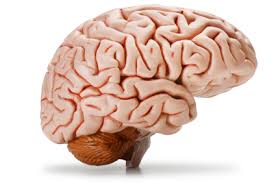
Despite all the years of intensive study humankind’s understanding of how our brains work is still largely a mystery.

That is while we continue to uncover function centres within the brain, the basic mechanism of why and how reasoning (processing) and memory (storage) work is a black box.

Matrix Learning

In the movie “The Matrix” the human and computer brain functions were integrated.    Computers were used to greatly enhance our learning capabilities.

One character (Trinity) learned how to fly a helicopter in seconds just by connecting to the matrix.  The concept of the power of our brains is clear to all.

The accomplishments of focused thought has changed our world in so many ways improving and enhancing our lives individually and collectively, yet,  we still have not figured out how to harness the brain to its maximum.

Programmed from Birth

Our brains have unconscious thoughts and associated actions which take effect from the day we are born or perhaps even earlier.

Breathing, hunger and eating are examples of these pre-programmed functions which kick in automatically and require focused conscious thought to override, something we generally don’t do.

These pre- programmed basic unconscious functions which include some built in beliefs, are universal and except in the rare case of some birth defect everyone has them.

Uncovering the Secrets

Our basic brain research needs to focus on the pre-learned thoughts as they contain the fundamental architecture of how thinking works. The electrical impulses driving unconscious behaviours can guide us to a deeper understanding of how it all works.

From there we can conquer the mechanism of conscious thought

Decision Analysis and Resolution

Reaching a conclusion or resolution to an outstanding question or issue appears to be a straightforward process. Basically determine the options, and select the one with the best value.

Unfortunately maintaining objectivity, particularly if input is sought from a number of stakeholders, is not always that simple. Opinions and subjective assessment creep in.

Follow a Process

The purpose of a formal decision analysis and resolution process is to enable analysis of possible decisions using a formal evaluation process that evaluates identified alternatives against established criteria.

This practice promotes objectivity over subjective assessment.  Also by definition it must include tracking how the decision evolved. This allows for post decision improvements..

That is, if something unexpected or undesirable becomes apparent after the recommended solutuion is implemented, the analysis process can be backtracked and improved for future decisions.

This continuous improvement aspect of the process is a critical underpinning of the overall practice.  Being able to continuously improve the quality of solutions, over time, has obvious benefits.

Justification

Documenting why a choice was made also motivates all involved to be more careful in their judgement.  After all, post decision, a look back is possible and logic flaws could be embarrassing for those that were responsible.

This highlights the need for strong and solid justification of the solutions elected.  Impacted stakeholders often take more care with their input.

Use as Needed

While a formal decison analysis practice will improve quality of choices over time, following well defined steps can sometimes be more effort than it is worth. 

Choose critical decisions with far reaching impacts when following a formal practice.  For day to day, do this – do that decisions it often is not practical, nor necessary to follow a full blown process.


Total Exercise

Although when it is suggested we exercise most think first of regular activity focused on the physical parts of your body, e.g., muscles.

In fact it is well known that exercising through simultaneous physical and mental activites provides greater benefit to your overall well being.

Walking

While there are many well known mental and physical exercise programs, from supervised training at a gym to temples for meditation) often these are practiced separately.

Walking has always been my preferred exercise method as I can combine both the physical and mental.  (There are other combined forms, yoga being one of the most popular)

When I am walking in familiar territory the physical activity becomes unconscious or autonomic and so I can concentrate my thoughts on mental exercises.

The physical exercise relaxes my body leaving my mind more open to focus on a wide variety of thoughts, problems, visions and so on.

In the case where my route is not in familiar territory the mental exercise takes a different form, that is concentrating on the path I am taking, memorizing landmarks and such, but still constitutes exercising my mental capacities. 

Free Form

While a number of other exercise forms combine mental and physical (like the aforementioned yoga) there is usually a greater structure imposed on the exercise.

Walking can be very self directed both the physical and mental aspects hich is very much a part of its appeal to me a an exercise methodology.

If walking is your chosen method my only sugggestion would be to ensure you set golas to make sure you are practicing it enough to get the full benefits, both mental and physical.  

A target of 70,000 steps a week or more is considered the standard.


Deep Thoughts

The recovery of gold usually involves digging of some sort, whether tunnels underground or open pit mining.  Gold has a perceived value high enough to make the recovery effort worth it. 

What about your deep thoughts? 

Thinking

Thoughts are defined as the action or process of thinking.  In the normal course of events we develop a thought, interpret it and act.  More profound thoughts, that is thoughts that are complex and require interpretation can be classified as deep thoughts.

Deep thoughts are, by definition, any thoughts that are complex, somewhat buried and not readily accessible.  This type of thinking is often overlooked by us and not considered worth the effort to retrieve or interpret. 

Like gold, the intrinsic value of a deep thought must be recognized and understood to motivate us to take the time and effort for search and recovery. 

Seek Them Out

Your deep thoughts might be hidden just below the surface of your conscious, (i.e., within the unconscious states of your brain) but they are almost always ever present, just easily ignored (because they are not part of your consciousness). 

Typically the results of deep thinking can be very powerful and rewarding.  Of course, the effort to extract, interpret and implement them is not trivial.  In essence, it is a balanced effort/reward equation.  

Extra effort is required.  Extra benefits are accrued. 

Acquiring your deep thoughts

Grasping onto those buried complex thoughts mainly requires concentration.  Recognizing the presence of deep thoughts within the unconscious spaces of your mind is the first step. 

After grasping onto the thoughts and pulling it into your conscious mind, the next step is taking the time to unpack them into a state you can use, that is, understand their intent/meaning and act accordingly.

Like mining for gold, it is likely you will find this a worthwhile exercise. 


Conscious Thought

Conscious thought requires more effort than unconcious thought.  It is theorized that one possible cause of autism is a persons inability to think unconciously.

While most people can behave in an autonomic  way for many routine actions it’s thought those inflicted with autism have to think through eveything in a conscious way.

The danger of Unconcious thought

In theory, being able to rely on predefined soltions to external behavioural clues allows us to focus on the important things directly and conciously.

Those things that require analysis and thought to arrive at informed conclusions, and subsequently, leading to  appropriate behaviour are best handled consciously.

Think about the scenario first thing in the morning.  You begin to encounter other people and mainly great them with a “good morning”.

This is a typical sub conscious behaviour.  Somewhere in your store of unconscious behaviours is a routine grreeting to use in the morning even when it is not reflective of reality.

How often have you muttered good morning to others when in reality for you it was anything but.  People with autism will usually think consciously what their morning  greeting should be and then say it.  Many of us find this disconcerting.

And so that highlights both the benefit and danger of unconscious autonomic behaviours.  They may not really be appropriate because they are based on a pre-defined action and so they could be off putting to some or result in truly inappropriate behaviour.

Of course acting conciously when a routine action is expected could be unnerving as well.  On the whole though acting consciously is more likely to be both supportable (you had a well thought out reason) and the outcomes will often be better.

Keeping your brain alive

Intellectual stimulation, exercising your brain, is as important as physical exercise to maintaining your health.  Elongating your life span requires attention toward all body parts – muscles, vital organs and thinking processes.

Supporting thought

On and off my posts focus on leadership behaviours.  A critical tool in understanding and motivating others is to create an environment that allows for positive exercise of intellectual prowess.

Properly orchestrated this can enrich the performance of the team, group or organization, through a series of a productive set of behaviours, that addresses not just physical well being but possibly more importantly, mental health.

Like your muscles, without regular active use your thinking processes can become atrophied.   Leaders must not just motivate action and outcomes but enable others to do so in a mentally stimulating way.

Setting the Environment

One approach is to encourage respectful dialogue.  Exchanging information in a reasoned manner while encouraging dissent and opposing views can be a very powerful motivator.

More importantly, this behaviour results in higher levels of engagement which in turn raise motivation and ultimately outcomes are better.

These outcomes hopefully map to the groups goals and objectives.  Encouraging the team to mentally challenge themselves includes the use of scenarios specifically targeted to make everyone think.

In these cases, the goal or objective may be in and of itself, about the thinking process, no more no less.


What language do you think in

Thinking is an individual process centric to the human brain.  Basically the construction or development of a particular opinion, belief, or idea about someone or something constitutes thinking.

Artificial intelligence represents the ability to think without a human brain.  As the description of thinking is very broad, measuring if it is occurring can be a very subjective practice.

Alan Turing, British computer scientist, academic (among other things) postulated a test (the turing test) for artificial intelligence . It is however a somewhat subjective test.

Do you think in language?

Thinking is more a concept, that is thoughts are conceptual (e.g. think of sound or smell).  Language is a communication method associated with the thoughts but some  cognitive experts argue language is used more as an internal monologue tool than as a requirement for thought.

I have a number of multi-lingual friends, colleagues and family within my personal network and the simple question, “What language do you think in?” often leads to puzzlement.

Most, in fact initially everyone I asked was not sure what the question meant, hence the puzzlement.  On the whole, my conclusion is language is not required for thinking.

That being said, the ability to communicate is a key requirement for assessment  that artificial intelligence (thinking without an organic brain) exists and that thinking is occurring.

Still I wonder?

  • Can thinking exist without language, even if that is sign language
  • does a computer or device need to be able to communicate to prove the presence of intelligence
  • does thinking require the ability to comprehend and is language required to do this
  • if  I am multi-lingual and having a internal monologue, which language do I use.

And the questions continue.