All posts by steve@kerrzone.com

Patience

Patience enables the fallen to become mighty once again.  All of us will experience highs and lows throughout our lifetimes.  Remaining permanently at the bottom of a cycle is unlikely.

Sometimes just exercising our capacity to accept or tolerate delay, trouble, or suffering without getting angry or upset is all that is needed before we rise up again.

Hope/ Optimism

Being hopeful about future outcomes leading to confidence in your future success is key to the practice of patience.  Waiting for good things to happen is easier when you are confident they will.

You may not be positive you will rise again to a level of greatness you once had or even exceed that of the past.  Pushing hard to achieve this might work however there is likely a time when a combination of patience and well-timed effort will serve you better.

Savour the Opportunity

There is a common English saying “what goes around, comes around”.   This, of course, can refer to both good and bad things returning but it does underscore the point that patience will probably lead to something.

Your objective is for your plans to lead to something good.  Careful consideration and planning makes achievement of your goals more likely and the patience to plan is a key part of that.

Take your time, remain optimistic, most likely things will come around.  Your time to rise and be mighty will arrive.  Wait for it, be patient, watch for the opportunities and take them when when it makes sense.

Form versus Function

I rearranged the furniture at my home on the weekend.  The exercise highlighted for me the critical distinction between form and function.

The rooms in my home generally have a function, for example sleeping (bedroom) cooking (kitchen), entertaining (living room), relaxing (recreation room) study (den) or reading (library).

The room is defined by the activity or purpose intended by the design or form of the room.  That is the things in the room (e.g. sink/stove, TV, fireplace and so on)

Optimization

When the form/design matches the intended function the use of something (in this case my rooms but this can be generic to anything) is natural and provides the best results.

This, of course, is one of the key product concepts that is promoted by Apple and believed to be a key to the companies success.  The products form matches function leading to enhanced overall usability.

My weekend exercise in furniture rearranging highlighted this for me.  By moving things like the TV and painting easel to different rooms, while changing the location of other items, the entire functionality of several rooms was altered, for the better.

Ah-Ha Moment

For me, this represented somewhat of a revelation.  Simply by considering alternate possibilities and ideas on how to combine and integrate the various aspects of form and function I was able to achieve a great enhancement.

The obvious or default situation is not necessarily best and the through a little brainstorming can lead to the germ of an idea.   This can ultimately result in significant improvement.

The chance to change “for the better” is often there waiting you just have to take it.

Power and Organization

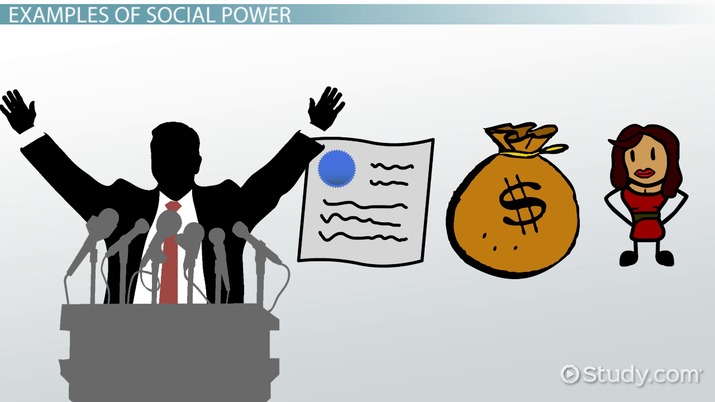
Organizational structures can be used to grant individuals a power base.  That is to say by dint of your location in the structure you have associated power to make decision and demand tasks (typically related to those lower in the structure than you.)

For example if you are granted the role of CEO in a corporation typically you would be near the top of the organization structure and have significant power associated with your role.

Power without Organizational Role

It is normal to have our individual power to provide direction and get things done enhanced by our organizational role but being a powerful leader is not dependent on it.

The power to get things done through and with others exists in all of us and while positional power is a nice boost sometimes the results of efforts derived from collaboration and  joint influences are far more rewarding.  And of better quality.

 Personal Power

Getting others to join you in doing things or behaving in a particular requires an exercise of your personal power.  Your capabilities ultimately depend on your own ability to influence and collaborate.

Leading purely using role based power seldom works effectively and has a high probability of failure.  Position based power usually relies on consequences over persuasion.

This consequence approach has limited value and duration.  Typically it is unsustainable.  Buy-in of others rarely stems from fear over the longer term.

The practise of personal power is a fine line between directive and collaborative methods and the right balance can produce amazing results.


Panic

It is probably not a desirable event but on occasion, most if not all of us will experience sudden uncontrollable fear or anxiety, often causing wildly unthinking behavior.

Panic probably has a purpose although I am not sure how valuable it is given the often associated illogical or irrational behavior which is driven by the shock/stress associated with the fearful event.

Keep Calm, Carry On

During the second world war, the British Government prepared a campaign to use in the event of an invasion by Germany.  The tag line was “keep calm and carry on”.

The premise was, panic is not a useful behavior in a crisis.   England was not invaded and the campaign was never run although leftover posters were found a decade ago and the motto has become a popular phrase for modern posters, coffee mugs, etc.

Why Panic

Panic is driven by strong emotions.  Most typically is fear of undesirable consequences.  The greater the impact of the bad things we visualize potentially the greater the magnitude of our panic.

For me avoiding panic starts with a logical consideration of why it occurred in the first place.   Panic is an innate natural behavior for prioritization.

Prioritization is critical to determining when to react, how quickly and how forcefully.  In this context, panic makes sense in that it could help us prioritize the need for immediate action.

Avoiding Panic

The downside arises from emotional underpinning.   Our prioritization might not be logical and the reaction might not be the most appropriate.

That is urgency drives us to “GO” even when a little forethought might be more appropriate to arrive at the best resolution.

Simple to avoid, stop, ask why you are panicking, consider options, pick the best one and move on.


Masters of Reality

Manipulation of the truth can alter your reality.  Those that morph the truth make their perspectives matter.  They can overcome logic and common sense.

You may be unduly influenced by these so-called masters of reality and need to guard against overt levels of influence in order to retain your personal perspective and identity

Influence or Manipulation

All of us tend to attempt to elicit change in others’ perspectives (on and off) together with their associated behaviors, typically to our benefit.  This practice of exerting control can be considered natural and reasonable behavior, or not depending on intent.

Influence occurs when we openly have an effect on the character, development, or behavior of someone or something.  Manipulation is the exerting of control on a person or situation cleverly, unfairly, or unscrupulously.

Integrity

Those of us with strong personal values, being honest and having strong moral principles can sometimes be at a disadvantage relative to those that don’t.

If honest, moral behavior which conforms to cultural norms is not high on your list of personal values it becomes easier for you to manipulate others in that manipulative behavior typically requires some level of moral suspension.

Being of good character with high personal standards does not mean you need to be a target for the manipulators but it does require you to be on greater guard to identify when someone is playing politics for their own gain.

It is important, from a self preservation perspective to guard against those that seek control through manipulation.

Unexpected Consequences

Speaking with veracity means conforming to the facts and being accurate in your statements.  Telling the truth depends on facts and reality.

Recently the University of Alberta launched a marketing campaign to increase awareness of the institutions broad base of research.  The tag line was truth matters.

Open Minds

The program defined truth as “…….the work of generations. Its pursuit is an arduous and necessary task that requires grit to stick to the evidence even when it seems elusive or challenges older ideas.”

I believe the underlying concept is to accentuate the fact  all research is of value whether we agree with it or not.  Consider the simple case of the shape of the earth.

If researchers had not been persistent in proving the earth to be round, in the face of great opposition and persecution, where would we be today?  (Possibly stuck in isolation lest we fall off the flat earth)

Consequences

Believing and promoting the truth as if it really matters, sadly, has consequences.  These can be greatly exaggerated reactions exacerbated by social media.

Last weekend we experienced an example of this when a top executive of the U of A resigned because a billboard advertisement  within the overall truth matters campaign was misconstrued.

Social media quickly picked up on the topic of the billboard, research that showed benefits of global warming, as supporting global warming. Of course this was ridiculous, the add was simply intended to expose and celebrate research, in and of itself.

For an institutions that promotes truth as something that matters this over reaction really makes it appear that those in charge really believe the opposite, that is truth is less important than perceptions, misconceptions and beliefs.

Sad and scary.

Confidence

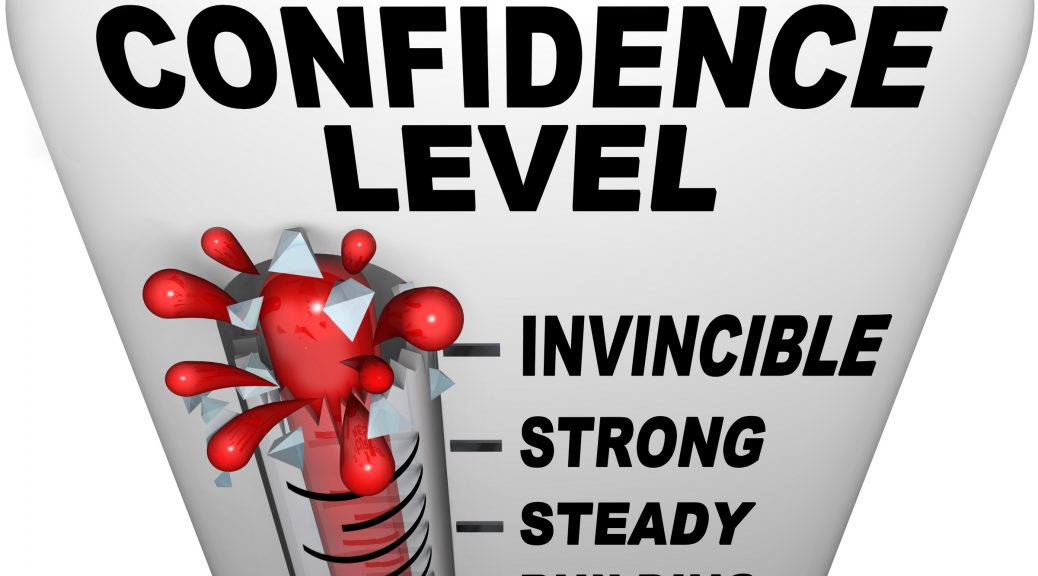
A typical quality of those we consider leaders is their demonstration of self-assurance which arises from self-appreciation of their own abilities or qualities.

This confidence is projected as a personal core value and the underlying behaviors enable us to hold a feeling or belief that one can rely on them; firm trust.

Over Confidence

While confidence is an important attribute for those that seek to guide and support others (and themselves) it is a fine line.  That is to say, overconfidence can lead to disastrous results.

Trust is a foundational factor, without which others cannot have confidence in you.  If they don’t believe the outcomes can be relied on however self-assured you project yourself to be will, in essence, be for naught.

Projecting confidence and not delivering could result in more than disappointment.  Those who trusted your judgment could lose whatever time, effort and currency they invested in you.

Ultimately there faith would be eroded and this could have a long term effect on how others perceive you.  Be very cautious about showing false confidence.

Proceed with Certainty

Confidence is about how you behave.  Being able to behave with certainty should be founded on facts.  Before acting with a high level of self-assurance, showing that you believe in yourself, be sure you have cause to do so.

True confidence is not a gamble.  It needs to be based on certainty to be effective.  Certainty is derived not from you just believing a thing to be so but rather knowing it to be the case.

If you don’t know, make that clear to others.  You can still be confident about searching and finding the answers but don’t guess them.


Life Long Learning

I had a friendly lunch with a former colleague today who is planning to embark on an executive MBA program.  Nothing unusual in that except he is in his very early fifties.

It got me contemplating the value of formal education later in life.  Although I am a fair bit older than my lunch companions today  I have been thinking of taking some courses toward an advanced degree.

Motivation

I admire my friends resolve and am a bit jealous.  The issue with entering some educational program boils down to motivation.  Is the cost and effort worth it (i.e.  are the outcomes justified.

To be motivated to take the significant step of applying for a course of study there are of course a variety of drivers but ultimately three things are key to your level of motivation.

How much work you need to put into it,the cost and what you will get out of it are foundational parameters that must be acceptable, regardless of the other considerations.

Effort and Cost

At later stages of life it is likely you have accumulated the resources to fund a program like an MBA (they are not cheap).  Probably though cost won’t be your limiting factor (subject somewhat to the appeal of the outcomes.)

Effort on the other hand is a bit of harder to reconcile, after all it is work for sure, perhaps a lot of work and as you approach or pass retirement age, do you really want to commit to working, albeit to your personal benefit.

Achievement

The core of a decision to proceed or not most likely lies with your perception of benefit to you.  What will you get out of it.  Retirement aside maybe for you this is the way to keep your brain active, stay connected with other people, even enhance your life achievement.

Personally I am still stuck on the motivation equation, maybe todays lunch conversation will push me off the fence.  Thanks friends.


Be Yourself

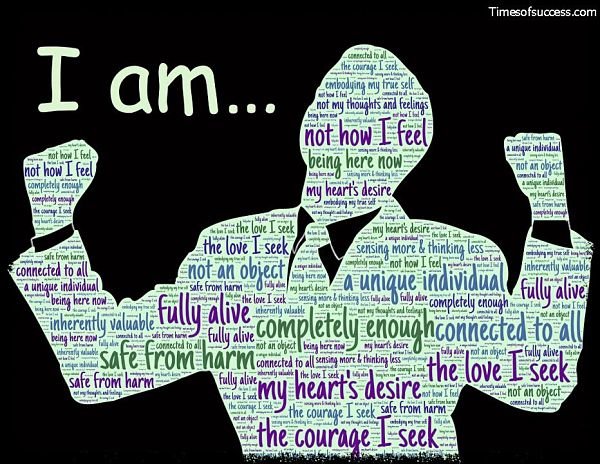
Our true self is who we really are when we let go of all of the stories, labels, and judgments that we have placed upon ourselves. It is who we naturally are without the masks and pretentiousness.

Given all the external influences on this state of being, that is other peoples feedback, demands, and complaints, together with environmental factors (cold, hot, dark, etc), it is not always easy to just be ourselves.

Being You

In order to behave according to your true self, you need to understand what that means.  Who are you? or more personally stated, “Who am I?”

To behave consistently according to who you are is not definitive because who you are is in a constant state of flux.   The framework lies in your value system and personality.

Being yourself requires you to manage external influences in ways that completely integrate with the core YOU.  That is your foundational beliefs and go to behaviours.

Flexibility Required

Being true to yourself is not locked in and unchangeable.  The key is being sure everything you do, both inwardly and externally is what you choose.

Always taking ownership of yourself, choosing what you will be, both from self awareness and others perspectives defines the road to self actualization.

Contentment

A state of contentment requires you to achieve realization  (i.e., fulfillment ) of your talents and potentialities.  This is an integral  part of being yourself.  To be content with yourself demands understanding who you are  and accepting it.

Being yourself is a lifelong task.  You should preserve this state and avoid others trying to influence you to step outside of your basic essence.

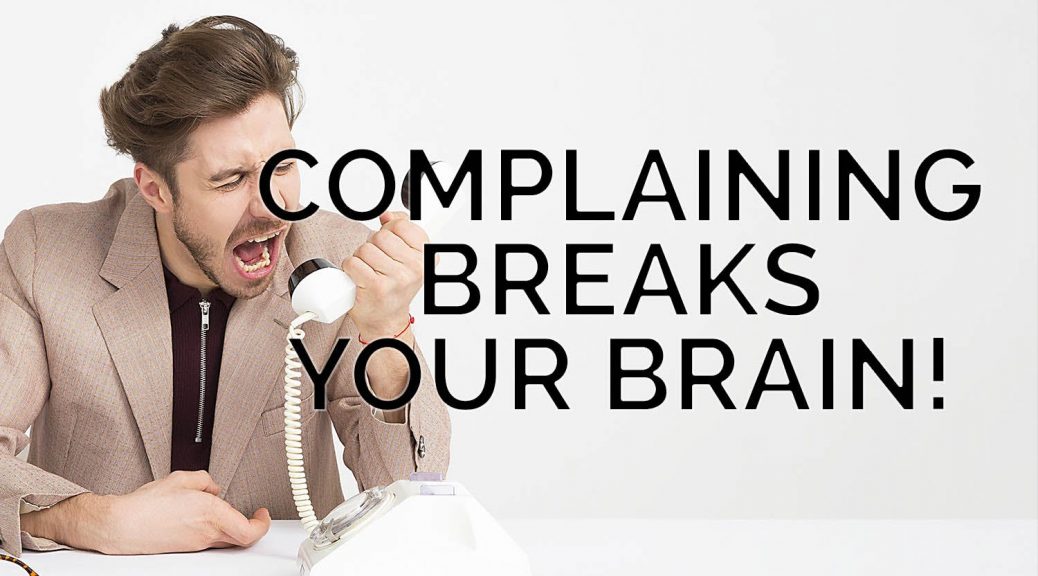
Complaining

There are times when both myself and people I interface with express dissatisfaction or annoyance about something. It seems to be a common practice.

I always get a thrill (not) when those less than sympathetic folks tell me ” What are you complaining about, just fix it.  What’s your problem?”

Rhetorical Question

I am always puzzled when they ask me what my problem is.  Weren’t they listening, I just explained completely.  They must know the answer to their question so why are they asking?

Obviously they are trying to make a point.  Complaining resolves little although it may make you feel better (which is something) but in essence, the effort made to complain could be put to better use, for example toward solving the issue.

Natural Behaviour

While I don’t have empirical data about the natural inclination of people to complain my own observation n is that it is an endemic practice.

While the extent and ferocity of complaining varies by personality in my experience  everyone like to complain somewhat.  It seems a natural behaviour.

The value equation

I suspect there is some therapeutic benefit derived from sharing things you take issue with.  A real danger of this is the negative impact it may have on people you are sharing with.

Your complaint may cause others to act or feel in ways they would otherwise not.  Caution is prescribed when sharing with others to avoid creating a tidal wave of anxiety.