All posts by steve@kerrzone.com

Reorganization/ Process Redesign

You may have heard this anecdote before, I was told it by a CEO who said it was a true story.  It presents an interesting perspective on when and why to undertake radical changes in your business.

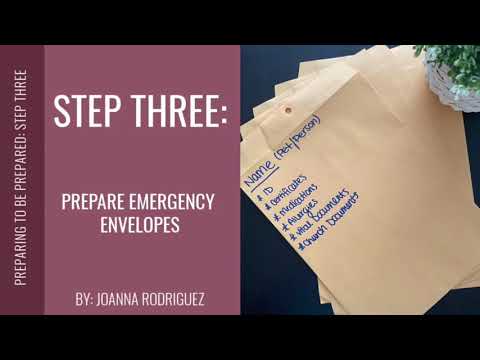
When first appointed, the CEO who told me this story was given three envelopes by his successor.  He was advised to do the best he could but when the wolves were at his door and trouble in the wind the information in the envelope would help.

Envelope #1

His first couple of years went well but by the third fiscal year expenses were up and revenues flagging.  He opened the first envelope.

It said ” Give the stakeholders something to take their minds off the state of the business, implement a company-wide process improvement program.

He did this and the problems magically went away (at least the perception of them).

Envelope #2

After a couple of smooth years, the overall economy flagged and things in the business we again on a downward trend.  He decided to open the second envelope.

It said “Give the stakeholders something to take their minds off the economy.  Implement a company-wide restructuring.

He did this and the problems magically went away (at least the perception of them).

Envelope #3

After another couple of smooth years business problems were back.  The expense trend was on the rise, revenues were down.  Seemed like time to open the last envelope.

It said “ Prepare three envelopes for your successor”.

And the morale to the story is smoke and mirrors will work for a while but unless the root cause is addressed it will catch up with you eventually.

In large organizations, reorganization and process redesign can be a great way of deflecting stakeholders temporarily but ultimately the real issue will need to be resolved.

Picking a Leader

Democracies enable control over the organization or group to be driven by the majority of it’s members.  In most cases this occurs by creation of a governing body with representatives selected by a majority vote.

One of the key risks with this system lies with the ability of unqualified leaders to be selected.  The process for the members to select a candidate is often as much a popularity contest as it is a selection of the most capable and skilled representative.

Worshipped or Valued

The current president of the United States is a good example of inadequate leader selection.  Worshipped by many as a reality TV star and  his ability to speak the language of the uneducated Donald Trump has been instrumental in creating a very sick country.

While not to blame for a global pandemic the inadequate response and disastrous results currentl being experienced by Americans can be laid squarely on his doorstep.   For example, the pandemic will not be eliminated if we stop testing as he has publicly suggested.

Bad Example

Instead of promoting public safety through his own behaviour President Trump is in fact doing the opposite, behaving as if the covid 19 outbreak is not serious and acting as if our reactions our overblown.

As the number of cases and the death count mounts he continues to display a strong disregard of the need to stay safe by wearing a mask and limiting in person social contact.

In the face of his constituents mortality Trump encourages dangerous behaviours that only fan the flames of the epidemic and in the long run will crush their economy.

And yet, he is still a contender in the upcoming presidential election. In spite of his massive failures his worshippers continue their support. Wow.


What I know

Often I interact with others that are reluctant to share information or knowledge with me unless they are sure as to it’s accuracy and completeness.

While obviously there is little value in fake news, sharing what you know, even if incomplete and potentially inaccurate is always better then holding back.

The potential for inaccuracy is based on what you don’t know or are not sure about, and that should be disclosed for sure, but to hold back from sharing at all until you are convinced you have the whole story can be harmful both to you and those you interact with.

Combining Knowledge

Holding back what you know, especially if incomplete virtually eliminates the ability to for both you and others to arrive at more holistically founded better conclusions.

I am always disappointed in those who hold back a piece of the puzzle.  This reticence toward open but honest disclosure can limit the range of outcomes.  Often the best outcome becomes unattainable.

Motivation

What is the root cause of holding back information?  Most likely the motivation derives in some way from alignment with personal interests.

Obviously not sharing is more beneficial to you than those you are holding out on.  Of course you may have the misguided opinion that it is in their best interest.

My personal experience leads me to believe this is never the case.  Open sharing, even information others might dislike hearing is always the best approach.

It is not possible to tell others things you don’t know, making it up is not a good idea, but just clarifying you don’t know an answer can be valuable information in and of itself.


Sequence Matters

The Province of Alberta has initiated a strategic review of post secondary education in the province,  Through an RFP process McKinsey and Company were selected as the lead consultants for the review.

The intent is to use the output of the review to create a ten year strategy for province wide post secondary education.  The report is due in the first calendar quarter of 2021.

Implementation

The province plans to begin implementation of the strategy in mid 2021.  Although this is billed as a ten year strategy there seems to be some urgency to begin formal implementation of the associated tactical initiatives.

Even before the strategy is collaboratively developed through consultation with all key stakeholders the government has slashed post secondary budgets in the province in a conscious effort to shift the cost burden to students.

Additionally the lower cost of providing the education should make providers more efficient and improve quality.  At least that is the theory.

This pro-active approach to  fiscal constraint seems to me a bit like putting the cart before the horse.  That is, these tactics are in support of the yet to be developed strategy.  It makes the long term strategy development seem like a bit of a farce as it is already pre-ordained.

Added Complications/What a Mess

Across the province post secondary institutions are reacting to the budget cuts with restructuring and process improvement initiatives. These are entirely reactionary to the budget cuts.

This backward approach has numerous significant tactical changes being put in place by universities, colleges and other seats of higher learning, in parallel to the strategy development.

Seriously, it does not take much effort to see this approach is a disaster waiting to happen.

The goals are noble and personally I believe change is needed.  Unfortunately this out of sequence approach to  seeking needed improvements is more likely to end in great disappointment.

.


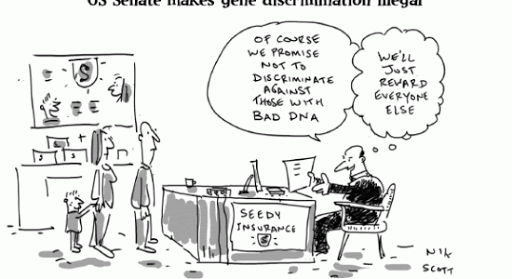
Discrimination

Discrimination is a basic human fact.  The ability to discern between all things we are able to perceive and determine if they are good, bad, or irrelevant is genetically programmed from birth.

How we react becomes a learned activity over time.  Initially, our discriminatory behavior is rationally individualistic.  Rationality though is somewhat subjective.

Racism

Racist behavior is typically learned not inherited except where a personal need drives our behavior.  That is a mix of genetic and environmental drivers of racism.

In the case of basic human behavior, if it is to our advantage to, for example, bully someone to satisfy a need (either power or physical possession) this is not necessarily based on something we have been taught.

Social Pressure

Another powerful influencer of our behavior is social norms.  We are taught to believe that the group practice is correct and personal consequences of deviation from this form of groupthink (illogical as it may be) can be negative.

Like sheep, we follow the herd faithfully.  This can be true even if our personal beliefs are not aligned.  There is some safety in being aligned with the crowd.  Of course, if the crowd is against you that is something else entirely.

Rational Individualism

Following our own path applying logic and rationale can overcome the failings of being a cog in a large group wheel. Unfortunately, though strident individualism goes against humans’ basic nature, this is the need to integrate, which grows stronger as we mature.

The difficulty of going your own way, and doing what is right in the face of false learning and group pressures is not easy but can be very rewarding.

How Much is Me/ How Much is You?

Antagonism and discord is simply an unavoidable part of the human experience.  Or is it?  Why do we get into adversarial situations with others?  How much of the adversarial context is of our own making?

It is arguable that we are exclusively the architects of our own fate.  We choose to argue, get angry, and assume the other is in the wrong.  Thus perhaps the adversarial situation is of our choosing.

Reflect on Cause

While not exclusively true, most of us prefer to stay away from conflict.  Perhaps mild and congenial conflict of a scholarly nature handled in a respectful way from everyone’s perspective is okay, beyond that, it makes us feel bad.

When a disagreement with someone, that is an exchange of diverging or opposite views morphs into an argument it will typically become a heated or angry one.

When I feel this is occurring, I pause and consider, how much of this escalation is me choosing to go down the adversarial path and how much is just ordained (It is what it is)?

Rhetorical Question

The preceding question is often rhetorical in that I know the answer before I ask it of myself.  It’s almost always within my control to stop, drop, and roll away from the conflict (That also works if you are on fire).

Perhaps, from a self-justification perspective assigning the blame for the distasteful interaction and the resulting anger, frustration, sadness, etc (all the negative emotions) is habitual, but is it helpful.

Accept it is you, defuse, be happy and move on.  For goodness sake, why not.  And ultimately if you both behave that way, conflicts and arguments just disappear.


Surprise

When the unexpected occurs it is time to relax and ponder the universality of things.  Deep thought in a philosophical bent can provide respite, probably albeit brief, from the stress of the unexpected.

Philosophically universal logic is one of my favorite concepts to noodle on.  Universal logic is said to be true in all possible contexts without creating a contradiction.

I can spin my wheels for hours with both arguments and counter-argument both for and against the universality of logic.  It really is a distracting pass time.

Managing the Unexpected

Deep (or perhaps shallow) philosophy aside, this post is really about holding your reaction about a surprise until you can be sure to react appropriately.

The biggest challenge with dealing with a surprise is having the ability to determine the impacts, both on yourself and others.  Is this a good, bad or irrelevant surprise?

Whether initially positive or negative you want to maximize the effect toward the positive by responding logically (versus emotional chaos).

Hold the Emotions

While human emotions are a critical aspect driving our behaviour the emotional reaction may feel good but these rapid responses can lead to regrets and even make a good or bad scenario worse.

I believe it to be universally true that reasoned logical analysis will always support a better outcome than just forging ahead with what feels right.

Taking the time to parse the causes and impacts of the surprise is rarely easy to do.  It does mean pausing and thinking through the alternate ways to address the situation, but the benefits make it well worth the effort.

A time to remember

The impacts of the worldwide covid pandemic have affected everyone.  The magnitude of the changes associated personal impact varies, but everyone is touched to some degree.

As the changes continue for over four months the question begins to be asked, “Is this the new normal?”.   In this case normal is most likely referring to the usual or expected.   Without the benefit of a vaccine or sudden transformation of the virus, the answer is likely yes.

Focus on the Positive

The main changes involve spending more time at home  perhaps with your children or others close to you or maybe just alone.  Going out involves taking care not to catch the virus.

The wearing of masks, frequent hand washing distancing yourself from others have become the order of the day.

This things are not onerous and can be beneficial (e.g.,  spending more time with the ones you love).  We might not have sought this significant change in our way of life but is it bad.

My own focus of late has been on the benefits of this altered lifestyle and there are many.

No commutes to a place of work, time to enjoy those close to me more than every and not least of all  time to contemplate my navel (meant metaphorically to represent relaxing and enjoying the little things.)

Not all Good

Of course I do miss travelling and interacting with others virtually can get wearing.  Even before the covid crisis hit everything was not perfect but this can be a good change.  All we need to do is embrace it.


Common Language

By using words in a structured way we are able to communicate with each other.  As long as the meaning of the words has a common interpretation we can share both concrete and conceptual ideas with others.

Of course the rub occurs when, although we believe there is a common understanding of the words meaning, personal  perceptions and associated bias can result in altered interpretations.

 Validation

Fortunately our meanings can usually be expressed through a variety of words and sentence structures.   This allows for  use to deliver a message (written or verbal) and have the receiver replay it to us with alternate phrasing and structure.

This type of check can result in identification of different interpretations  and ultimately resolve communication disconnects before they occur.

Re-statement is an extremely effective technique I use frequently to avoid confusion.  It does require patience and can be frustrating, often others wonder why you seem to be repeating everything they say, just differently.

Terminology

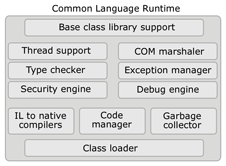
Words can be very specialized.  On occasion a specific body of terms can be developed solely for a technical application, study subject or profession.

In these cases the words are often not in broad general use as the terminology applies to very specific cases. It is critically important practitioner validate the meaning of such  terms in advance to ensure a commonality of discourse.

Specifc practitioners can often morph their terminology to fit the environment and practitioners with complementary skills, but from different environments, might have developed different meanings for what sound like common terms.

Without validation this can create a very frustrating and volatile situation.

Requirements are Important

When we need or want something that is necessary to satisfy our desires we need to document/explain clearly what the requirements are (in detail).

Providing a high-level objective can define what you are trying to achieve, but as often stated the devil can be in the details.  High-level requirements might get you started but without more detail, the results might not be to your liking.

For Example

You might engage a builder to construct a custom home for you.  The objective is simply stated to build a single-family home on this empty lot that conforms to the building code.

Without much more detail than that you could get a home that does not conform to your needs.  How many floors will there be, how many bathrooms, what color will the walls be and the list goes on.

In this example, the requirements can be quite straight forward coming from a single source, the homeowner.  There are many other cases where the evolution of the requirements can be much more complex.

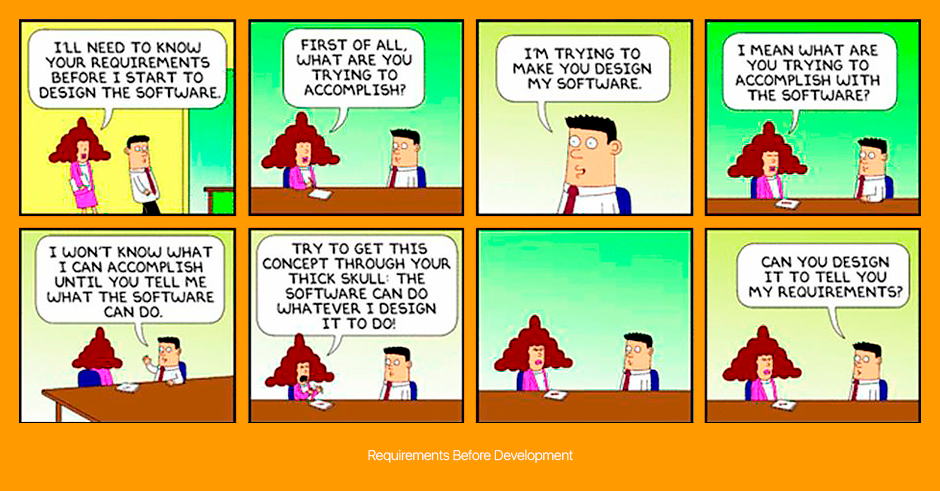
Building Software

In the information technology space, application software development is a good example of a more complex requirements management  process.

Often there are many end-users of the software product and each may have an individual requirement some of which are contradictory.  Many of which are confusing and almost never with enough detail.

The cost or feasibility to provide all the desired requirements might be prohibabtive or for the sake of expediency.   Additionally because detail is often not provided or clarification sought the final software often does not meet the requirements.

If you expect to receive what you wanted clarity and detail is required.