Tag Archives: governance

Picking a Leader

Democracies enable control over the organization or group to be driven by the majority of it’s members.  In most cases this occurs by creation of a governing body with representatives selected by a majority vote.

One of the key risks with this system lies with the ability of unqualified leaders to be selected.  The process for the members to select a candidate is often as much a popularity contest as it is a selection of the most capable and skilled representative.

Worshipped or Valued

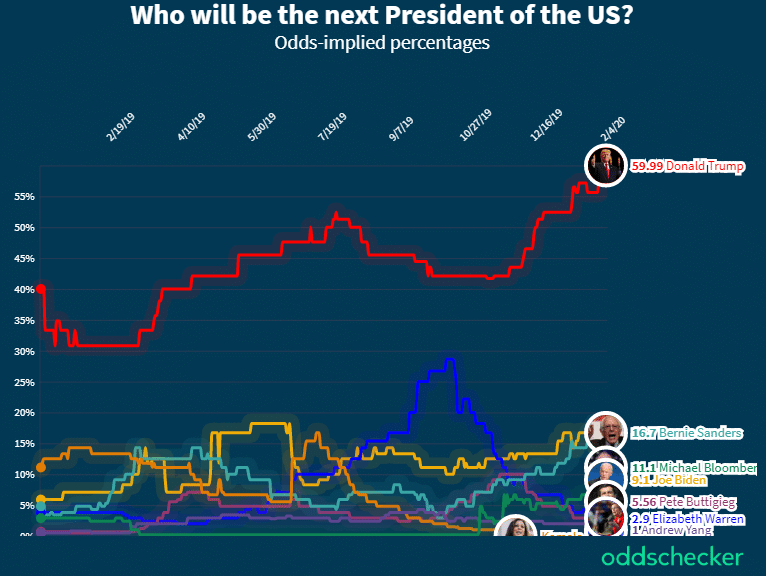
The current president of the United States is a good example of inadequate leader selection.  Worshipped by many as a reality TV star and  his ability to speak the language of the uneducated Donald Trump has been instrumental in creating a very sick country.

While not to blame for a global pandemic the inadequate response and disastrous results currentl being experienced by Americans can be laid squarely on his doorstep.   For example, the pandemic will not be eliminated if we stop testing as he has publicly suggested.

Bad Example

Instead of promoting public safety through his own behaviour President Trump is in fact doing the opposite, behaving as if the covid 19 outbreak is not serious and acting as if our reactions our overblown.

As the number of cases and the death count mounts he continues to display a strong disregard of the need to stay safe by wearing a mask and limiting in person social contact.

In the face of his constituents mortality Trump encourages dangerous behaviours that only fan the flames of the epidemic and in the long run will crush their economy.

And yet, he is still a contender in the upcoming presidential election. In spite of his massive failures his worshippers continue their support. Wow.


Governance – an exploration

Very generally,  governance refers to undertaking processes and practices by which others actions/activities are controlled and directed.

In effect these processes and practices start with guidelines, laws and rules  and end with enforcement to ensure they are adhered to.  For example, speed limits are a law most of us are familiar with.

This law is a governance practice intended to reduce the risk of accidents (or it represents a government money grab) . Speed cameras are one enforcement practice associated with this law.  Fines are another.

Governance, Yuk

A typical reaction to governance is distaste.  Like most things though  governance has associated pro’s and con’s.  Low levels of governance  usually result in:

  • faster completion
  • greater flexibility/ innovation
  • simpler solutions
  • lower quality
  • greater risk of error
  • inconsistency across repeated activities

Clearly high quality, consistentency and low risk are better attributes than the opposite listed above.  Yet higher governance is usually less flexible, slower and lacking creativity.

What to do?

Both approaches to governance (a lot and a little) have pro’s and con’s generally exactly the opposite.  The best way to achieve the highest results (best of both worlds) is “surprise,surprise” through a balanced approach.

Too much or too little governance is not a one size fits all balance.  It is very contextual.  For example, as an investor you probably desire strong governance to be in place around your investment.

The intent is to risk your reduce of loss.  However if the regulations are too onerous the investment can be strangled by them.  You might not lose but you might not gain either.

An example of this is Trumps approach to reducing regulations put in place during the last financial crisis.

In his view the risks mitigated by these outdated regulations have subsided in the current economy and the regulations are holding back economic and job growth.

I am not sure I agree with his assessment but the principle of balancing governance practices to get the best result really does resonate with me.