Tag Archives: consideration

The little Voice in your Head

That little voice talking inside your head exists in everyone. That little voice is called inner speech, and you can hear it when you’re thinking or silently contemplating.

There are many unique variations of the voice.  Sometimes it arises instinctually as an early warning.  The message, in this case, is usually fear driven and focused on risk avoidance.

The voice could just be part of an unconscious direction reinforcing your values or learned behaviors from your environment.  For example, telling yourself to be nice when the situational context is driving you in the opposite direction.

Listening to your Little Voice

It is not a bad idea to trust your inner thoughts, but verify.  That is, your instinctive reaction is usually developed based on sub-consciously viewed and stored facts and worth considering.

The little voice can be a very useful guide but it can also include over-reaction and emotional drivers (e.g., fear) and should be validated to ensure extraneous feelings are not being incorporated in the direction provided.

Acting Prudently

The smoke test of a good decision or direction to proceed can be the little voice in your head but to reduce the risk of unhappiness (unsatisfactory outcomes) consider carefully before acting.

It behooves you to examine your inner thoughts in the harsh light of reality (For the existentialists among you the question, “What is the reality?”, is another topic altogether.)

Self-talk, in essence, the voices in your head, is really just one way of filtering information to arrive at a better decision.  It is not wise to ignore nor is it wise to play slave to these thoughts and ideas.
Frustration

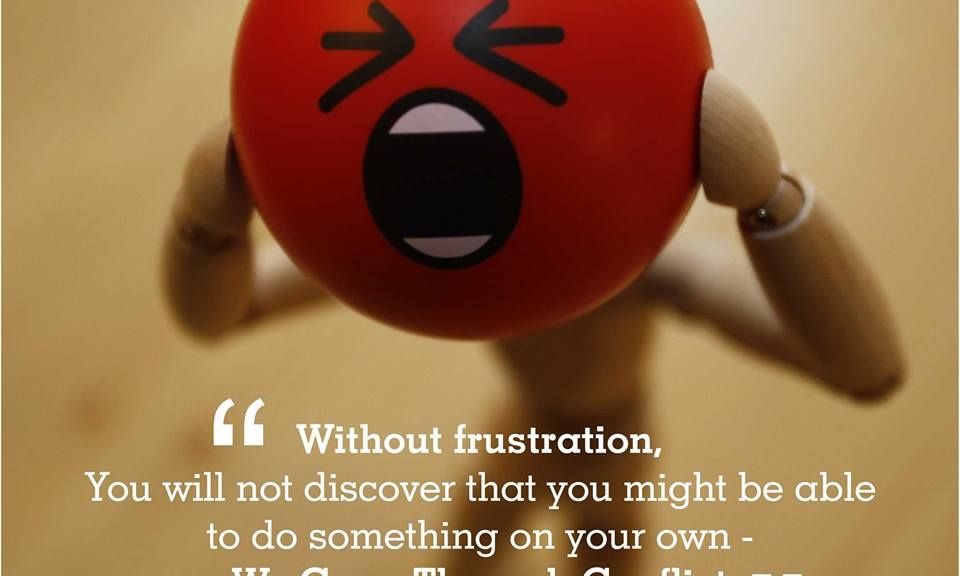
Frustration describes a state of mind which is exists when you are upset or annoyed because of your inability to change or achieve something.  As a general rule, frustration does not lead to productive behaviour. 

Most if not everyone experiences frustration on and off.  Obvious examples are things like how you felt in a long line waiting for something or the when the actions of other drivers lead you to anger (road rage). 

bAnimosity

At the core of the frustrating experience is desire and caring.  You are seeking a result and unhappy it is not readily attainable or perhaps not attainable at all.  

Animosity, dislike or hostility toward your objective makes it less appealing and your desire to change something or achieve a goal diminishes.

That is, anomisty toward something, a repulsion to it, will diminish your frustration although it may turn to anger.  Developing anomosity may eliminate frustration but anger driven behaviour is probably not optimal.

Root Cause

Frustration derives from a barrier.  You are blocked from a sought after change or achievement.  There must be a cause of this barrier.

Determining the underlying reasons for your inability to succeed is the first step toward resolving them.  Of course you can just let anomosity kick in but I suspect removing the cause of your frustration will be more satisfying.

This does require a pause, analysis, a plan and then action to confront and remove the cause of your frustrations.  My recommendation would be to employ finesse.

The direct approach can work but often has some negative side effects.  

Judging Behaviour

All our interactions with other people entail some interpretation of their behaviour.  In real time we decide what their actions mean and how we feel about it.

Overtime we categorize people we regularly interract with by type.  While a persons behaviour may vary by context out perception of their personality (go to behaviours) colors all our interractions with them.

Viewed by Extremes

In reality most  people balance their behaviors across a spectrum from one extreme to the other.  For example, moderating from flexible to stubborn so overall taking the middle ground..

Our classifications typically focus on one end of the spectrum or the other.   That is,  a person mght naturally fluctuate from one extreme to the other (e.g., flexible to stubborn).

We tend to classify them based on one end of the spectrum or the other.  Our perception is usually set as a result of a few limited interactions.

Misconceptions

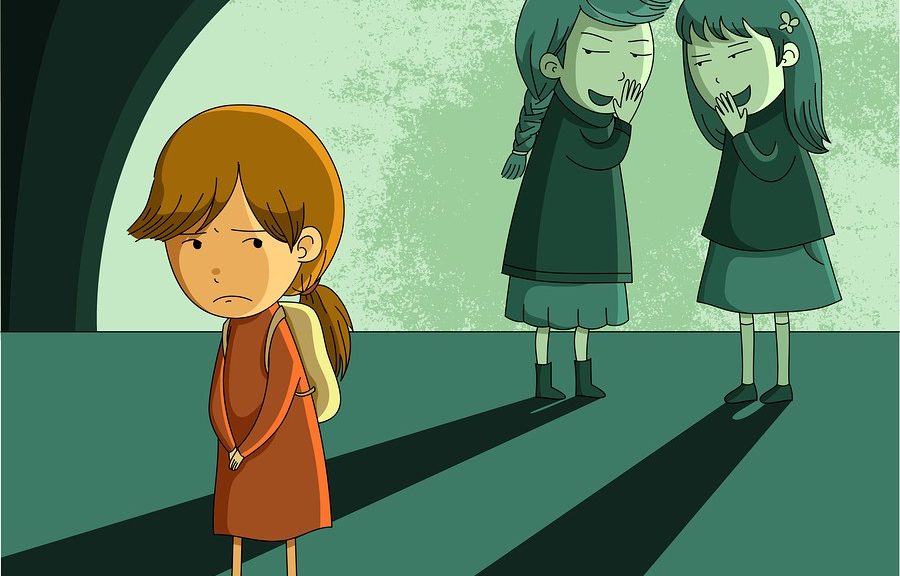
Unfortunately our subjective behavioural classification boxes those we deal with by type (e.g., agressive, unreasonable, meek, childish, etc).

Whilemost people practice a number of behavioural variations across a spectrum of options we often leap to conclusions based on our pre-conceptions of the behavioural extreme.

Unfortunately this can negatively affect the effectiveness of our interpersonal communications.

Judging and categorizing others can be helpful to us in streamlining the communication process, but it can also create a risk of misunderstandings.

When we do not listen fully or think through what we hear and see there is a real danger of poor and ineffective outcomes.