
Tag Archives: judging

Escalation

A colleague and I had an interesting discussion today about the impacts of escalation versus working together in a collaborative way to achieve resolution of outstanding issues.

In the context of this post, escalation refers to raising an issue to a higher level of authority for resolution.  Basically when someone bypasses you to try to achieve what they want.

For Example

You may be requested to provide a service outside of your preview or capability and so politely refuse.  The recipient of your answer decides to  take their dissatisfaction to a person of higher authority, that is, to escalate above you.

An interesting twist on this example is when you feel constrained and unable to respond in a way concurrent with your values and/or assessment of the situation.  You might suggest they take the request to a someone with more decision making power and latitude.

Handling Escalation

As the recipient of an escalation you are often between a rock and a hard place.  Your authority may enable you to overide and basically denigrate those at a lower level in the organization, judging their needs to be lesser than those of the escalator.

Or you can provide the escalator with a refusal, potentially damaging the organizational reputation by creating a perception of inadequate responsiveness.

Doing theDance

Of course these are just to ends of the spectrum and you can perform a dance trying to achieve an outcome that will satisfy all, the requestor, the receivers of the original request, yourself and organizational guidelines.

Never easy.  Personally, I dislike escalations and those that propagate them as a matter of principle (regardless of my role).
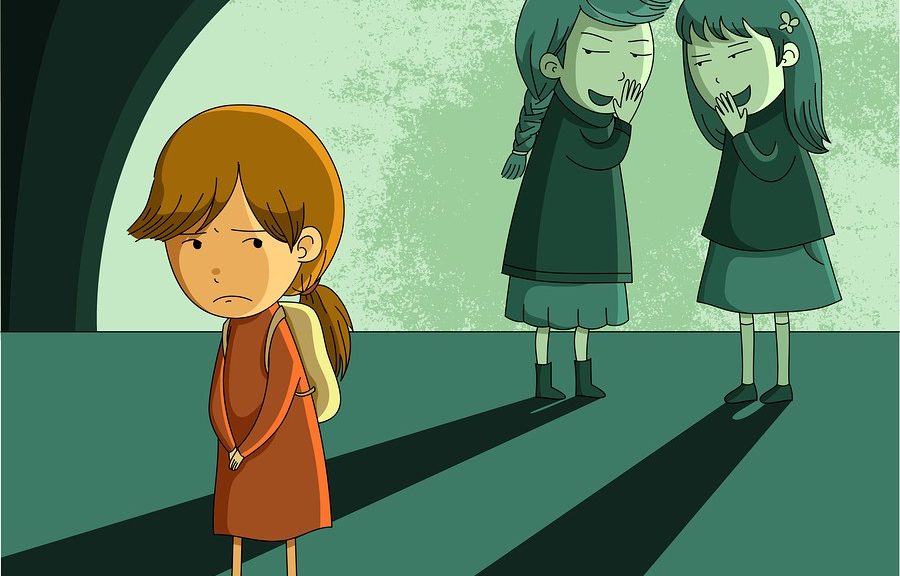
Judging Behaviour

All our interactions with other people entail some interpretation of their behaviour.  In real time we decide what their actions mean and how we feel about it.

Overtime we categorize people we regularly interract with by type.  While a persons behaviour may vary by context out perception of their personality (go to behaviours) colors all our interractions with them.

Viewed by Extremes

In reality most  people balance their behaviors across a spectrum from one extreme to the other.  For example, moderating from flexible to stubborn so overall taking the middle ground..

Our classifications typically focus on one end of the spectrum or the other.   That is,  a person mght naturally fluctuate from one extreme to the other (e.g., flexible to stubborn).

We tend to classify them based on one end of the spectrum or the other.  Our perception is usually set as a result of a few limited interactions.

Misconceptions

Unfortunately our subjective behavioural classification boxes those we deal with by type (e.g., agressive, unreasonable, meek, childish, etc).

Whilemost people practice a number of behavioural variations across a spectrum of options we often leap to conclusions based on our pre-conceptions of the behavioural extreme.

Unfortunately this can negatively affect the effectiveness of our interpersonal communications.

Judging and categorizing others can be helpful to us in streamlining the communication process, but it can also create a risk of misunderstandings.

When we do not listen fully or think through what we hear and see there is a real danger of poor and ineffective outcomes. 

Judging

When you form an opinion or reach a conclusion about a set of data you are judging.  The process may include both active or passive fact gathering as well as consultation with others.

Danger, Will Robinson, Danger

In the late 1960’s, “Lost in Space” was  a popular TV series modeled after the childrens novel “A Swiss Family Robinson” . The TV show was about a family lost in space (in the book they were lost at sea).

The TV family had a robot cleverly called Robbie (Robbie the robot).  The young adolescent member of the family (Will Robinson) often made decisions based on questionable judgements at best.

The flawed judgements were regularly identified by Robbie (the young masters protector)  who would ejaculate the catch phrase “Danger, Will Robinson, Danger”

This became a very popular catch phrase of the time, as sound bites from popular television shows often do.   Of course the audience recognized this as a clue Will was about to suffer the consequences of a bad judgement.

Judging

The act of judging represents a mixing of the objective (facts) and the subjective (assumptions and conclusions).  While we cannot live without making judgements, caution is advised.

Like Will, the  fictional intrepid space traveller, we all run the risk of adverse consequences resulting from our behavioural decisions, which are based on our judgements.

Unlike Will we do not have Robbie the robot around to warn us.  My advise is to think through the potential impacts associated with your judgements.

Consider the worst potential result and be ready to accept it before acting.  If it is unacceptable, reconsider the judgement and your approach.  This could save you some grief.


Judging

Everyone’s behaviour is impacted in some ways by their personal,  organizational (e.g., home, non-profit, corporation, govt, corporate) and  societal (aka – cultural) bias.

Efforts can be made to override these bias which ultimately inform your behaviour but true impariality is impossible to achieve.

Some roles, for example a judge or a jury member, are founded on expectation of factual based analysis and associated recommendations or decisions.

Even in these cases though true neutrality is not possible.  Your environment, values and prejudices cannot be removed fully no matter how hard you try.

Attempting to put aside these personal filters and view with an open mind is admirable and a task well worth undertaking.   The closer we can come to achieving neutrality the fairer the assessment.

Two Sides

Consider a refugee or political escapee petitioning a government to grant them asylum.  The country they are from claims this person is a terrorist or political agitator.

Their target country seeks to make a fair assessment.  Is this individual being unfairly persecuted or are they an agitator or terrorist.

The assessment of course begs the question, by whose standards.  Which bias, if any, should be applied to the ultimate judgement.

If the refugee has made it safely to their new home, the judgement will be driven by that countries filters otherwise they will probably waste away in a prison.

In one country, this person may be viewed as a terroist and in another as an oppressed fugitive who is being unjustly persecuted. Who is right?  So often the answer is driven by our built in bias.

Is a Fair Assessment Possible

In North America we attempt to ensure fairness in judgement by designing and following practices which have a focus on removing bias and encouraging fairness.

While the North American judicial systems are not perfect and have been shown to occassionally arrive at erroneous judgement, I find it comforting they strive for fairness  as an ideal.