All posts by steve@kerrzone.com

It begins with you

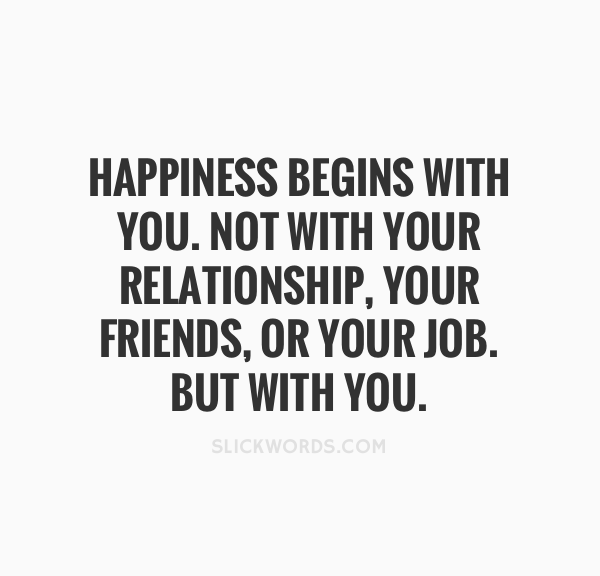
Happiness begins with you.  Happiness, pleasure, joy, etc are all emotions which belong to you and you decide when and if they apply to you. 

The state of your mind is under your control, albeit influenced by other people and things.  We often say something brings us joy or makes us feel pleasure. 

In reality we choose to feel joy or pleasure, the influencing factors definitely have an impact on this choice but no matter what the circumstances it is still ultimately a personal choice. 

Success is a Choice

If your goal is to win a high jump competition, the objective is to jump higher than anyone else.  Alternately your goal might to be just to participate in the competition and have fun.

The bar you set for success belongs to you.  It is not cast in stone.  Your may set your goal low or high and after making the attempt you might accept the lesser achievement.  It is your choice.

Your happiness is what you choose it to be.  Everything begins and ends with you.  Others cannot decide how you choose to feel, influence it – yes, decide – no.

Choose Enjoyment

I start each day with a shower.  While shower I set the tone for my day.  I decide to be happy and content.  By the time I am drying myself with the towel I am a happy and content person, because I choose to be.

This simple technique makes ever day of my life a joy.  My pleasure cannot be undermined by the external events of the day  because I have protected myself with a happy attitude from the beginning.


Happiness for Free

I had an interesting chat with a colleague today about spreading joy.  Making others happy can be really simple at no fiscal cost and requiring little effort.

Boosting someone’s ego through compliments requires only that the feedback be perceived as honest and heartfelt.  Most if not everyone feels some happiness or joy when others make positive statements about them.

Sincerity is Natural

Providing positive comments about someone’s activities and/or future predictions of their success and reward potential do not work unless they are presented with the associated tone, body language highlighting the fact you really believe it.

Acting sincere most often looks just like what it is – acting.  Generally, everyone has really good filters to identify phony sincerity (no matter how good our gushing is).

Praising someone, (i.e., recognizing positive attributes) is not hard when you do it naturally.  No acting effort required.  From a hard currency perspective, it costs nothing.

Joy to the World

We often jump to criticism.   The negative seems to be easy to share.  Telling others their shortcomings rarely brings real joy, even if they thank us for letting them know.

If you have something positive to share with others, why not bring a little happiness to the world.  A small touch of happiness repeated thousands of times becomes a bundle of joy.

Not only does boosting a person’s ego elicit positive feelings but as a side benefit it is much more motivational than criticism.

Years ago I had this realization, positive feedback works way better than negative.   I never include derogatory or critical comments in performance reviews of people I work with.   Not surprisingly this approach almost always leads to continuous improvement.

As the earth burns

This summer has been a record for an outbreak of wildfires, around the globe.   The Amazon rain forest wildfires are a current hot topic in the news but Europe and Asia are not immune.

Early this year some parts of Canada had record numbers of out of control wildfires and of course, a large area surrounding Los Angeles suffered from great destruction of expensive housing.

I Need Oxygen

The scariest fact about the Amazon rain forest fires is the potential impact on the worlds oxygen supply.  Plant absorb carbon dioxide and produce oxygen.

It is estimated the rainforest produces 20% of the world’s oxygen.  Since we need oxygen to sustain life losing 20% of your manufacturing capacity is probably unhealthy, for everybody.

It’s Hot

Record high temperatures are being experienced around the world.  Whether caused by the carbon humans and other events (e.g. massive wildfires) are releasing into the atmosphere or just a natural weather cycle the earth is undergoing the results are bad for the human race.

Saving Ourselves

Will we survive?  The ingenuity of humankind is indisputable.  The advancements in technology, health, and culture alone are massive.  Positive change to the human condition is continuous and increasing.

Will we be able to address our environmental changes (e.g., extreme weather, global warming) or is extinction a real possibility?  Based on history, I believe we will overcome and resolve our current difficulties over time.

Unfortunately, this will probably just lead to new ones, which future generations will need to address.  Struggle and adversity are part of life.

The good news is, collectively as earthbound people, we are on it and we have proven we can overcome.

Changing your World

Sometimes the daily newscasts make me wonder if the world is a boiling cesspool of terribleness.  Worse is the fact I feel I am just an observer.

Contextually, personally, I am okay.  So the pain and strife are largely occurring elsewhere (outside of my realm of existence). It is interesting but does not affect me immediately or directly.

Basically, the news from around the world is just information which I can do little about.

Your World

Are we really isolated?  Do we just live in our own little box, observers to things outside our boundaries but not really participants?

Except in the odd, infrequent and unlikely cases where the worlds ugliness barges into our personal reality it is unlikely we will do more than observe and perhaps empathize.

Of course, happy unexpected events can burst into your world as well.  These are probably always welcome.

Helping Others

Taken in a worldwide context being the catalyst for change seems daunting and we are talking about things happening elsewhere affecting others – What can we do and really why do we care?

Helping others, (e.g., giving gifts, providing life-altering support) is actually usually very rewarding.  For most, if not all of us helping others gives personal pleasure (this applies to some extent but the extent varies by person).

Making meaningful change around the world on a macro-basis is probably not practical.  It may be a cesspool of terribleness, however;  on a micro basis, we all can elicit positive change and to some extent clean up that cesspool.

Sounds Deep

I read a Dilbert comic (by Scott Adams) the other day where the pointy-haired boss announced to the team “Let’s do a deep dive in the big data and drill down until we hyper localize some disruptive technologies.”

Putting the comics ultimate punch line aside, just focusing on the leaders rhetoric, which was meant to be a serious direction to the team, I was saddened by the accuracy of the statement in the context of a regular working meeting.

This type of jargon without real meaning is used in our society far too often.  Sounding intelligent and knowledgable is considered a valued skill.

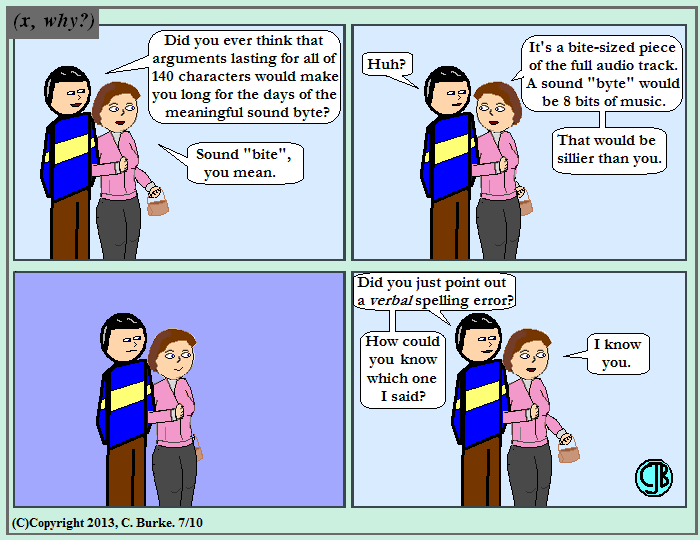
The Sound Bite

Fast easy to access communication is is a bi-product of the internet and associated technologies (e.g., mobile devices).  More than ever before in human history we are able to access and consume information from all corners of the globe in seconds.

With the dawn of live radio and TV, (i.e., the initial forrays into efficient wide access communication technologies) one way this ability to provide an immediate message was heavily leveraged is the sound bite.

Technically a short extract from a recorded interview, chosen for its pungency or appropriateness I use the term here more broadly to refer to a short, catchy snippet of speech.

The drawback is these snippets often, like the Dilbert example,  sound great but are largely meaningless.  The real consequence is people interpret and act on what they perceive the meaning to be.

Sadly, mostly they really are intended to do is improve the pronouncers reputation.   Shallow leaders make themselves appear deep.  Misinterpretation can lead to dangerous results.

Motivating High Performance

Performing both at your best and incenting others to do so is a good way to achieve happiness.  It makes me feel good to see others succeed and to do so myself.

Hence a core motivation for getting things done is simply the pleasure derived from success.  Making sure you and everyone involved in the performance understand what the results are and how attaining them will make all feel good.

Trust and Respect

Treating both yourself and others with trust and respect is a basic underlying behavior to enhance the motivation (trust and respect begin with how you view yourself).

As a default, perceiving everyone is being treated fairly and respectfully results in everyone being inclined to do their best and creates a high-performing culture.

Clarity

Building on trust and respect is just as important.  We all need to know why we do are doing something and personally believe in the value of doing it.

This understanding leads to buy-in.  When we care about what we are doing, appreciate it and anticipate the results we are far more likely to perform at a higher level.

Beware the Poisonous Environment

Some cultures are so poisonous that people only care about themselves and will never take any risks that might have negative personal consequences.

Success and strong positive results are founding on trust, respect and creating real understanding.  This leads us all to care about both our own achievements and those of others.  We are willing to extend ourselves for the greater good.


Power; Corrupts or Reveals

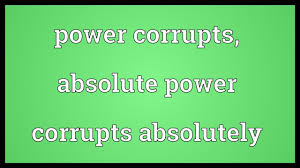
The phrase “power corrupts and absolute power corrupts absolutely” is most often attributed to a letter written by Lord Acton in the mid-nineteenth century.

The concept expressed is having power corrupts us, in essence, lessens our morality, and the more power we have, the more immoral our behavior will become.

Does Power Change Who We Are?

Author Robert Caro proposed an interesting twist to this common idiom.  Mr. Caro hypothesized, based on his research, that power does not change us, but the greater the power, the greater our ability to reveal ourselves, and we do.

In his book where he postulates this theory one example, I found compelling was that of Richard Nixon.  As a young law intern, during an early court appearance, former President Nixon was castigated by a judge who suggested based on his shady behavior maybe he should never be admitted to the bar.

As history tells us the judge was probably a bit prescient.  Nixon’s amoral behavior clearly escalated with his power.  Author Caro argues he was not corrupted by the power itself but rather used the opportunity granted by a great power to behave as he liked.

The Good News

This theory, which does appear logical and has solid supporting evidence (you need to read his book “The Power Broker” to glean more) means there is hope for all of us.

Great leaders, with their associated granted power, do not necessarily become corrupt.

By being careful to ensure (as a societal whole) that our leaders have personalities reflective of strong moral fibre and values common to the majority, we do not need to worry the power we grant them will corrupt them – it probably won’t.

Teaching to Learn

Showing others how to do something by demonstrating or explaining how to do it (teaching) is intended to enable them to gain or acquire knowledge (learning).

Surprisingly though, teaching is not just a way to help others learn but the very act of teaching others can create a valuable learning opportunity for ourselves.

Those that do not learn from the teaching experience probably are not the best teachers.  When teaching is just a one-way communication it becomes more rote learning then the acquisition of knowledge.

Embrace the Learners

Teaching others is best when not treated as a hierarchy, that is phrases like  “I know stuff you don’t”, “I am the expert”, “Treat me with respect” all tend to put the teacher on a usually unjustified pedestal and close the learning experience.

Learning is a two-way street.  Just as we expect the students to embrace the experience and gather information (learn) we ourselves should embrace the student and learn from them.

Our own learnings can range from interpersonal relationship skills to innovative ways to view the knowledge we are sharing.  Leveraging the intellectual property of others opens many new realms of possibility.

Outside the Box

The traditional relationship between teacher and student is strictly role-based and restricts our ability to grow the knowledge base collaboratively.

Everyone is important and everyone has great value to add to the body of knowledge that is human life.  Embrace your opportunity to both teach and learn simultaneously.

To do otherwise is a lost opportunity.

Finding the Key

In cases where the key fits we can use it to open the door.  (I mean this metaphorically not literally).  If the key does not fit, we could of course just kick down the door. (again metaphorically)

Understanding why the key does not fit and completing a logical analysis of options carefully weighing the pros and cons is probably a better approach.

Difficulties can always be overcome?

Over the years, on and off, I have been involved in the creation of software applications to automate or otherwise improve the way we get things done.

It is not unusual to encounter business requirements that are not easily accommodated within the software design.  Tool limitations are often the cause of this.

Frequently when discussing these difficult points the developers respond, of course, we can do anything but can you really afford the time and cost to make it so?

Their point was intended to convey the message that although we could do anything, in reality, we are limited.  I never bought into this philosophy.

Make it Happen

Hopefully, this does not come across as too aggressive, hardcore or conceited,  but whether I have the key or not I have never encountered a door (still metaphorical) that I could not either open or bypass.

Somehow I always get to the other side.  I do believe you can do anything but more importantly, we should do anything if it is the right thing to do (morality should apply).

Locked doors should not be allowed to get in our way.


Answers and actions

Having answers is good.  Knowing how to use them is better.  Actually acting on them is best.  In essence, being able to do stuff is not as valuable as doing it.

Accomplishments require action.  Providing action instructions, in and of itself, does not necessarily get things done.  Getting results requires more than just identifying what is needed.

Buy-In

Even when you know what outcomes are expected, achieving them requires more than just insight.   Whether you are undertaking the action on your own, with or through others, to be successful everyone needs to buy-in (including you).

Without explicit approval or agreement to the course of action proposed (i.e., the answer) those involved will not feel ownership for the solution and so probably do not perform to their maximum potential.

Building acceptance and ownership to an approach requires more than being told or even knowing the right answer.  Everyone has got to believe it is the best way.

Doing it Right

Just acting on the right answer, that is getting stuff done is only part of the equation.  The approach needs to result in the defined goal.  That is a success means you achieved what you set out to achieve.

Knowing the right answer includes understanding clearly what the aim or purpose of the answer is.  To say you understand and know how to proceed without a clear vision of what success looks like probably translates to you not really knowing the answer.

The approach to achieving the goal, answering the question or problem is not right unless it works.