All posts by steve@kerrzone.com

Perspective can change your life

Problems and issues are bothersome.   Challenges give us pause and often motivate procrastination.  We perceive problems and issues as unwelcome or harmful and needing to be dealt with and overcome.

Challenges are generally viewed as competitive and requiring effort to overcome.  Our perception tends to influence our behaviour when it comes to issues, problems and challenges.

Take another look

How we perceive things is within our control.  Often the default behaviour comes from our environmental and cultural influences.  We are taught to recognize problems and issues and behave accordingly.

But, does it have to be that way?  What if we trained ourselves to treat problems, issues and challenges as opportunities.  Opportunities to experience great enjoyment.

Why have a negative spin on things that can actual invigorate us and provide a thrill.  Here is an opportunity to excel, and if you don’t while it was a problem or challenge anyway, at least you had fun with it.

Perspective Matters

Entering a situation feeling reticent and pessimistic sets the wrong tone.  It can exasperate everything and simple problems suddenly become scary and complex.

Viewed as opportunities from the get go positions us for achievement.  Just by perceiving the situation differently changes the way we will behave.

Optimism is far more motivating then pessimism.  Why treat something as a problem, that is to what advantage.  Nothing springs to my mind.

Your determine how to perceive any given situation.   What harm is there in proceeding as if it is an opportunity? Really there is no downside.
Organize for Performance

While not an original nor innovative concept, how we organize the work we do, from individual tasks, teams to enterprise structure makes a big difference to the cost, efficiency, and quality of the outcomes.

Success can be achieved through organizational optimization.  This is a continuous process, ongoing change is inevitable and how we are organized to address external and contextually change needs to reflect the current and forecast future situations.

What is Organization?

Organization is the act of getting people, places or things arranged in a systematic way, whether on a large or small scaled getting things organized in a way that the goals and objectives will be achieved with as much ease as possible.

This is not only about efficiency though, organization is how we can ensure the right things get done by the right person (or persons) at the right time.

Often we take the organization of things at the status quo and just carry on.  Why challenge what is working?  Unfortunately effective organization is integrated with a multitude of environmental factors.

As the environment changes so does the organizational effectiveness.  To attain the best results your routine needs to adapt to the changes.

For Example

You have organized your morning wake-up and get ready for the day in a particular day.  Maybe you get up at a set time and complete a defined set of activities from washing, shaving, dressing to eating before considering yourself ready.

The question becomes, is the same morning activity organization as effective today as it was the first time you practiced it?  Without altering your routine  to adapt to changing life events (e.g., getting married, having children, changing jobs, moving locations, etc.) it is highly likely the outcomes will have suffered.

Pay attention to how you and the things around you are organized, it matters.


What a Mess!

The major worldwide events of the past month give me pause for concern.  Throughout my life, there has always been some level of upheaval worldwide.

These include significant weather events, trade disputes, civil unrest and national aspirations (revolutions, border skirmishes, etc). I have been wondering if there was a boiling point when the number of events would become overwhelming.

What’s Up

Here is my list of key events that are currently roiling the planet.  While the impacts are localized primarily to countries and regions the world wide impact is real and increasing.

  • Hurricane Dorian – the category five storm has devastated the Bahamas and is rampaging the US east coast from Florida up to the Canadian cost past Newfoundland.
  • Chinese/US trade war – the worlds two largest economies continue to become more insular (it’s all about me).
  • Brexit –  The European Union is about to have a serious shakeup as is the British economy
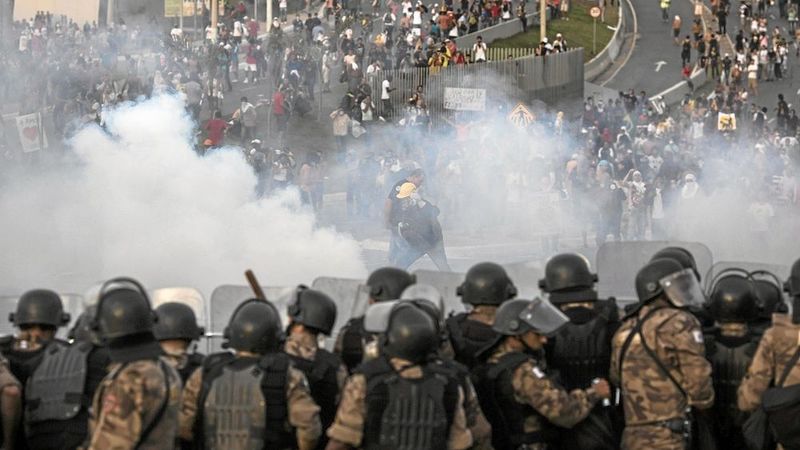
  • Hong Kong protests – Is the city-state about to experience martial law.
  • India annexes Kasmir  – Is a conflict brewing that will involve China and Pakistan?
  • Israel and Lebanon exchange missile fire – is the middle east conflict heating up?
  • World wide recession – is a large hit to the world economy on the way, the bond rate inversion says it is.

Stay Optimistic and Carry on

It does seem as if the current state of world affairs is highly turbulent.  Clearly there is a lot of unrest and pain being experienced worldwide.

For me, we have been here before but over longer periods of time.  It seems like major issues and events are surging together.   My hope is all will pass without integrating into a powerful whole that creates mass disruption around the globe.

I

Telling the Story

When communicating with others the most important objective is for your message to be received and understood the way you intended.

Implicit in this objective is getting the attention of the person or persons you are sharing with.  A critical aspect of attracting and maintaining attention is how you tell the story.

What’s the Story

Whether your tale is an account of imaginary or real people or and events the key aspect of a story is the fact it is told for entertainment.

By definition, entertainment is about enjoyment.   If you are enjoying yourself it’s far more likely for you pay attention, absorb the content and even participate in the stories discussion (e.g., via questions or your own anecdotes).

Turning your communications into stories means they are more likely to be enjoyed by the recipients, this should ultimately create a better chance that your narrative will lead to understanding or at least follow up to create understanding.

What makes it a story?

Stories are well organized.  They should always contain the following six elements, however, the one that really gets and retains attention is “conflict”

  • Setting – provide the background and context.  This sets the tone of the entire communication helping to avoid confusion.
  • Character/Subject – The key components of the story are who or what it is about, without this being clear, confusion reigns.
  • Point of View – Determine from whose or what perspective you are going to tell the story and make that is embedded throughout consistently.
  • Conflict – This is the suspense part of the story.  Some sort of conflict is needed so others wonder what is going to happen.  This will get their attention.
  • Plot – The story needs to flow cleanly from beginning to end.  Map this out yourself before starting to tell others the story.
  • Theme –  This is the purpose of the story, why you are telling it in the first place.  It is important to know before relating the story to others.


Setting Your Bar

For many years I worked for organizations that focused on driving excellence by regularly increasing performance expectations.

In essence, great achievement or success from the past became only mediocre in the present and perhaps even below expectation in the future.

Resting on your laurels

Having one successful book or a hit record or implementing the most complex project does not make for success.  True greatness requires continually performing at a higher level.

Like the concept of infinity, raising the performance bar is never-ending.   This applies even as you move through various stages of life.

For example, a student to professional to the leader and then retired, the quest for improvement and excellence does not need to end, in fact, should not end.

You Can Do It

When I was younger, I was engaged in competitive track and field. Two of my favorite events were high jumping and pole vaulting.  In both cases, you attempted to jump over a bar without dislodging it.

Each successful attempt led to another after the bar had been raised of course.  Ultimately the bar reached a height I could not jump over at that point.

This led to more training and preparation.  At the next meet, I always beat my height by at least one raise of the bar.  Until I stopped competing (admittedly there probably was a maximum height I could jump).

Challenging myself, proving I could do it was both motivation and a thrill (the thrill of success).  From an early age, this taught me the value of pushing the bar.

Get it done sooner

Getting something done soon simply means within a short time.  This is, of course, a subjective measure and arguably depending on your perspective could be minutes, hours, days, months, etc.

The term is relative and so if the task would normally take a century, the term soon could refer to getting it done in half a century.  That is earlier (or soon) relative to the normally expected time.

Sooner

The comparative adverb of soon is sooner.  While still a subjective measure there is an implied baseline.  In essence, the expectation is the task would be completed before the initially selected duration.

Logically though, with the term sooner there is a bit of a paradox because any moment of time before another moment of time is sooner so the soonest time does not exist because there is always a sooner time (considered on an absolute basis).

Getting it done earlier

Finishing an activity or achieving a goal before the accepted duration could be sooner but it is not necessarily faster.  Doing it sooner is about reduced duration.

It can be achieved by doing less work but still attaining the same outcomes.  That is working smarter not harder.   Getting it done sooner does raise the question as to why it was not scheduled soonest in the first place.

This is not a question I ask when dealing with bureaucracy.  There is really no point.  The culture in these situations is largely focused on process versus urgency.  (In many cases mindless process).


Seeking Pleasure

If life is all about me, why are you here?  From birth, we are involved with others.  Conception requires at least two humans, our lives can only begin with the assistance of others.

After birth, ss we grow our thinking processes and physical capabilities our initial focus is on us as it relates to our environment.

We are in a focused learning mode, gathering and analyzing information.  At an early age (baby to toddler) The people around us treat us with a singular focused attention.

Developing Purpose

As we mature both physically and in our thinking the environment and the way we were nurtured influences our believes and actions.  Ultimately though it is through our own volution that our life purpose is developed.

From the basic starting point as a baby to toddler our focus was on understanding and pleasure – we sought things that may us feel good (e.g., food, company, interesting learning experiences).

Thus our growth experience from birth positions us to want and seeking a life of pleasure.  We did begin our lives, after all, with it generally being all about us.

Over time this does change of course and we typically move from a more self-centered to social centered approach (each of us to a different degree.

Thinking of Others

If seeking maximum personal pleasure is one of your maxims, remember this must not be at the cost of others.  No matter how important we believe ourselves, to achieve success requires us to accept that everyone matters.

We are not only regardless of what we think.

Finding your Purpose

Why am I here is a question that has intrigued philosophers since the dawn of time?  In essence, the answer to this question can provide us with motivation.

That is, the reason for being, why we were created or for which we exist can guide our purpose.  Without this understanding or at least we need something we can accept as a reasonable explanation, if not the real answer, otherwise one wonders what to do.

Retire and Die

Lack of purpose can translate into sadness, depression and even reduce our will to live.   Retirement can be a classic example of this where many studies have shown retirees who do not replace their work with some other regular and demanding activities, just expire.

Succinctly put, the studies showed for retirees without a clear reason to live (ie, some purpose) they don’t.  These studies focused on people who had at least one accepted personal “purpose” that being working at something.

After becoming retired this purpose disappeared and if not replaced the results were, well deadly.

What Purpose?

Working, especially if you don’t enjoy it or embrace it, might not satisfy your personal need for purpose.  For many it relates to what we have determined is the answer to the mysterious, what is life all about question.

For some work is accepted as a significant answer to that question and as studies have shown, in those cases we need to figure out an alternative.

For me,  my raison d’etre, is attaining maximum pleasure. This can be work or some other activity (reading a book, configuring technology) but my life long search for maximum pleasure will not be impeded by retirement.


Accident or Design

Our universe is composed of many things that make logical sense.

For example humans breath in oxygen and breath out carbon dioxide, plants breath in carbon di-oxide and release oxygen.  The eco system components complement each other perfectly.

Our world is comprised of materials which are useful.

For example we can use trees to create heat which enables us to survive in weather conditions that can be uncomfortable or even deadly.

It just is.

I wonder how this complex array of integrated components (e.g., earth, water fire) to name just a few basic things that naturally compliment life, came to be.

Things work together naturally in an organic way.   People kind have extended the ways things are used  so we can have better lives, however, the core substance of the things appears to me to be too ordered to just randomly occur.

A Higher Power

Throughout humankind the concept of some thing being the brains behind the universe (i.e., a god) exists because intuitively it makes sense.

Although we can explain human creation through the theory of evolution the basic components of the universe connect together in such a logical way it is hard to believe some external design was not at play.

Random

Could our world, our universe developed just as a happy accident? Were things planned and or orchestrated with a purpose.   Is our universe by design or a natural progression.

Given the complexity of the Universe we live in I personally find it hard to contemplate it all as something that was created without a plan and direction.

The real mystery lies with figuring out what that thing was.

Rumors

From time to time many of us will engage in casual or unconstrained conversation about other people, typically involving details that are not confirmed as being true.

There is some pleasure attained from gossip, it is after all about others (turns the focus of us) and because of its secret nature (just between us), it can be titillating.

Gossip to Rumors

With time and persistence gossip can become more widely circulated stories or reports of uncertain or doubtful truth.   These rumors can be impactful and damaging to their targets.

Closely associated with gossip and rumors is speculation., that is forming a theory or conjecture without firm evidence.  The sharing of this speculation, unless clearly labeled as such, can become gossip and lead to rumors.

Caution

While exchanging speculation about upcoming changes and events or gossiping about other people leading widespread rumors can have some entertainment value it is important to be careful not to offend or even libel someone.

Making sure that entertainment is focused on providing amusement or enjoyment, not at the expense of others, is key to avoiding malicious or libelous gossip or rumors.

The context of information sharing is really important.  How the message is delivered matters and if not clearly defined as speculative (for fun discussion) there is possible damage will be done.

Ultimately this might not just harm the subject of your gossip but could backfire against you.  To some degree, the rumor needs to have some believability or it will just be discarded outright as fantasy but making it seem too real can have dangerous consequences.