Stealing Home

Sports analogies are at a forefront for me this week although I have no idea why.

In baseball when a runner advances to a base to which he is not entitled in the normal course of play, for example by a hit or a walk, it’s credited as a stolen base.

I think of this as analogous to attaining a goal outside the normal process.  Achieving a strategy outside of standard channels could be thought of a stolen success.

Of course, stolen in this case  is within the rules, not outside the law.  The beauty of it is that it is unexpected by others, the stolen element has an element of surprise.

Sneaking Success

Planning an approach to achieve your goals without fully communicating to all stakeholders can be risky, however the element of surprise can be an advantage to you.

Caution must be exercised to ensure you are not being underhanded in a way that would offend.  This takes skill and careful preparation and planning.

Stealing your success often means you don’t need to overcome obstacles typically associated with bureaucracy.  You simple bypass andif needed apologize later.

Handle with Care

Executed carefully, so you are not labeled as sneaky, theresults can be achieved with greater speed and effciency.  Overall the appraoch can be quite satisfying.

The value is stealing home most likely is the fact accomplishments that would not be or ones that become watered down, are possible to achieve this way.

It is an approach worth considering as long asthe reward outweighs the risks.

 

Esteemed Colleague

I was recently asked by a colleague to add “esteemed” to a reference about their participation in a recent workshop exercise. Admired and respected are default attributes I expect of both myself and those I interract with so I found the request somewhat unecessary.

The concept of respect and admiration should not need highlighting.  If we behave according to the highest principles our actions, which dictate how others percieve us, will speak for themselves.

Trust but validate

Ronald Reagan is quoted as decribing his style for interraction with others as trust but validate.  His default approach is trusting, a behaviour that is both respected and admired.

However, straightforward trust in a world with con men and hustlers  whom for which trust is a flexible concept, does make validation activities prudent.

This should not be considered rude disrespectful but rather a necessary practice to reduce the risk of being mislead to our detriment.

Respect Needs no Acknowledgement

Trust and respect are bi-lateral behaviours that benefit all stakeholders.  These should be the cost of entry, that is good character begins with respect of others.

It should not be neccessary to explictly acknowledge this expected practice through use of adjectives like esteemed.  Rather it is probably more important to highlight cases where distrust and disrespect occur.

This identification, to those involved, of cases where changes in behaviour and attitudes are warranted will do more to create esteemed colleagues than false praise.


Just Do It

I am often puzzled by the leadership approach which is largley founded on desire rather than analysis.  The ” have my cake AND eat it” approach.

This commanding approach to getting things done is not about feasibility but force of personality.  It is not too important how it gets done (blood in the streets) just that it gets done.

Sustainability

My wonder at this approach arises from the fact that experience and observation make it clear over the longer term the results become worse.

Pushing hard, being aggressive and expecting demands will be met can certainly work once or twice, then typically passive agressive or similar behaviour kicks in.

Those being subjected to bullying and brutallity appear meek and compliant, however this is only a perception they wish to create.  In reality they are focusing on sabatoge.

Plan for Success

Realistic plans achieved through consensus are far more likely to be achieved.  Buy-in by all stakeholders, that is everyone has a stake in the outcomes, obviously is more motivating than fear of bad concequences.

Fear leads to defensive behaviours, (e.g., passive aggressive) and over time the forceful approach becomes less effective.  This leads to more bluster or more commonly, desertion.

More Effort

While the common sense approach is collaborative it is harder to do and so often brute force becomes the default.  If others are not staying on your team or seem to frequently misunderstand your orders it might be time to reassess your approach.

Home Run

“Hitting a home run” is a common phrase which leverages a sports term and has come to indicate success.  For example, following a successful presentation, others might compliment you on your home run.

Taking the sports analogy to a higher level, consider hitting a home run requires a bat (that is a powerful tool) and rules (without them how would you know a home run has been hit).

Using Your Bat

Treading lightly, I don’t mean to imply you need to weld a big stick to achieve a home run, however, using the tools available to you, within the rules you are constrained by, is an important consideration to success.

Home runs don’t happen magically, preparation, training, selecting the best tool (the type of bat) are all key considerations.  Also, as baseball players well know, even if you do everything right there is an element of chance.

That is, no matter what be prepared not to hit a homer every time. However, like the great players you can hit a high percentage of home runs with the right preparation, attitude, and training.

Aspiration

Not to be underplayed by the need for a bat and adherence to the rules hitting home runs requires dedication, passion and desire.  Without ambition, it is unlikely you will have a high percentage of break-away hits.

Consider your approach when seeking to send the ball far into the outfield.  Your skill attitude and motivation are all key drivers laying the foundation for that ball to sail away.

Finding your Happy Place

For each of us the definition of “happy place” is a bit different.  The concept is common to all, that is, a place you can recharge and create a fresh perspective for yourself.

It’s a break from the chaos, a retreat from uncertainty, a shelter from stress, a shot of vitality.  What exactly is entailed in getting to your happy place is very personal, after all, it’s your happy place?

Stress Release

Having some stress can be motivational, distress is a form of stress which can be harmful.  When you percieve something to affect you adversely but not feasible for you to resolve it typically causes distress.

One  approach to aleviate the distress before it can harm you psycholigically, even physically , is to enter your happy place. You can use this technique to manage distress for a period.

The stressful event may pass  naturally ( like the hurricane that changes diection and misses you)  or the bad thing could happen (the hurricane hits), it is done and then you can go about recovery activities.

The happy place technique is a tool to help you focus on the positive.  It enables you to remain distracted from something where thinking about it is not helpful.

Mental Exercise

Finding your happy place is really just a personal mental exercise.  You are in control of your brain,  What you think about, the context and the associated stress elements are yours to manage.

Next time you feel the need for a little relief, find your happy place and go there. It is in your power, all that is required is accepting you have the ownership and capability.

Be accountable to yourself

When others seek evidence that your actions or decisions were well founded they are seeking to assess how effectively you have addressed your accountability.

When we are accountable we often think of it in the context of how others perceive you/ your performance.  In fact, most importantly you are accountable to yourself, then to others.

Judging Accountability

There is a subjective component to the exercise of accountability.  A decision one person thinks is good might be considered disastrous by another.

The most accurate judge of what you are accountable for, that is the opinion that counts the most, should be your own.  The truth is yours to testify to.

This is not to say you should ignore your accountabilities as they relate to others, this can have a significant impact on you.  What others think matters but as you create those perceptions the foundation of success is being true to yourself.

Don’t Fool Yourself to Live

Asking yourself hard questions about what you seek, what you value, how you want to behave, basically defining your own beliefs and accountabilities should be a brutally honest assessment.

Don’t fool yourself into believing things that don’t resonate with you,  but appear appealing.  As you act out your basic values the best results always arise from things you truly believe.

If you believe you own something then most likely you will be passionate about acting accordingly.  Others will see that and respect it.


Maturity

Individuals and groups who demonstrate they are at an advanced stage relative to their behaviour are typically classified as mature. Their experience influences their decisions in a positive way.

To some extent, maturity is related to age however variances in levels of maturity for individuals of the same age, or the age of a group – recent pr long running, can be wide so this is not an absolute measure.

Building Maturity

Maturity is a skill that can be embraced and developed proactively although it also  occurs by default.  That is, age will create a change in overall level of maturity.

The pace and magnitude of the change of the change can be influenced and the defaultor sub-conscious approach will not necessarily achieve the best results.

All of us can benefit by enhancing both our personal maturity as well as those of groups we participate in (e.g., the family group).  A key attribute of maturity is a well founded set of values

Encouraging Maturity

While self awarness of your own behaviours, against a template of social cultural expectations is how personal maturity can be nurtured, mentoring others and helping them expand their own level of maturity is a critical component of building mature groups.

Act in mature ways and others may imitate you (and they may not) however if you are not an example others opportunities to grow their maturity may be left to chance.

Your own level of maturity can be a barometer for others.  Likewise other peoples level of maturity can reflect in your actions.  Contributing to  overall maturity levels is everyones role.

Smoke and Mirrors

In politics, ignoring the real issue is often an approach used to gain an advantage.   Sometimes an opportunity to present a situation in a bad light, for political advantage, requires overlooking the real issue.

The recent SNC Lavalin scandal in Canada is a good example of this.  In this case, it is suggested the government is using overt pressure to override a prosecutor’s decision.

The press and opposition parties are focusing on the potential lack of integrity represented by the Prime Minister interfering in a judicial matter.

The Core Issue

The integrity discussion is masking the real issue.  Did the prosecutor make a valid decision and should the head of the legal system (the Attorney General) review and possible reverse the decision?

SNC has raised an appeal to the courts saying they should be allowed to have a DPA.  This is the correct approach.  The prosecuter will argue why the legistlation does not support a DPA in this case, SNC will make a counter argument and the judges will decide.

Arrogance

The legistlation in Canada mirrors that of the United States and is designed to insent companies to  communicate criminal activities to authrorities when detected.

SNC did not say anything when they first became aware of the fraudulent activity and it was the Swiss police and RCMP actions that brought it to public light.

So there is a strong argument for no deferred prosecution agreement based on the direction of the legistlation.  Without undue political interference, hopefully this will unfold as it should.

In Command

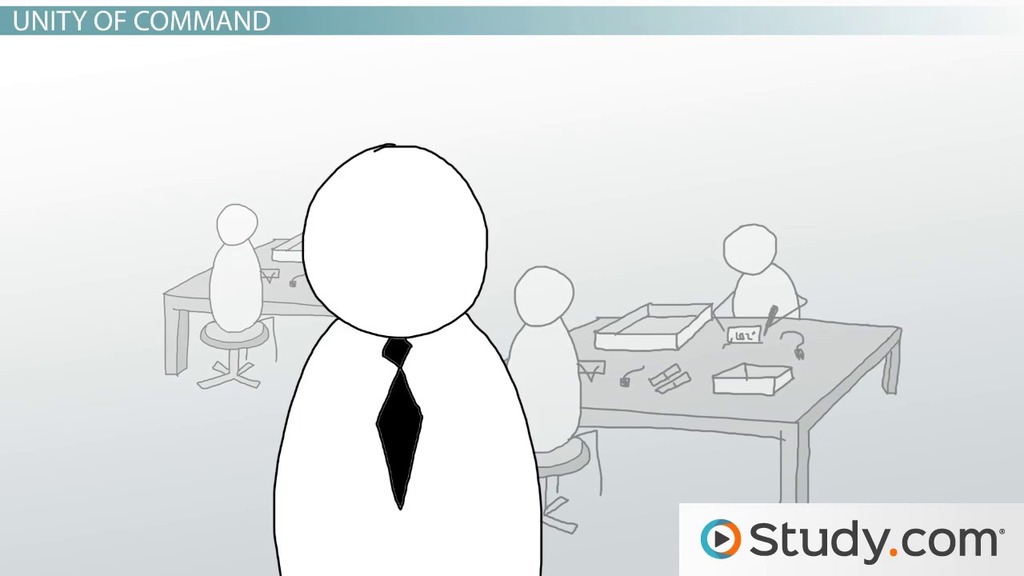
When you are granted a formal position of authority by official appointment or other formal grant of authority you are in command.  You may issue an order and expect compliance.

Leadership does not require the benefit of command and getting things done through the use of personal impact and influence skills  without a formal appointment or granted authority can be harder but sometimes is longer lasting and ultimately more effective.

Balance Command and Influence

Earning the ability to guide and support others through trust and collaboration is typically more difficult than issuing directives and expecting compliance based on the dint of command authority.

However, sometimes the direct approach is required due to urgency and priority but if overused the ongoing effectiveness of your command authority can be diminished.

A mix of command behaviours with more facilitative ones is often the best approach.  The challenge is finding the right mix for any particular situation.

Take Your Time

Taking charge should not be rushed and taking time to analyze options and work out the best plan for a given situation is well worth it.

Consider the audience and the nature of the goals.  These may be strategic or tactical objectives and the stakeholders could be mature or inexerienced and every flavour in-between.

Targeting leadership/command approach will typically provide better more sustainable results.


Facts

On Feb 28th I posted some thoughts on the key components of decision making – objective and subjective analysis.  I asserted that the objective perspective was factually based.

A reader suggested in reality even facts are not always the same.  The example given related to directions.  For most the fact is you can travel in four directions, north, east, south and west at any time.

This fact is true everywhere on earth except the North and South pole.  If you are standing on the pole there is only one direction to go (at first) that is either North or South.

Facts are Relative?

This example could lead to the conclusion that a fact is relative.  Not a novel or new theory this thinking is the basis for the Einstien theory of relativity which is, in reality, a theory to explain gravitation.

In overly simplified terms Einstien proposed that all motion must be defined relative to a frame of reference. Without going into the details this idea can be used to explain gravity. 

It also could be extrapolated to dispute the absolute certainty of a fact.  That is the fact is dependent on the frame of reference and so can vary (i.e., it becomes subjective to the frame of reference).

Poppycock

I am not sure the heading of this section is fully applicable, but I liked the word so snuck it in.  For me I feel strongly that facts exist, they are not subject to opinions or interpretation.

That being said for a fact to stand unaltered the context must be clearly defined.   And then use your truely objective facts wisely and you will arrive a good decisions the majority of the time.