Tag Archives: change

Taking Time

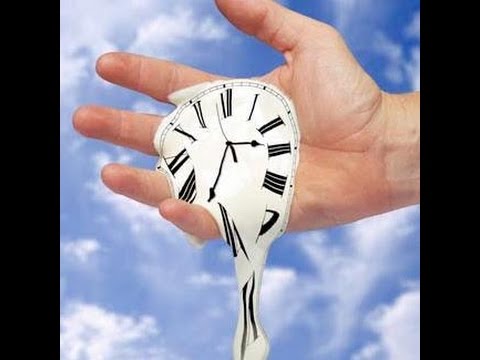
The progression of time leads to change.  Something occurs in every moment and these occurrences represent a change.  Whether the activity was the similar to a past activity, or not, something changed.

For example, if you get up in the morning, shower, shave, dress the actions seem similar.  Each of these activities results in a change, for example from sleeping to waking state, from whiskers to clean shaven, from dirty to clean, although the activity itself and order of the activities might be unchanged.

Accepting Change

In fact the only way to freeze change would be to stop time, something that can be conceptualized but is unlikely to be actually realized.  Time marches on mercilessly.

We do of course have some control over the extent and magnitude of change we are comfortable with and can influence or impact the amount of change we are willing to accept. 

Like the daily march of time, change is inevitable and some things we must just accept, “it just is” and move on.  Being able to recognize when to accept and when to take action is critical to your ongoing peace of mind. 

Passive/ Aggressive

One common method to address change is to create the perception you accept it, while aggressively resisting through sabotage and other indirect practices

Open resistance is a far better practise both from the perspective of the challenger and the champion of the change.  Open discussion can enable the changes to occur with less anxiety and frustration by all parties while allowing for the potential of collaborative modifications.

The key is recognizing change is inevitable and resisting is a far less productive practice than participating. 

Constant Change

When things are made different whether a behaviour, an object or a physical transformation,  a  change has occured.  Of course change can range from small to radical and every measure in between.

Both small and major changes occur around you every day from the instant you are born until death.  Given all the possibilities for things to alter, from the color and make of the car you own to the way you think both conciously and unconsciously (e.g. a bias) change is inevitable.

Pace and Value

Change will occur, but how much, how fast and what order of magnitude will the impact be?  Will the change result in immediate satisfaction, dissatisfaction or will it be neutral.

Alternatively the impact of change may take some time to become apparent.  The future result of a change could be both unexpected and surprising (unexpected is usually a surprise but not necessarily).

What you can do about the pace and impat of change varies and certainly you can embrace changes, resist or ignore them.

Things are changing, so I can do what I want

Whatever change is, one thing it is not; an excuse to behave any way you want.  To say, I behaved badly because things are changing does not fly.

Whatever motivated a particular behaviour,  future change is only valid as a motivation if the possibilities, impacts and rationale are at a minimum communicated inadvancd.

For example to say I acted this way because things are changing is a pretty lame excuse.  If things are changing why not indicate what the anticipated change will be, why it will impact the way you behave  and then act?

Seems like a reasonable and effective sequence to me.  If you behave badly because you are arrogant and self centered, blaming bad behaviour on the fact things are changing is pretty weak.  After all things are changing all the time.

The pace of change

Change is inevitable.   Planned and managed with a clear objective based on reasonable benefit assumptions, change is good.  There are a lot of conditions that needto be satisfied to ensure change is good, but the results make it worth the effort.

Sometimes conditions create the need for a change. For example someone leaves an organization or team.  At a minimum their replacement will be a change, but a reorganization or other restructuring are opportunities that could also result.

The pace of the change

For todays post we assume a good change is in process.  The objective and most beneficial change actions have determined and a approach is planned.  That is the work (e.,g., communication, implementation) activities are defined.

Should this change proceed slowly or rapidly?  Is there an optimal type of approach to change scheduling.  Should we push it through quickly to reduce the anxiety of affected stakeholders or will slow and cautious lead to a higher quality result?

Both approaches have benefits and pitfalls and these can vary depending on the specifics of the change.  Sometimes there are constraints that drive a slow or fast approach (e.g., things are bad and need to improve fast or the culture mandates a slow and discursive approach so you have limited choice of pace.

Most importantly, when determining the schedule for your change (i.e., the timing of the implementation activities) be sure to consider the associated risks and plan mitigation activities. This applies whether a fast or slow paced change.

For example if the pace of change could lead to team demorialization or mass exodus consider this risk and plan what to do if it occurs.


It’s getting better all the time

Improvement is the act or a thing that makes something better.  This requires a change. By definition the improved state is better and so different from the starting state.

Bad to Good

A common misconception about changing for the better is the starting state was bad.  This is not necessarily the case, in fact, improvement from dire straits to an acceptable level in one step is relatively rare.

Incremental improvements or continuous improvement are both more common and better.  When the environment is at rock bottom sometimes just starting over is more practical than seeking improvement.

Consider an Olympic silver medalist attending the next Olympics and winning gold.  A silver medal is an exceptional achievement in and of itself.  Improvement to gold is a great improvement but, as noted, does not mean tbe starting point was bad.

Managing Change

At it’s core, improvement comes through change .  Whether it be internal change ( you change yourself), external to you or a combination.  Like all change, it is most effective when well planned and communicated.

In  essence, all change will have improvement as an underlying motivation.  There may be a variety of specific reasons to make a change, for example to reduce costs or increase revenue or quality,

Whatever the reason, to be executed effectively with a positive outcome,  those affected by the change must have a clear understanding of what the improvement is and why it’s of value.

Embracing Change

As we go through our lives understanding and believing in the value of change, we can lessen our natural resistance and this allows us to be part of the improvement, we become better.

Submit and Hope

When planning a change or presented with a change to consider most people follow a simple three step approach.  This can be a conscious or unconcious activity.

First, analyze, then based on the analysis act and finally judge the results, ie, succeed or fail and repeat.  The choices to act can range from wait and see, submit and hope for the best or to proactively influence the change.

For Example

You are thinking of making a lifestyle change from a single to married status.  Whether conciously or without great direct thought the impacts of the change  are considered ( this happens whether you realize it or not).

You may actively list pros and cons or just let emotions and intuition drive your action.  Or a combination of conscious and unconscious thoughts may lead to the decision.  You will get married, or not and you will be happy with the decision or not.

Waiting, Hoping

As you move through life you may encounter change initiated externally to you .  That is, a change made for you, not by you .  In these cases, the process, analize, act, check results is the same.

When the change appears positive or exciting, something that creates an opportunity for you you may decide to wait before acting or submitting your thoughts and then hoping for the best.

This does raise an interesting question about the correct balance between creating your own destiny (being proactive and working to control the results) versus waiting/hoping for the best (like winning the lottery)

People do win lotteries but my recommendation is always take some proactive steps to influence the results ( to some extent).  After all, it is your destiny.

Open or Boxed

Resistance to change is a natural behaviour.  The risk of the unknown is a key factor, creating fear and resistance.  There is a comfort in knowing how to behave based on past experience.

Many people “box” their day to day existence.  Surrounded by the familiar they can relax.  Adventures in travel and other activities can be controled and risk of the unknown minimized.

Embracing Change

Accepting change fits the standard risk reward model.  Typically the greater the risk, the greater the reward.  Not being too bothered by change can be very satisfying.

Unfortunately the changes could also have negative results.  Embracing change therefore, is not always the best approach.  Like most things striking a balance between resistance and acceptance is probably the best approach.

Staying in the Box

Typically routine is relaxing and while it may have some boring aspects, your basic needs can probably be well satisfied.  For example get-up, get on the bus, take the 9:15 to city, work all day for some pay and so on  (I think theres a song in there somewhere).

Entrepreneurs and senior leaders behaviours typically burst out of the boxes walls.  They are open and ready to take on what comes, good or bad.

This behavioural group is less common, most people stay in the boundaries of their box, these are followers.  A key atrribute of those that embrace change, open to try new things, is usually high levels of grit.

Recognizing openess can lead to both good and bad scenarios, through the application of grit you hang in there and work your way through to success.  This may take a bit of effort though, that’s what grit is all about.

Better Things

English rock band the Kinks song “Better Things”expresses the epitome of optimism in the chorus line ” I know tomorrow you’ll find better things.”

The song was first released on the album titled “Give the People What they Want” in 1981.  What a fabulous album title.  No artistic crap, let’s play what people want to hear.

Optimism

It is all good.  What is wrong with this perspective.  That is, believing everything you do and everything that is done to you is good has got to be pleasant.

Not just believing it, but feeling it.  Knowing it is true, your life is magical.  There is a strong case for consistently practicing and displaying optimism.

Basically, optimism has no downside.  Back to “It’s all good”.  Hopefully this mantra is not just lip service.  Thinking and believing that ultimately everything is beneficial, even if painfull in the moment, leads to a life well lived.

Attitude

Happiness (like sadness) is both infectuous and addictive.  When your underlying emotional construct is positive not only do others see and feel it, but they catch it as well.

Of course the same goes for a dismal gloomy attitude.  Sadly though what people want is better things.  As a human race, overall, one underlying motivator of all behavior is improvement.

As a race, we believe in better.  So why not practice it every day.  Embrace the concept that it is all good and in the words of the Kinks, I know tommorow you’ll find better things.


Change is good

In 1964 Bob Dylan issued his classic self penned folk song “The times they are a changin”. It was an anthem for the youth of the time echoing the popular desire for cultural change.

As appropriate as the lyrics were to the decade they were written in, the message is timeless.    Consider:

“If your time to you

Is worth savin

Then you better start swimmin

Or you’ll sink like a stone”

Basically, I interpret this to mean, if you can’t keep up with the change, you will drown.  A true statement any time, not just in the decade of the sixties.

Resistance is Futile

In Star Trek, Next Generation. one of the classic antagonists were the Borg.  An alien race that absorbed everything in their path.  Their motto was “Resistance is Futile”.

Although it does not fit exactly within the context of the TV drama, I have always appreciated the catch phrase as representing the epitome of my attitude toward change.

That is, embrace the change and get on with it.  There is little value to resisting.  Ultimately the effort, time and potentially the pain you elicit does not stop life’s progression.

Change is Good

Often I get feedback that not all change is good.  The clarification I provide is; this phrase does not imply all change should be accepted blindly without attempting to influence or impact the nature and outcomes of the change.

Simply put, the process of change in and of itself  is beneficial.  That does not mean it’s not necessarily a process potentially fraught with frustration but it is better to embrace and guide the change rather than to battle it.

Divide and Conquer

There are some bad behaviours which managers and leaders leverage to retain their organizational power.    Growing your influence through positive leadership practices is not always easy.

Leadership styles focused on creating an environment where everyone is motivated, happy and most importantly understands thier role within the context of the organizations strategy and vision are obviously preferred.

Divide and Conquer

When a manager or leaders prime objective is to retain personal power, the managing style can be focused on creating chaos.  In this way others are too busy defending themselves and so are not able to create a united front to combat and ultimately displace the ineffective manager.

This is a pure power play usually employed by insecure mangers who have neither the time nor the willingness to excel.  Maintaining the status quo, that is their position and compensation level, is the primary goal.

Creating a Positive Perception

In effect by creating confusion and disharmony this leadership or management style enables the encumbent to be percieved in a positive light.

In essence, it is all smoke and mirrors.

And the Solution

If you are in this type of scenario you can either accept it, leave or influence change.  Each option has different levels of effort and associated impacts.

Influencing Change

The key is to first observe and gain an understanding of the most disruptive behaviors being used by the manager.  Then develop a plan to counter these behaviours.

For example the manager might ignore questions and requests for action.  Emails to them might seem to go into a giant void never to be  heard about again.

To counter this, your messages and communications could be crafted to carefully involve others (external or internal organizational stakeholders).

This approach would highlight the negative behaviours and bring along others to help in prompting the change.

There is no simple, absolutely certain approach to change or eliminate this management or leadership style, but being a successful change catalyst leads to personal satisfaction, a sense of accomplishment and is to the benefit of all.

International Day of Happiness

March 20th is the International Day of Happiness,  unanimously adopted by  the United Nations 193 member states in 2012.  This day is intended to highlight the need to recognize the pursuit of happiness as a human right and a “fundamental human goal.”

Not New

There is no question this is a noble goal albeit not a new one.  Throughout the ages since dawn of civilization humans have philosophized about the pursuit of happiness.

Philosophers  such as Bhudda, Socrates, Confucius, Aristotle, Plato, Epicurus, Mencius, Abu Hamid al-Ghazali, and religious figures like Jesus, Abraham, Moses, and the prophet Muhammad have all comptemplared the definition of happiness, and how to achieve it in some shape an form.

My own personal philosophy of life stems from the work of plato.  I consider my happiness founded in the belief I can persue my own maximum pleasure as long as I don’t impinge on that of others.

Making it Happen

Sadly creating a worldwide environment of happiness and joy for all, while a noble objective, is hard to do.  A simple poll in my workplace today revealed few (actually I found none) aware this was International Happiness Day.

The need to declare such a day, to bring attention to the basic human requirement for global happiness is in itself unfortunate. Happiness should be endemic, the norm rather than something to strive for.

Ah, Utopia.