Panic Demic

In a time of a pandemic, the new norm becomes social distancing.  That is keeping at least one meter away from others.  Perhaps elbow bumps are okay but handshakes and hugs are out.

Given the covid -19 virus can live on surfaces for up to a week or more I am not sure social distancing has great value.  Airborne transmission is considered not to be the main vector, although not much is really known.

Over Reacting

This is a serious disease that is propagating rapidly, often passed by carriers with no symptoms.  The illness can be fatal.  Putting protective and preventative measures in place is only common sense.

In this situation not reacting makes no sense but overreacting/panicking is probably not a good choice.   Things like hoarding or pure isolation could be more harmful.

In Canada, the authorities’ reactions have been somewhat measured but the general populous is acting in full-on panic mode in some cases.

Economic Reality

World wide commercial activity is clearly going to be reduced during this pandemic.  This loss of productivity will worm through each countries economy over time.  This is obvious.

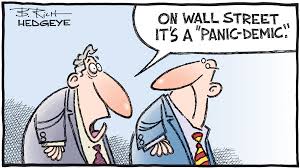
What I find hard to understand is the running for the exits before the fire has really started.  Stock markets around the world have crashed, but the economy soldiers on.

Must be anticipation.  Herd mentality. All-consuming panic.   Basically just a sudden uncontrollable fear or anxiety leading to wildly unthinking behavior.

For all the good it does.  Not!
 

Believe

Can you feel sure that something is true and doing so makes it true? That is, could belief become reality simply because you choose to make it so?

This is probably a stretch.  Making the impossible become possible is not a magical activity that is accomplished by a sweep of the wand.  However, attempting to elicit a change without believing it possible reduces the chance of success.

Trust in Yourself

Being sure something is true arises from a firm belief in your own judgment.  How you view your own reliability governs the strength of your belief and the intrinsic power of it.

Proceeding on the basis of blind faith can be risky and trusting in yourself without paying attention to reality could not only fail but also lead to negative consequences.

Self Doubt

It does make sense to temper your self-trust with a dose of doubt and some cynicism.   The trick is not to let self-doubt become the overriding factor in your decisions.

Doubt should be based on objective analysis to the greatest extent possible.  That is, where it makes sense to question whether something is true or whether you are able to make it true, this is best based on the supposition that is supported by some facts.

Accent the Positive

Having a strong belief and letting that drive your outcomes is really just a way to accent the positive.  Focus on the positive is far more likely to drive achievement of what you seek.

And for those that were wondering, this message of positivity is not brought to you by fox news.

Networking

Forging strong bonds with fellow humans is beneficial to both them and you.  Being able to leverage the support of others is invaluable (this should be a two-way street for best effect).

Building and maintaining a network of personal connections is not effortless.  It can take a lot of effort to interact with other people.

Time for Reflection

Solitude can help you refresh your mind but it should be balanced with more extroverted behaviors.  Living in seclusion from society (i.e., constant solitude) is a choice some make (often driven by religious conviction) but this practice has a cost.

The amount of solitude each of us needs to reflect and recharge varies person by person.  It also depends on how much ongoing interaction and stress you have in your life at any given period of time.

The key is to not overdo your required time alone.  For the majority of us, our interactions with other people, friends, family, colleagues, and acquaintances are critical for us to thrive and succeed.

But, I strongly suggest, don’t overlook it.

Strengthen your Networks

Whether social, business or family focus having a  group of people that can reach out to you, and you to them is a necessity.  We all need the help of others at times, as they need ours.

The focus of your interpersonal network should not be on size but rather quality.  The base number of connections you choose is a personal choice and may be limited to a small group however the key is their ability to help you and yours to help them.


Giving and Taking

When we freely provide others with something it is usually accepted without dispute or controversy.  In the normal course of events, people may receive things like salary increases or free medical care.
The provision of these types of things made sense at the time.  The giving of things are often based on current circumstances and can be logically supported as a good thing to do.

Taking it back

Once given, getting it back will typically elicit a firestorm.  While it is human nature to take a free benefit without question, letting go is an entirely different proposition.

Governments, in general, are great progenitors of the give and take syndrome.  On a very cyclical basis, often linked with economic cycles, governments will give only to later take back.

Government spending which can know no bounds during times of prosperity can be shifted 360 degrees on a dime with changing circumstances.

Avoiding Churn

The give and take cycle, particularly on the political front, has a long history of rollercoaster-like ups and downs.   For me, the most frustrating thing is the cost of this churn.

The taking back of political gifts has a cost.  Leaving things in place and working through them in a less draconian way (i.e., big bang cuts) will, in the long run, cost less and provide a more stable and consistent environment.

Governments support their actions with strong arguments of dire consequences but this is mostly meaningless rhetoric.   The harder strategy to carefully consider options that are less drastic is mostly put aside in the favor of the politicians’ favorite device – the cataclysmic rant.

Attitude

Your personal behavior is largely driven by your attitude.  That is your core perspective, what you think and feel about things.  A positive attitude is can drive success.

By focusing on the positive, understanding and believing what you desire is within your grasp, you are more likely to attain altitude and soar. (Positive attitude will result in altitude).

You don’t need drugs or other artificial stimulants to get high.  The right attitude can take you there all on your own.

Perception Matters

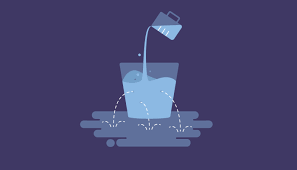
The classic example of attitude is illustrated through the description of the glass that contains water to its mid-point.   Some respond the glass is half-empty (a pessimistic attitude). While others view the glass as half-full (an optimistic attitude).

To stretch the metaphor, our attitude toward the glass will influence our subsequent behavior.  The pessimistic view might lead you to sip the remaining contents slowly and drink them slowly over time.

The optimistic person will likely drink fully and quickly expecting additional supplies to arrive when needed.

With Caution

A positive attitude will most certainly include a dose of optimism.  Sometimes blindly believing in a positive outcome can be helpful but there is a risk optimism that could lead you to be careless and open to consequences.

A balance of appropriate caution well still believing positive results can be achieved is better than wild uncontrollable belief that you cannot fail.

A carefully tempered but largely positive attitude will always outweigh a negative and pessimistic approach but a small amount of doubt can be useful in preventing calamities.

Right or Necessary

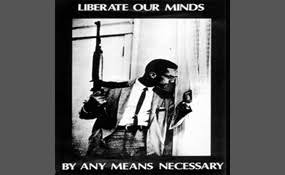
Is it right to do what is necessary? Necessary action is deemed required to be done. It is considered needed and essential albeit this usually being a bit of a subjective determination.

Acting in a way that is morally good and justified based on acceptable ethical and behavioral considerations can be thought of as being the right thing to do.

What should happen when necessary and right actions conflict?  The necessary might conflict with moral and cultural standards but has a criticality.  We are convinced it is essential.

Horns of a Dilemma

When the necessary and right thing conflict, we are in a situation in which a difficult choice has to be made.  This could be between two or more alternatives, especially equally undesirable ones.

This choice can have significant consequences, perhaps even of a life or death nature.  Sometimes it is not necessary but is the right thing.  That is not too difficult a choice.

However when it is a necessary action but not right (i.e, appears unethical) the things that make it necessary probably have significant consequences and some urgency.

Integrity or Profit

The motivation associated with necessary action has a positive outcome.  Someone profits, whether you, others or people kind as a whole.

These benefits must outweigh the believed negative morality of the necessary actions.  Determining if this is the case is not always easily done, or even in an objective way.

This is a foundational battle between good and evil.  By doing evil for good reasons do we become evil?


Selflessness

The impact and effectiveness of our individual strengths can be multiplied many times over through the practice of selflessness.

By focusing our attention more on the needs and wishes of others than with one’s own, we create an environment for teamwork and collaboration.

But it’s all about me

Using circular logic, I can argue being selfless actually supports our individual needs.   It is a bit trite a saying, but really there is always enough success for everyone to enjoy.

Working effectively in cooperation with everyone is both easier on you and everyone else (if you have the right attitude) It is also more effective.  Results are of higher quality, achieved with less effort and create greater satisfaction because everyone can derive some.

Logically, being selfless can, therefore, support my selfish objectives.  Philosophically, seeking maximum personal pleasure without impinging on that of others can require some degree of selflessness.

Collaborating

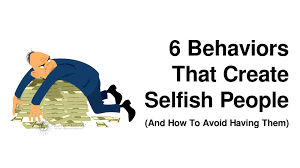
Working jointly on an activity, especially to produce or create something can be a selfish activity.  You may be primarily concerned with your own personal profit or pleasure (i.e., selfish) but realize being part of a team is the best path to success.

In this way, collaboration and hedonistic self-interest can intersect.  This can be to everyone’s benefit.  Balancing both selflessness and selfishness effectively can actually be a great way to achieve optimum personal satisfaction.

Two Way Street

In brief, helping others helps you.  Being self-centered and confident your life is all about you does not necessarily translate to a lack of selflessness.

Helping yourself at the exclusion of others is selfish but helping yourself in conjunction with others is just smart.