Respect

Building on the personal value “Everyone is Important” it is natural to both act with a feeling of deep admiration for others based on their abilities, qualities, or achievements.

Respectful behavior is how we expect others to interact with us and it is reasonable to consider we would do the same for them.  It also fully supports the tenant that our differences are important and should be embraced/leveraged.  

Balance Respect and Action

On a bit of a contrary note (contrary to the aforementioned value), it is possible if you treat others with respect they will walk all over you.   In this case caution may be needed. 

This is not to imply we should not be respectful to others in principle, that is to recognize, accept and to some degree admire their capability. 

Rather it is just a caution about intensity. Some may abuse respectful behavior and others actually respond better because they appreciate the forceful direction that disregards them to some extent.  (Sometimes it is just easier to accept, agree and move on)

Polite but Firm

In some cases your objectives require more directness and less repect for the others but this does not mean rudeness is either a valid or acceptable approach.

Some belief just being polite is respectful so in a sense polite and firm avoids you being a door mat but also can be considered a respectful format.

In the context of this post respect to others is much more than politeness and can open you to being walked on but this does not mean polite behaviour should also be cast aside. 

Confidence

Self confidence is the belief you can rely on yourself.  The level of your own self trust is reflected by your behaviour. 

Intrinsically, we all have firm trust in ourselves but it can be eroded over time through the influence of environmental circumstances.

Believe

It is very important to take accountability for your self trust.  Personal confidence is yours to own and manage and yours alone. 

This does not mean you should be unaware or heedful of feedback and signals from others either verbally or through actions. 

The key point is to remember is this is your life and while your actions should not be taken with an unwavering conviction that you are right, neither should you bow to others unless the rationale is strong. 

Be Firm, Not Stubborn

Personal confidence is not about charging head first like a bull, challenging all around you and portraying a high level of firm self trust. 

It does empower you to be firm in your beliefs not to the extent of stubbornness but rather to the level of fair judgement.

Be aware of your surroundings but trust in your ability to judge fairly the best path to follow.  Firmness is articulated through reasoned analysis not forceful action.  

Rely on Yourself

The most important message associated with self confidence is the belief that everyone is important, that includes you. 

Feeling Good

In very simple terms, a core personal objective that can be applied to everyone is seeking to feel good.  While subjective in its determination, feeling good is about having happy and positive feelings about your life.

It is a pleasurable feeling.  Things that create pleasure can be motivating and seeking a state of happiness is one of these. 

Are you happy?

Although happiness is a subjective assessment, our feelings are very real to us and we generally know what they are quite definitively (although mixed feelings do exist).

Although it sounds a bit trite, we all recognize when we are happy and when we are not.  Contextually the drivers of happiness may be different but the ability to recognize it’s presence is not. 

Creating Joy 

Creating joy for others is one way to create your own happiness.  It can be the key to a pleasurable life.  Simply put, when we make other people happy we make ourselves happy. 

The real joy in gifts is not in the receiving (although we do enjoy that) but rather in the giving.  It makes us feel good to make others happy.  

I have often noted in my posts, “it’s all about me” and although today’s post seems to have an altruistic perspective the self-interest aspect of my beliefs is satisfied by the pleasure received through giving others pleasure.  

So don’t hesitate, be the joy that others crave.  

The political answer

I attended a question and answer session today with the Minister of Advanced Education for Alberta.  It was an interesting reminder for me about the political answer. 

Often politicians say a lot of words in response to a query but the question itself remains unanswered, although the intent is for the response to appear complete. 

Positive Perspective

Many of the inquiries were about funding ( no surprise).  The answers to these questions were a carefully crafted non-response.

That is the answer follows a pattern like; “funding that program has merit, however, all funding must be balanced, a budget review is imminent or underway and I really can’t say much more about that until the review is complete.

Being direct

This measured approach to responses is better for me than outrageous statements simply focused on making the speaker look good.

A good example of this, by a politician who is currently front and centre in the public eye, is the diatribe of Donald Trump.

President Trump does not hesitate to say what he is thinking, even if it contradicts what he said previously on the same topic, which it often does. 

Although his comments have led to labels like pathological, sexist, racist liar he somehow continues to retain some level of support and popularity.

It make me wonder is the measured, reasoned, logical approach to acting in the public interest is going by the wayside?

Is the population tiring of middle of the road politicians, are fierce conservative bullies with dictorial aspirations making a comeback?  Sadly, could be.

Challenge

Many psychological studies have demonstrated the value of doing a task or job that requires a great deal of effort and determination.  In fact, lack of challenge in your daily activities can impact your quality of life. 

Challenging activities can provide the underlying reason to act and are a real motivating factor.  The basic desire to do stuff, take actions of some sort to achieve objectives, is a basic part of human nature.

Satisfying Outcomes

Usually, the things we undertake have a purpose.  Achieving this outcome provides satisfaction of achievement but the difficulty of being successful is a key contributing factor to the level of pleasure derived from the achievement. 

Simply put, successfully completing a challenging activity is more satisfying than one that is relatively easy.  Our personal development and growth is related to the levels of difficulty. 

Throughout our lives we have desires and we undertake actions to attain these goals, but just achieving the goal is not the only measure of success.  We do not feel as satisfied or even satisfied at all if the achievement required no effort on our part.   

Making Changes

Sometimes when we are not challenged by the things we do, it is easy to fall in the trap of just carrying on.  The effort of effecting a change is not perceived as fundamentally required to increase our personal happiness. 

The lethargy and overall feeling of boredom become acceptable.  Over time this has a negative impact on our health and if we don’t snap out of it and make a change the impact on our overall health can be quite detrimental. 

Persuasion

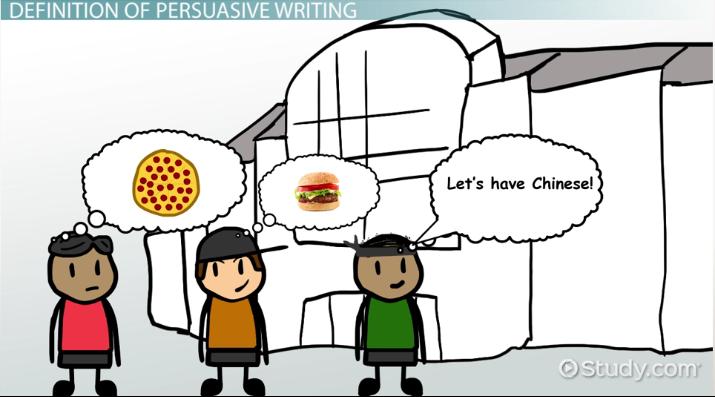
When you want someone to believe or act a particular way you are practising the art of persuasion.  The intent of the persuasion activities is to convince them.

Often persuasion can be attempted unconciously.  That is, we have something we want others to believe or do and so we behave accordingly, intuitively.

Argument

We can construct our arguments unknowingly.  We recognize what we want to happen and so craft our message in a way that is pervassive, so ultimately another person will act the way we desire.

Sometimes our proposed action may have a weak justification and so we bolster our argument using a position of authority or threat.

For Example

The TD bank recently sent me an email requesting I attend at a local branch to update my personal information or access to my credit card might be restricted.  

They gave me a deadline to do this by mid-January.  Providing deadlines is a good way to reinforce threats.  Also a standard marketing technique.

I suspect TD was trying to persuade me to come to a branch so they could try and sell me stuff.  This is something most people resist so they added a veiled threat.

TD’s attempt at persuading me to subject myself to a sales pitch, without any real justification has only upset me to the point where I want to cancel my card.

Backfire

When we craft our arguments in support of our objective focused solely on our objective we can dissaffect our audience.  This can reduce even eliminate our chance of successful persuasion.

This is a strong argument to think through how we will persuade carefully before proceeding.

Set your pace

The consistent and continuous speed at which you work,  (i.e., complete activities to achieve your objectives), is your pace.  It can vary from fast to slow. 

Pace is a critical determining factor relative to overall success.  From a highlevel conceptual perspective, too slow can diminish the impact while too fast can impact the overall quality. 

Determining Optimal Pace

The pace at which tasks are executed is often just a conscious decision.  Environmental factors often drive the pace of activity and you just go along. 

Accepting the default approach to your pace has some drawbacks.  The obvious attributes of impact (timeliness) versus quality figure significantly in this determination.

Proactively figuring out the best pace based on the standard value equation (effort/outcome) and then proceeding accordingly ultimately impacts the overall level of the accomplishment. 

Basically, going fast or slow and all points in-between can dramatically effect the outcomes.

Accountability for the Results

A key contributing factor to your ability to own the accountability for results is the pace of execution. This applies from conceptualization through planning to completion.  

Accepting the default pace of the changes you participate in will be easier most of the time, but your level of success might not be where it could be.  

Focus on achievement, consider the pace at which you are proceeding and adjust ongoing to achieve optimal results.   


The politics of fear

Today the US mid-term elections are underway.  These cover seat in the senate, house of congress, state governors and a number of other things like plebiscites and other miscellaneous elected positions like district attorneys. 

There is a belief based on polling to date that the Trump factor will be a key driver of the election results and the country may swing from a Republican party focus to Democrats (or reinforce Trump staying strongly Republican.)

The Caravan

As many as 6000 Central American and Mexican refugees have formed multiple caravans that are winding their way to the United States. 

President Trump is treating this as a danger to the United States and is moving up to 15,000 troops to the Mexican border in a defensive posture to stop illegal entry into the country. 

This series of events is well publicized and personally I wonder if the timing was orchestrated to purposely gather some support for Trump and the republicans on the eve of the mid-term elections (admittedly a conspiracy theory).

The Fear Factor

Fear of invasion by maybe 6000 immigrants, albeit probably an irrational fear, is fabulous propaganda tool.  Fear is well known as an excellent way to manipulate the masses.

Groupthink is rarely logical and strong emotions like fear can be strong behavioral motivators.   Throughout his two years in office Trump has shown his preference to motivate through fear, on many occassions. 

My conspiracy theory is possibly far fetched, whether true or not, I really do hope the Republican party looses the majority in both houses today.  

Artificial Intelligence

Similar to the many public predictions about the impact of the internet, some 30 years ago, this year there has been a real focus on discussions about artificial intelligence and the major changes it will bring. 

Although we call it artificial intelligence (AI), to date, AI is really just the application of “brute force” computer processing to complete more complex tasks (e.g, playing a game, or recognizing a face).

My own vision of AI, based on the science fiction stories I grew up with, was robots that were able to mimic the processes of the human mind, only with fast processing and extra memory.

Black Box

To imitate the workings of the human brain, we need to understand how it works.  Since the actual workings of the mind are currently a black box, we are limited to emulating the outcomes using the mathematical processes which drive computer operations. 

That is, we can determine the outcomes of human thinking and build a computer that is able to replicate, even improve, on these outcomes. 

However, the way the computer accomplishes this is limited to the underlying framework of computing, i.e.,  mathematics. 

The logical part of our thinking process can be translated formumatically, the emotional and intuitive part, not so much.

Learning

As the development of AI has progressed a relatively new term is emerging, “machine learning”.  This is in recognition of one of the key capabilities of our brains. 

Continuous improvement in the outcomes of thinking is not possible unless coupled with learning processes.  As with basic intelligence, for the human mind the, the mechanics of learning remains a black box. 

Imitation

The human race is certainly developing the capability to emulate/ imitate the work of the human mind but our ability to replicate the actual processes (emotional and learning) is likely something that is far in the future. 

Expertise

Through a combination of training and experience we all develop specific expertise over time.  This is a skill and knowledge in a particular field.

In many cases professional credentials are associated with this expertise.  For example a journeyman plumber, medical doctor, certified accountant and so on.

In somes background and demonstrated knowledge (for example authoring a book or a specific role) are the only supporting evidience.

Skeptism

Sometimes experts rely on their background to support suggestions and recommendations.   In the Corporate world consultants advice is sometime taken based only on their reputation.

 Regardless of the nature of the experts input, (whether it is a repair, direct action or just a recommendation) it is wise to exercise some healthy skepticism.

Obviously training and experience are valuable indicators of  quality but regardless of the credentials there often are optionxs and the experts input is just one opinion.

Pet Peeve

I frequently notice those designated experts are annoyed if I do not immediately bow to their greatness.  How dare I question them, after all they are the subject matter expert.

In context, while training and experience are invaluable, they are not absolute.  Consideration of supporting arguments and logical analysis are still needed to supplement the expert opinion.

In many cases there is no single absolute right way.  In these cases debate and argument to support the expert conclusion is a reasonable expectation.

Sometimes I wonder is the so called subject matter experts need for their input to be accepted is as much about self justification as anything else.