Leisure

I have always found work to be one of the most deceptive words in the English language.  Especially when coupled with the concepts of leisure time and time off.

Depending on your perspective, work is either an activity in which one exerts strength or uses one’s faculties to do or perform something: or activities that a person engages in regularly to earn a livelihood.

Poor Description

Earning a livelihood or exerting yourself to do stuff that will result in the achievement of something are actually very different things.  Of course, the do compliment each other and have similarities but at the core, the meaning is very different.

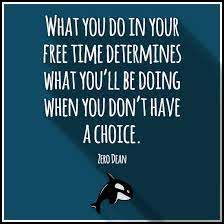
My challenge is that both leisure and time-off activities are in fact work, just work for a different purpose.  This is my pet peeve.  Many consider leisure time more pleasurable than “work” because you have freedom.

My argument is work is work whether you choose it freely or are directed to it by others or even just your own sense of accountability.

Focus Differentiation

I could be working in my garden during my leisure time (although why I would freely choose this type of activity to do this is beyond me).

Gardening is work, most likely my spouse directed (requested) me to it so while it’s not work focused on making a living it is work with a purpose – to keep the peace.

Constantly Working

Ultimately we are all constantly working on something (maybe as simple as just breathing).  The objective and value of the work clearly varies but is very contextual.  Often it will have nothing to do with earning a living.

Vaccine Games

Big news item the other day, Russia announces the covid vaccine is approved for use.  This although stage 3 (widespread testing) has not been conducted.

Based on the best information cobbled together by the press about 87 people have tested the vaccine so far.  This raises very real questions about both the safety and ultimate effectiveness of the vaccine.

Jumping the Gun

While the continuing positive progress toward the development of a vaccine is welcome, Russia’s announcement is very negatively colored by the doubt it is generating worldwide.

Is this really an effective preventative solution or is it just Russia eager to empress the world with their capabilities.  Even the virus name (Sputnik) seems to be more focused on marketing than anything else (first manned space vehicle, first covid virus).

Harm or Good

It is unlikely many other countries will adopt the Russian vaccine without rigorous testing.   This announcement gives hope (that is good) it could be a false hope (that is bad).

Efforts on phase 3 vaccine testing throughout the world will continue and it is unlikely countries like Canada or the U.S. will approve any vaccine for use without completion of the normal full testing protocols.

Of course in the case of U.S., it is hard to predict what Donald Trump will try to do.  Hopefully, there are enough checks and balances in place to ensure the country does not take to many risks (although past behavior makes you wonder).

Bottom Line

This political positioning by Russia could very much backfire.  If the vaccine is not as effective or does have unidentified negative side effects moving quickly might be a mistake.

On the other hand, if the vaccine is effective this will be a great win for Russia.  All in all this is a risk decision which could go either way (good or bad), the jury is out.

Using your Inner Voice

Sometimes it is not appropriate to express publically what we are thinking.  Doing so creates the risk of negative outcomes.  In these cases, the thoughts and feelings we choose not to express outwardly can serve to seem to warn, self-criticize, or influence our actions.

Using our inner voice can be a powerful tool, aiding us to behave in ways that will lead to the best results.  However, since only you can challenge your inner voice caution does need to be exercised.  The guidance you are giving yourself might not map to reality.

Let it Go

Active use of the inner voice may lead to frustration.   Typically these thoughts are negative or bridge on the more harmful emotions (e.g., anger, hate, sadness, frustration) frequent use can mire you in negativity.

Unquestionably there are occasions when the use of your inner voice can defuse a situation.  This should not become your “go-to” approach though as you will become disillusioned and basically tend to checkout.

Present as Humor

Sometimes the things you are thinking need to be said but blurting them out or boldly stating what you really think can often cause more damage than good.

Couching your ideas in humor, stating them in an offhand way and then perhaps saying something like “Oops, inner voice” and laughing can defuse the situation but still enable both making a point and letting off a little personal steam.

Use it, Don’t abuse it

Our inner voices can be very valuable in helping us behave appropriately outwardly without ignoring the issue.  When overused they can cause us to be morose and inwardly focused in ways not beneficial to our mental help.

Use you inner voice but exercise care to use it to the best effect.


Importance

We each view different things as being of great significance or value as opposed to the perceived significance or value of other things.  This can be a very subjective measure.

As with so many things, the level of importance can be viewed by many as a state of fact but the interpretation of the facts remains subjective.  Is anything absolutely factually determined?

I’m Okay – You’re Okay

Back in the 1960’s the non-fiction book “I’m Okay – You’re Okay” by Thomas Harris opened me to some interesting concepts.  The book explored (among a number of other concepts) four simple life positions we all adopt from time to time.

  1. I’m Not OK, You’re OK
  2. I’m Not OK, You’re Not OK
  3. I’m OK, You’re Not OK
  4. I’m OK, You’re OK

Over time I substituted OK for  importance based on my observation of human behaviors and how we often treat each other.   So the life positions became:

  1. I’m Not Important, You’re Important
  2. I’m Not Important, You’re Not Important
  3. I’m Important, You’re Not Important
  4. I’m Important, You’re Important

For me, the fourth option was best, this translated to a value, “Everyone is important”

Subjective Analysis Aside

The importance we apply to others is a choice each of us makes.  By focusing exclusively on our own importance, option 3 or even perhaps the lopsided options 1 and 2 above we are only fooling ourselves.

Real pleasures and satisfaction can only be achieved in conjunction with the recognition that the happiness of the human race is truly based on the whole.

Everyone matters.  By reminding ourselves daily, I‘m important – You’re important we reinforce the basic tenant of humanity and position ourselves to live full filled and happy lives.


ourselves.


Anticipation

Predicting what is probable relative to others’ expectations is the first step in being proactive versus reactive.  The anticipation and provision of other people’s needs and desires before they ask is a great way to impress them.

The primary purpose of this kind of pro-active behaviour does not necessarily need to be making others happy (although that is good) but rather can be simply to position yourself for gains by gathering their support.

Help Others/ Help Yourself

Personal enjoyment and self satisfaction can often go hand in hand.  For example I often find giving a gift and seeing others joy is often better than receiving one (and based on my observations I am not alone in this)

The act of gift giving is a win-win situation (everybody is happy.). Similarly providing help or acting before being asked has value both for the anticipator as well as the recipient.

Those whose needs you anticipate benefit directly from the outcome,i.e., they got what they wanted or needed with little effort on their part. You both feel a good and create a positive impression.

Self Directed

Will power is a highly valued personal trait for leaders.  This can actually apply to everyone as we use our initiative to get things done (albeit they should be perceived by the majority as worthwhile accomplishments)

By anticipating others needs and using our own believes and self determination as foundations to help ensure these are achieved, often even before they are clearly elucidated,  we demonstrate our leadership capabilities.

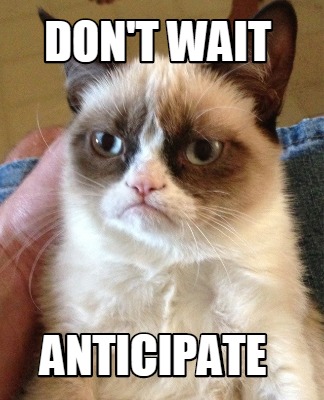
Don’t wait, anticipate.

Lockdown Lingo

Language is constantly evolving.  New words and phrases developed from emerging cultural norms and environmental shifts are really common.

I recently encountered a new term, seemingly quite popular on Facebook, which is the term coronacoasster.  Just a quick way to describe the emotional rollercoaster we are on due to all of the news each day about the Corona virus.

Excitement Every Day

From high numbers of new cases every to, to a drop off in new cases, back to high numbers, the rollercoaster analogy is quite apt.  Although rollercoaster give us a quick thrill I am not sure the corona virus ride will be all that quick or even thrilling.

The daily dose of corona virus news streaming on social media or from emergency press conferences is exciting in a way but not really positive or anticipatory, beyond hope for improvement.

Catch Phrases

Like headlines are to newspapers,  in these days of mutiple social media channels, catch phrases get a special nod from communicators.  It is an easy way  to send a message.

Clarity is not always the intent for these channels, grabbing interest and getting views is often the goal.  For example, Want to hear about my coronacoasting?

You might not be sure what the word means, nor is the author, but it sounds cool.  Here is a phrase that slips off the tongue, people listen because it’s snappy and with it.

Flavor  of the day,  coronacoasting comes and hopefully leaves.  With luck this new phrase won’t hang around for long.