All posts by steve@kerrzone.com

Stand Alone

Poet John Donne observed, “No man is an island”.  Today this is probably more politically correctly stated as no person is an island. Regardless the sentiment is accurate, humans are a social animal.

Sometimes we prefer to live on a virtual island of our choice from time to time.  This particularly applies to those with personalities leaning toward the introverted.

Balance your isolation

Choosing moments of isolation is best for yourself and often and can be best for those around you; However, if not carefully balanced and practiced in the situational context you could frustrate others.

If people think you are ignoring them or being aloof at times when this not appropriate (i.e., they expect you to be engaged) you might be viewed in a negative light.

The key is determining the context of the situation before wandering off to your island forsaking humanity for long enough to recharge.  Think it through, will your period of isolation disaffect others, probably something to be avoided.

Don’t Overstay

Time spent on your personal virtual island can be relaxing and fulfilling.    For some, it is a preferred location.  It’s important to remember we (humans) are inherently a social animal and staying on the island too long is not a good plan.

As Donne observed we are members of a group whether we like it or not and participation is really not optional.  We need others and they need us.

Balancing alone time with people time is a critical skill in managing and ensuring you maintain an even keel and maximize your life happiness and enjoyment.


Presents or Presence

This is a time of year for celebration.  Cleverly labeled, we call this the holiday season.  It is a time of getting together with family and friends enjoying good food and other libations and for many, giving and receiving gifts.

Whether associated with a religious celebration (e.g., Christmas, Hanukkah) or just a milestone (e.g., New Year’s day) the spirit of giving (and getting) is prominent.

Aging Population

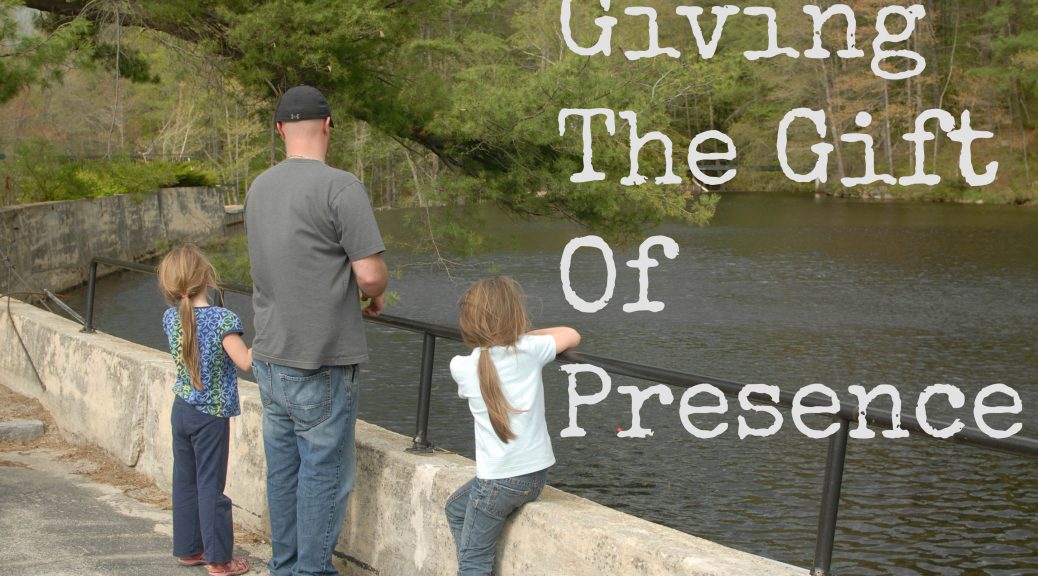
As the baby boomers grow old their need for material thing’s lessens.   Often their real desire is to share new experiences and memories with their friends and family.

For empty nesters,(i.e.,  co-habitant adults whose progeny have left their childhood home) the real gift is simply the presence of their loved ones. To play on words, presence not presents.

The Joy of Giving

While I do not have empirical evidence, my observation over time coupled with personal experience is giving a gift is more fullfilling than receiving.

Don’t get me wrong I do enjoy it when I am given something.  More than the thing being given though is just the good feeling I get knowing that someone cares about me enough to displays it with a present.

On the other hand the personal feeling of joy and pleasure that spreads through my entire being when I gift someone else is huge.   Giving makes me feel good and my observations of others is this behaviour is not just isolated to me.

Remember though, the gift does not need to be tangible, just a hug or a handshake can often be more than enough.  Of course, you need to be there to do that.

Impeachment

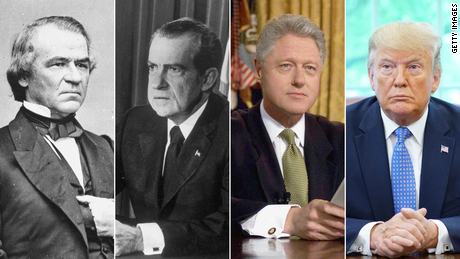
Hot topic in the news these days is the impeachment of Donald Trump.  People think impeachment means he will be removed from office.

This is not necessarily the case.  It can be a step in that direction but the process mirrors the U.S. federal justice system.  In criminal proceeding (not related to political office) a grand jury is struck to determine if there is enough evidence of a crime.

Grand Jury Outcomes

The prosecutor puts his case to the grand jury, there may be witnesses but there is no defence.  If the jury believes the person being investigated might be guilty an indictment is issued and a criminal trial ensues.  If not, the matter is dropped

In the case of elected officials (at the federal level) instead of a grand jury investigation, a house of representatives investigation is conducted.

Instead of issuing an indictment when the politician is considered guilty an impeachment vote  ensues and if passed the result is virtually the same as an indictment, a criminal trial must be held.

In this case though the trial is held in the senate.

Presumed Innocent

Just as in a trial arising from an indictment the accused in an impeachment is presumed to be not guilty.  The trial must prove guilt beyond a shadow of a doubt or there are no consequences (beyond public opinion, a reputation can be tarnished).

So if Trump is impeached he will go to trial in the republican controlled Senate.  It is doubtful they will find him guilty of the crime of which he has been accused.

Impeachment will hurt his reputation but will not force him from office or even from being re-elected.

I am not perfect

I made a mistake earlier this month which has had some negative impacts on others.  My visions of being perfect exploded like a balloon popping, sudden and loud.

The reality is having all the required or desirable capabilities, qualities, or characteristics to be as good as it is possible to be probably still is not perfect.

Embrace Imperfection

Being perfect or imperfect and all points in-between is simply a reality of life.  In fact, this variation from getting everything right to suffering from all going wrong is what keeps me alive.

Stress challenges forging ahead against all costs is what makes living a wonderful and enjoyable experience.  My own vision of perfection includes making mistakes.

And I love it.

Celebrate Failure

The potential for failure is a key part of everything we do and it is always a possibility.  Taking the chance that leads to failure is a good thing so while it sounds strange, acknowledging the attempt, even celebrating it, might be worthwhile.

For me, perfection is planning and executing for success. This is a valid goal while avoiding failure is not.   Restated the road to success does not mean the chance of making a mistake is to be avoided.

Without mistakes we cannot succeed.  Perfection is not without blemish but that is as it should be.  I do all I can to reduce the risk of making mistakes, but I do not avoid them at the expense of learning, striving and undertaking challenges.

Followership

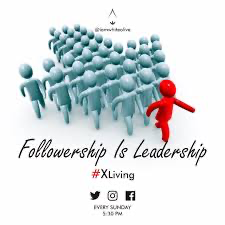
Leadership is a much-discussed topic with many publications and studies focused on defining what it is and how to best practice it.  Often missed is the fact leaders do not exist without followers.

Followership does have some focus in literature and research over the last decade.  It is defined as the willingness to cooperate in working toward the accomplishment of defined goals while demonstrating a high degree of interactive teamwork.

Effective followers are active participants (partners) in creating the leadership process. That is, leadership and followership are intricately entwined.

Chicken or Egg

Do leaders create followers or do followers create leaders?  The answer is probably a bit of both.  To be effective followers require someone to follow but must be motivated to do so.

Leaders need someone to lead (i.e., a follower) but must also be motivated to do so (i.e., lead).

In some cases leaders are appointed or elected and by dint of position are classified as a leader.  In these cases the followers are typically not chosen by the leader but pre-existing.

In other cases followers and leaders develop their roles in tandem choosing each other.  These typically become the most effective and high performing teams.

That is where leadership and follower-ship is not designated but rather arises organically.  Both leaders and followers recognize each others strengths and weaknesses and play off of those.

In this way everyones best is leveraged.  The power of the whole prevails and most often the result is greatness.

Inspiration and Imagination

Sometimes we become mentally stimulated to do or feel something, especially to do something creative, we are not sure the source of the inspiration but it is real.

Coupled with the forming of new ideas, or images or concepts of external objects not present to the senses (i.e., our imagination) the combination of inspiration and imagination can result in innovation.

Something New, Something Different

Developing a new method or idea in order to do something better, to take advantage of an opportunity for improvement, get some  profit or to better the human condition are examples of positive change.

These types of changes would be considered innovative.  The biggest downside to innovative behaviour is the risk of failure.  This causes many of us to pause.   We are afraid things might not work out.

Fear of Change

Inspiration coupled with imagination and an openness to changing things to get better results are the key qualities of great innovators.  You must be willing to suspend your believe for a moment and focus on the possibilities.

From the point you are able to put your genetically driven fear of failure aside you can begin to concentrate on the innovative.  Believing it’s okay to fail is key to being innovative in the first place.

The fear derived from the unknown is greatly lessened when you accept that not everything will succeed nor does it need to.  Opportunity does not equate to success in and of itself,  only to a chance of success.


Fitting In/Standing Out

Humans are, by and large, social animals.  We treat co-habitation as a social norm.  A multitude of family, community and organization (e.g. club, fraternity, union) groupings exist because of demand.

Joining some groups like that special club or sports team for example can be competitive and have wait lists.  The desire to interact with other people is part of our  genetic template.

Hermits, Misanthrope ,Introverts

There are also a smaller number of folks within the general population  who do not have the common tendency to  socialize.  For these people parties and other group events can be tortuous.

The ability to seamlessly participate in groups, chat, and behave naturally does not come easily to introverts.  The effort involved can be exhausting.

Relax and Enjoy

Living in isolation ( the live of the hermit) results in many missed opportunities.  We are social animals for a reason, there is a value equation to do so.  We can and do help each other.

There is a downside as well, groups can act as bully’s en-mass and even enforce group think upon us.  Like all things a balance is needed.

So there is a benefit to participation in parties and other social events  (even for the extroverted) and it is worth overcoming our inhibitions.

However,  this should not be because we feel we must but rather because we are able to consciously participate in a way that is enjoyable, to both ourselves and others.

We need to find that answer within ourselves, and once you do, Go Party!

Principles

Each of us lives based on some a fundamental truths or beliefs  that serves as the foundation for our behaviour and analytical chain of reasoning.

Often these principles function mainly on a sub-conscious level and in  many cases we cannot clearly list them or even fully describe these intrinsic values which drive a majority of our actions.

The Root of Conflict

Not surprisingly interpersonal conflicts can arise from principle based contradictions and the participants frequently do not even recognize  this to be the case.

As with so many adversarial situations awareness of the reason behind the disagreements, in this case an understanding of the underlying conflicting principles is not even considered.

Resolution thru Understanding

In most situations when principles rise to the level of  conscious  thought we can compare, understand and reconcile differences enabling us to overcome arguments and reach consensus agreement.

Sadly this conscious recognition is not always achieved.  This straightforward approach to limiting conflicts and reaching a conclusion satisfactory to all participants does require us to be aware of our principles on a conscious level.

Hidden Bias

Personal principles can be a driver of our unconscious bias.  Our principles develop from an early age and are often mainly set by the time we reach our teen-age years.

They form the foundation of our personalities and largely operate unconsciously. Hence a bias aligned with our principles simply drives  our actions without us often even being aware it is happening.

Thinking about your principles, understanding them on a conscious level can help you overcome inappropriate truly unjustified behaviours.   It can help you quickly identify and resolve interpersonal conflicts.

What are your base principles, do you know?

Visionary Thinking

Typically, analytical thinking proceeds on a linear path.  Leaping to the end of the path without considering the check-points along the way can be innovative but risky.

Mixing a strategic thinker with an analyst and charging them with reaching a decision together can lead to some interesting results, that is, if they both survive.

Out of Step

When collaborators are approaching the problem from different perspectives, you can end up with a situation where some team members require patience while waiting for others to catch up to the obvious conclusion.

This can lead to arguments, frustration and could cause delays in moving forward to resolve the problem.  A result can be analysis paralysis.

This situation is way too common.  Stakeholders basically give up in frustration adopting the attitude  “it is what it is”, nothing I can do but accept the circumstances.

Bridging the Divide

In these situations it is important to first recognize the root causes of the delays.  Accepting the lack of a resolution can be an approach but it is seldom a good choice.

Collaboration among people with significant differences of perspective can be very difficult but not impossible.  The quality of the outcomes make it virtually always worth the effort to go for collaborative resolution.

Accepting the lack of closure because addressing the underlying disagreements, in a respectful and open way is too hard is never the best approach and just leads to frustration.


Question and Answer

The TV game show Jeopardy would not exist without answers.  The premise of the show is for contestants to be told the answer and provide the question to win points.

The contestant who accumulates the most points wins.  If you guess the wrong question you lose points.  The show is a microcosm of real life.

One to One Relationship

In the world of questions and answers the show highlights the truism “ There cannot be an answer without a question”.  This is microcosmic in the sense that it focuses only on a small part of the question and answer environment.

In particular there can be questions without answers or maybe better stated as without definitive answers.  For clarity there may be an answer proposed but it is neither proven nor accepted as universally correct.

Also some questions might have multiple correct answers while Jeopardy relies on questions which have a unique unilaterally accepted universal answer.  Without this the game would descend into chaos.

The Mysterious Symbiotic Relationship

Which comes first the question or the answer?  On Jeopardy it is the answer but this only works because the question is known.  Is it reasonable to think we could propose answers from which we derive the question which here-to-fore is unknown.

It raises the question, to what purpose?  Would starting with the answer and seeking to uncover the question actually motivate and propel research such that it would be more efficient?

I consider this an interesting theory but so far have been unable to find examples of its use.  I wonder if that means it’s not a viable approach or just that no one has really considered it because it appears backwards.

The answer is “More thought is required”, but what is the question?