Right does not give carte blanche

The French language includes a phrase that describes situations where you have unlimited discretionary power to act as you see fit The term is “carte blanche”.

Often we translate the correctness of our position to carte blanche.  That is to say, I often observe others behave as they see fit because they firmly believe they are in the right.

Win the fight, lose the battle

Being right might translate to winning an argument but at what cost?  You might be correct, but your actions could lead you to regret the way you behave as a result.

Think of a fight you had with a partner, spouse or close friend that ended with a victory.   Did you feel good about the result or was the damage to the relationship the overriding consideration that ultimately left you feeling miserable.

Being right and acting accordingly can lead to sadness and remorse.  How you behave in a given situation is better driven by the results you seek rather than righteousness.

Feeling Good

If your actions lead you to feel bad about yourself, what’s the point.  Road rage can provide a good analogy of focusing on what makes sense rather than who is right.

I recently heard of a case where a car cut off another and an accident was barely avoided.  The driver that was correct in their driving practices leaped from his car in anger with a weapon in hand.

The right was on his side and his intent to punish the offending driver was logically justified.  He had been wronged and the other deserved to have that point clarified.

Unfortunately (or perhaps, fortunately, depending on your perspective) the police were near at hand and the road rage was ended with the driver who was in the right being arrested.

Case in point, being right does not always lead to the best outcomes.



Moment by Moment

Although it is not clearly defined as the exact amount of time involved a moment is defined as a short period of time.  It is used in communication as an inexact place holder.

For example:

  • take a moment before responding (is this 10 seconds or 2 to 3 minutes, it is unclear how long you have to ponder but the intent is to be brief)
  • the crash occurred in a moment (the impact and follow up repercussions were brief but exactly how long the crash lasted is not typically known)
  • it was a historic moment (implying whatever occurred was highly impactful but did not last long, or the sense of it was brief

Moments Matter

In reality, we live our lives moment by moment.  That is everything we see, do and think begins in a brief flash although these individual moments combine to a unique, still on their own moments’ matter.

There is a preponderance of literature advising us to live fuller lives by staying in the moment.

There are a number of definitions and explanations supporting this practice but in short and simple terms, your life is a series of moments and each one counts so don’t waste it.

Paying Attention

This advice is not about staying in the moment, that is really not possible, we are fated to move on no matter what.  Rather this is paying attention to each moment.

Through constant attention, we are able to ensure the appropriate outcomes and memories are derived moment by moment and ultimately this leads us, enables us,  to take control of our life.


Frustration

Most of us experience a strong feeling of annoyance or upset because of a strong believe you lack the ability to change or achieve something, from time to time.

This sense of frustration typically  occurs for example when a doctor keeps you waiting past your scheduled appointment perhaps even one or two hours.
Or maybe you are in a line to make a purchase and you have been waiting an hour.  Whatever you are buying it must really be something  to make it worth the wait.

Avoiding Frustration

Being frustration rarely results in good behaviour.  Unfortunately many of us our known to pass along our frustrations to others in loud, sharp and disrespectful ways.

I believe this to be a strong argument to avoid things that can lead to frustration.

This is not always easy and does require some planning but it is a good approach not only for you but particularly for the others whom might become innocent victims of your negative emotions at some point along the way.

Selecting Options

Most of the common causes of frustration relate to other people.  How dare they make appointments, shop and drive at the same time as me.

This can be overcome by simple steps like picking the first appointment of the day to avoid later delays, driving at timesoutside rush hour and picking shopping hours that few others do.

The benefit of being relaxed and happy while you full-fill your needs without frustration will become quickly apparent.

Turning Pain into Gain

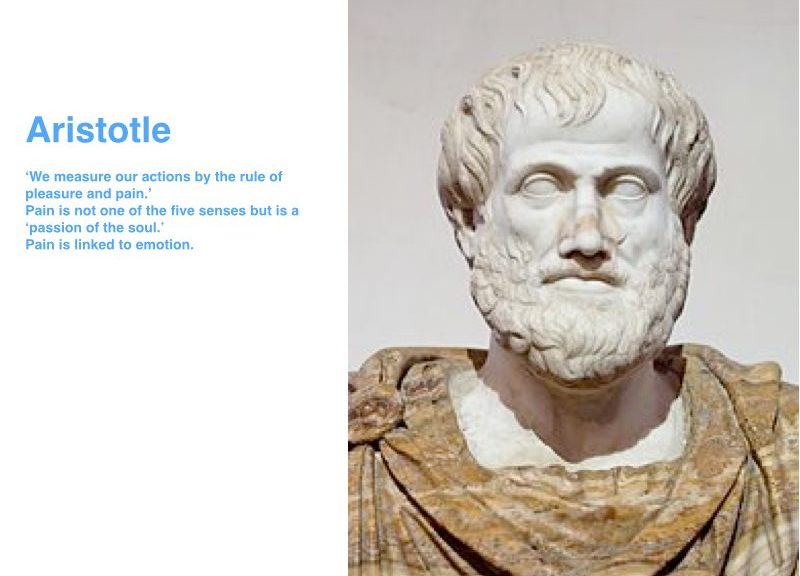
Painful experiences are best avoided. However, whether resulting from a physical or mental context we all experience suffering or discomfort from time to time.

Dealing with pain can be an opportunity for gain, in fact, trainers often use the old saw “no pain, no gain”.  Pain and suffering can also lead us to a downward spiral of doom.

Accentuate the Postive

To borrow a little motivational advice from the movie Mary Poppins, focus on how to improve and resolve things.  This is a great way to leverage painful situations as a wake-up call.

This is not about ignoring things that cause you pain.  Rather focus on a resolution that surpasses the status quo.  Use pain as an opportunity to make things better.

Our perspective is an important influencer of our actions.  What we do, that is our behavior, is very much based on the way we regard something; our point of view.

Act to your Benefit

Pain can influence our perspective toward sadness and pity, neither of these emotional views is likely to result in positive action.  Overcoming the pain we feel by rising above and beyond it, seeking positive change is far more personally enriching.

Being mired in sadness or self-pity can become self-fulfilling prophecies.   The results are far better when we act in a way that benefits us.

Allowing external circumstances to become detrimental to our health and well being is a choice but is probably not the best choice for you.


Avoiding Mistakes

Mistakes are the product of ill-conceived actions that are typically fraught with peril.  Based on this description of the root cause of mistakes, they are totally avoidable.

Simply put aside high risk approaches conceived in haste and the likelihood you will make a mistake is very low if non-existent.  This is a strong argument for consistently practicing careful analysis and thought.

Reality Bites

In practice taking the time and effort to apply careful analysis and planning to everything we do is impractical.   While careful forethought is a wise approach the situational context is a key factor affecting the feasibility of behaving this way.

Undertaking expediency often leads to mistakes because the urgency can drive us to rushed decision making that is not fully thought out and high risk.

The reality is mistakes can be avoided, however, it is often not a simple thing to do.  As the first step in any decision-making process, it’s most helpful to ask yourself “What can go wrong and if it does how sorry will I be?”

Considering the negative impacts, even if only at a high level focusing on the obvious, allows you to make a choice to stop and take time, even in the face of percieved urgency.

Mistakes can be Painful

While taking too much care to avoid mistakes can lead to missed opportunities taking too little can be painful.  Spending a little effort to help achieve the right balance is always worthwhile.

Avoid the pain, maximize the gain, think a little before you act.


Commitment

Relative to your interactions with others, building trust is dependent on your core values.  These values drive how you behave and thus how others perceive you.

If you treat a promise as inviolate and behave accordingly others will observe this behavior and believe that when you commit it means you will complete the commitment in some form.

Trust

When others hold a firm belief in your reliability, commitment to honesty coupled with the ability, or strength to practice these things consistently, they trust you.

A key to creating trust is making sure others understand not everything can be treated as an absolute certainty.   However, providing assurance that you will be dedicated to ensuring everything will unfold as estimated or predicted works.

Trust is founded on the belief that you are treating your promises with unwavering attention.  Others understand while things might turn out exactly as promised mostly they will.

Before making a Promise

The key to building trust is executing on your promises the majority of the time and when failure does occur being sure it is not because of your lack of effort.

This means determining when to promise requires to advance analysis, preparation, and planning.  Without these three critical behaviors, successful delivery on a promise can be naught more than a chance.

Taking a promise lightly, without the required preparation and thus failing or succeeding by the whim of the gods can be intuitively perceived by others.

This undisciplined behaviour will erode others trust in you.  If you can consistently behave with confidence underpinned by strong planning even failure will not negatively impact the trust you have built.

Running out of Candy

Each year on Oct 31st many countries, certainly most of North America celebrate Halloween.  Adolescents indulge their fantasies (with a little help from parents usually) and dress up in innovative and creative costumes.

They go out after dark and threaten innocent homeowners with the chant “Trick or Treat”.   The implication, of course, is if you don’t give me a treat I will give you a trick (ouch).

I have participated in this annual ritual probably since at least when I was 3 years old, first as a trick or treater myself, followed by enjoying the holiday as an observer,  then assisting my kids trick or treating and finally handing out candy from my various homes.

Panic Ensues

Not to gloss over it, also in my observing days, there was a little trickery executed by myself and friends, all in good fun.   This all leads me to this year’s Halloween and for me the first-time occurrence of panic.

We had provisioned for 45 trick or treaters and for the first time in over 40 years of handing out candy annually on this hallowed day we ran out of candy and had to turn off the lights and shut-down early.

“Oh no,” I thought without treats to give away I am susceptible to tricks.  Then I thought back to my own tricks like dog excrement in a paper bag set on fire placed on the doorstep just after you ring the bell and watch the homeowner stomp on shit.

Hilarious when you are 16, not so much at my current age.  Fortunately, I was not subject to any of this really funny mischievous (depends on your perspective. )

I hope all had a happy celebration, tune in to my post next year for the gruesome follow-up to yesterdays tale.