Being Polite

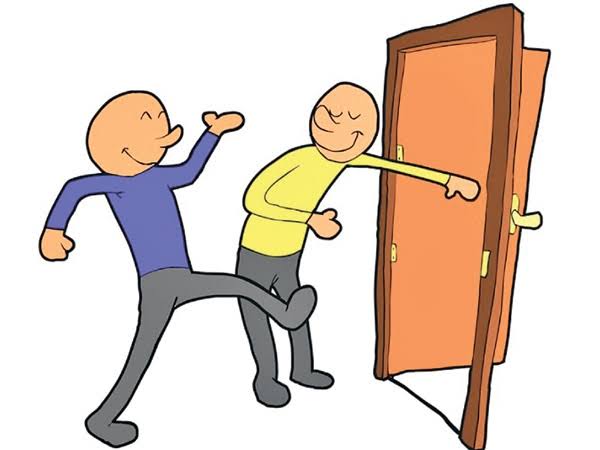
The definition of politeness is behaving in a way that is respectful and considerate of others.  Unfortunately determining what is respectful and considerate is subjective and there is the rub.

Considerate behaviour should align with expectations.  Individual expectations can vary considerable and group expectations are formed from cultural bias.

What?

In English the expression what can be associated with body language indicating incredibility.  That is, the observered behaviour is considered outlandish or outside the norm.  

Such an expression, used about some action that is a  behaviour norm in another culture will fall flat.  Perception and expectation drive the interpretation of politeness.

Picking up the Garbage

In North America there are public garbage receptacles everywhere.  Still there is garbage randomly cast aside everwhere, just check your local park.

In Japan there are virtually no public garbage receptacles and despite this there is virtually no garbage in public places.  

In Japan, it is considered impolite to dispose of your garbage anywhere but home and the main deviation from this is the by foriegn tourists. 

The cultural norm of the country very much drives behaviour.  Of course that is not to say there are some impolite people but their occurance is rare.

Practicing Logic

While individual expectations and cultural bias is a reality the benefit of polite behaviour is the pleasure it brings to others, and so to yourself.

Understanding the context of behaviour norms  is valuable but most important is self awareness about the impacts of your beviour on others.

In the moment reacting to and meeting their needs and expectations can and should be more of an exercise in applied logic than guessing what the expectations are.

 

Living Longer

A recent study of average life span in the Akita prefecture of Japan revealed surprising results as to the root cause of the longevity.

Japan about 27 percent of the population in Japan is over 65.  This is the country with the worlds highest ratio of persons living long lives.

Physical Exercise and Diet

Most leap to that a long life is linked to health.  This make logical sense .  Building on my last post though, I ask the question, which is more impactfulon the length of yourlife, physical health or mental health.

Clearly it is a combination but focusing on physical activity or the things you eat and drink might not be the full answer.  The surprising result of the Akita prefecture research, reading was a significant factor. 

Mental Health

The study focused on behavioural differences beteewn the people of Akita prefecture and other areas and Japan.  The surprising difference, in fact the only significant difference was the level of reading. 

More books were bought or borrowed per capita than any other reagion.  Newspaper subscriptions were the highest as well as the number of reading focused cultural activities.

Types of food and beverages consumed together with the average level of exercise were very comparable by region.  

Mind over Matter

The conclusion is that while physical health is critical, keeping your mind sharp gives an edge, onaverage, to a longer life. 

Focusing on oerall well being means not just exercise sing your body but also your mind.

Total Exercise

Although when it is suggested we exercise most think first of regular activity focused on the physical parts of your body, e.g., muscles.

In fact it is well known that exercising through simultaneous physical and mental activites provides greater benefit to your overall well being.

Walking

While there are many well known mental and physical exercise programs, from supervised training at a gym to temples for meditation) often these are practiced separately.

Walking has always been my preferred exercise method as I can combine both the physical and mental.  (There are other combined forms, yoga being one of the most popular)

When I am walking in familiar territory the physical activity becomes unconscious or autonomic and so I can concentrate my thoughts on mental exercises.

The physical exercise relaxes my body leaving my mind more open to focus on a wide variety of thoughts, problems, visions and so on.

In the case where my route is not in familiar territory the mental exercise takes a different form, that is concentrating on the path I am taking, memorizing landmarks and such, but still constitutes exercising my mental capacities. 

Free Form

While a number of other exercise forms combine mental and physical (like the aforementioned yoga) there is usually a greater structure imposed on the exercise.

Walking can be very self directed both the physical and mental aspects hich is very much a part of its appeal to me a an exercise methodology.

If walking is your chosen method my only sugggestion would be to ensure you set golas to make sure you are practicing it enough to get the full benefits, both mental and physical.  

A target of 70,000 steps a week or more is considered the standard.


USMCA

For those of you not tracking the long and boring NAFTA re-negotiations, the United States, Mexico and Canada decided to do away with free trade.

They did arrive at a trade agreement which was renamed the U.S. , Mexico, Canada Agreement (USMCA) at the request (or perhaps insistance) of the U.S.

The removal of “free trade “ and from the title was quite appropriate.  Although still about trade it is focused on rules and restrictions, not free exchange of goods.

All about me

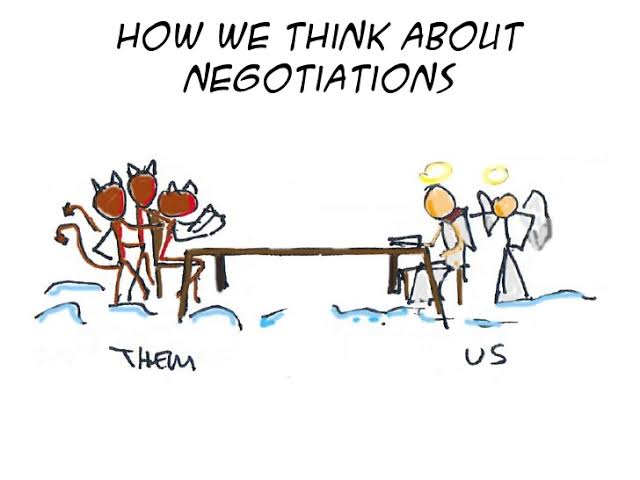
From the start of negotiations the U.S., through it’s stalwart spokeperson Donald Trump, declared the objective was to get the U.S. what they wanted.

The win-win negotiation principal arising from research at the Harvard business school, was disregarded.  

Historic results have shown this approach is typically not sustainable and while it does provide some immediate satisfaction ultimately things will turn out badly.

Already, cracks

It is probably precipitous to say the current stock market sell off is due to the U.S. trade stance, however anticipation of the impact on the world wide economy is surely a factor.

The problem with the my way or highway approach is it only works when backed by power.  The bully’s approach only works as long as the opponents give in. 

With any luck the coming U.S. mid-term elections will change the political power structure and sanity will return.  At least one can hope.


Listening to yourself

Unconsciously, we are constantly talking to ourselves.  This has been labled”self-talk” and refers not to verbal communication but silent conversations in your mind.

That is not talking aloud, but rather silently communicating internally, sometimes without being fully aware you are doing so.

A Powerful Influence

Self talk is typically more influential on your feelings, attitudes and ultimately behaviour than standard discussions (i.e., talking) with others.

Unfortunately self talk typically focuses on the negative.  It illicits and builds on things like anger, frustration anxiety, fear and so on.

It is rare for us to tell ourselves how great we are doing, promoting confidence even exploring topics that provide pleasure and self satisfaction.

It is rare for self talk to pep you up and assist with personal success, particularly in it’s unconscious form.  We don’t even realize how we are dragging ourselves down.

This can change if you take conscious control of your self talk.

Take Control

When you take control and direct your self talk in positive and up lifting ways it can be a very powerful tool.  You can influence how you think and behave just by having a conversation with yourself (silently of course).

Using self talk conciously enables you to make sure the message is appropriate for you and allows for the application of logic to make what you are thinking is likely to achieve the desired results.

The first step to owning your self talk is recognition.  Pay attention to what you are telling yourself.  This will let you question the direction you are giving and perhaps modify or even block the message.

Bargaining

Working to define the terms and conditions of a transaction through discussion is the classic definition of bargaining.   Typically you are working for your own benefit.

When the results are in our favor we typically call this a bargain.  The implication is a bargain is a result of negotiating favorable terms.

Winners and Losers

Logically, for any given transaction, if one person got a bargain, the other did not.  Of course both can percieve, from a subjective perspective, the transaction was in their favor.

The will occur when the participating parties have different priorities.  For example in a sale transaction if one party has price as a priority and the other timeliness both aspects could be satisfied and everyone feels they got a bargain.

Unfortunately this win/win scenario is not always possible and some times the bargain sessions and associated results or failure to achieve results at all can leave one or even both parties dissapointed.

Personally, when bargaining, I often find seeking a bargain that works well for everyone leads to the best results.  That is not just thinking about your priorities but giving the other parties some thought as well.

If I can’t win, I don’t want to play

Of course, seeking a solution beneficial to all is not a one way street and although it is a great perspective, I have found it is not always feasible.  

However, sometimes a party to the bargain is ruthlessly self centered and in those cases seeking a solution that works best for you can become the only viable option.

Foundations of Culture

Many cultures exist around the world.  That is, a particular people or society develop their ideas, customs and social behavior which apply to the group as a whole.

The behavior associated with the cultural norms likely derives from many factors,  both environment and genetic.  That is the temperment of a people can be bred, learned or a combination of both.

Human Inhumanity to Human

One key aspect of culture is how people interract with others .  From politeness to predudicial brutality unfortunately the societal norms do always lead to equal treatment for all.

Like typical animal behavior, observed in many species, the pack mentalty applies.  The larger pack (the in group) can treat the minorities with distain and even worse.

How Culture Develops

Cultural develops and changes over time with the group psyche.  This is influenced by historical events (e.g. war and and famine), geography ( e.g., nearness to others,  natural bordr protection, isolation).

Population density, weather, availability and type of food are among the many other things that drive cultural development.

For Example

I have visited Japan often and can cite my observations as to drivers of their cultural development.  First, isolation (it’s a collection of islands) has led to self reliance and associated operational efficiencies.

The population density (the islands are full of people) has led to an extreme politeness and powerful national pride.  Being a Japaness citizen is an honor, dual citizenship is not allowed.  Who would want to be be anything else?

Earthquakes and typhoons occur often and has led to a very resilient culture.

Culture is real and very powerful and as a whole people of specific regions adhere to the values and behavioral norms passed on historically, changing with time as the historical events and geographic isolation morphs.

Making Mistakes

Planning is a great way to reduce the risk of unexpected outcomes.  That is your action is misguided and the results are wrong.

Judging the occurance of mistakes can be a bit subjective, one person might think a mistake has been mase while another does not.

Inevitable

While the frequency of mistakes is reduced by planning it is never eliminated.  While we generally work to avoid the occurance of mstakes, they are not necessarily bad.

Overcoming an undesirable result can leave to improvement and of course experience and life learning are invaluable.

Identify, Fix, Move on

Most importantly do not deny or ignore the outcomes when a mistake occurs.  It might be appropriate to only acknowledge what happened with no further action required, the key is this needs to be a conscious decision.

Of course a correction or improvement is often the best course.  This is really just a replanning exercise.  Consider what occured, the root causes and the best next steps.

It is an Opportunity

I almost always gag when a boss or colleague suggests a problem or issue is really just an opportunity.

Applying this logic to mistakes (which can be a sub-set of problems or issues) works for me as typically they are of your own making, you own them.

A mistake affects you and is related to your involvement.  It is not unusual to expect you to act.  Viewing the mistake as an opportunity rather than a defeat, will help you do that.

Asking Questions

Eliciting information from others is a very important practice.  There are many things we don’t know, others may know them or may not, but questioning is a good way to find out. 

Unfortunately, the answer to your question might not be forthcoming or inaccurate or even a deliberate falsehood.  Also, sometimes others are disdainful of those who ask questions. Occasionally I hear, “You ask too many questions”

Is there another way?

Obviously a direct question is not the only way to elicit information from others.  More subtle methods could be employed to get the information desired. 

This can involve making a statement or observation or even taking an action intended to get a response which provides the information that is sought after. 

The indirect forms of eliciting information from others may also have a bit more veracity as the other person may not realize they are being probed and so do not filter the reaction. 

Asking Directly

Still, while less direct methods can be used there is always the question of clarity, the potential the result of your probing misunderstood.  You may misinterpret the response and think you have elicited the desired information when in fact, you have not. 

A direct question, while it might not always get an honest or accurate answer provides greater ability for you to assess the value information received. 

As well, follow up questions can be used to resolve any ambiguity to perceive in the answer.  

Don’t hold back

Whether you seek to elicit information directly or indirectly the main advise is to proceed.  There are gaps in everyones information and questioning in some form is often the only way to resolve them.