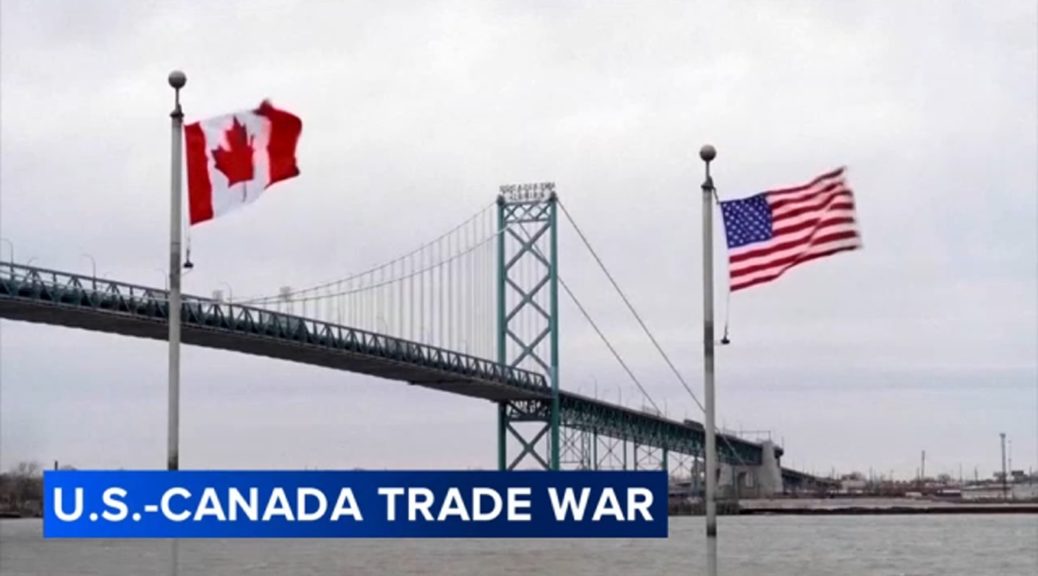
The U.S. has initiated a trade war with Canada. This has resulted in a massive amount of commentary which I absorb with great interest, yet in my opinion the real question is rarely mentioned.
The questions around what, how, why and who are somewhat irrelevant but whatever your perspective about those fundamentals is, the one absolute truth is that everyone loses, period.
Americans and Canadians alike will suffer and neither will be better off than at the start of the trade wars. Perhaps if a declaration of victory is needed it will be the country that recovers fastest with the smallest long term effects.
Not even about who loses the most
This conflict is not about who loses (everybody does) but rather which country is negatively impacted the fastest to an extent where the pain becomes intolerable.
Like a game of chicken with two automobiles headed for a dead on collision, with no one swerving, the winner after the crash is the combatant witch the least injuries and most importantly is best positioned for recovery.
Popular Support
The US polls show support of the tariff policy at less than 30% while 75% of Canadians support their government actions. These poll numbers support the theory that America will reach a level of intolerance (i.e., declare a crash) far before Canad, unless something unexpected occurs..
When and how the trade wars end is unpredictable but it is likely the current American President will declare victory regardless of the circumstances.
After all he has declared victory over Iran numerous times to date although that conflict does not really seem to be over yet.
In the End
The victor will have continued employment growth, rising GDP, strong trade agreements worldwide and recognition their approach was successful. At the moment my opinion is that will be Canada hands down.
