Yesterdays post about patience got me thinking a littlebit more about when it is appropriate for the urgency/ impatience balance to favour urgency.
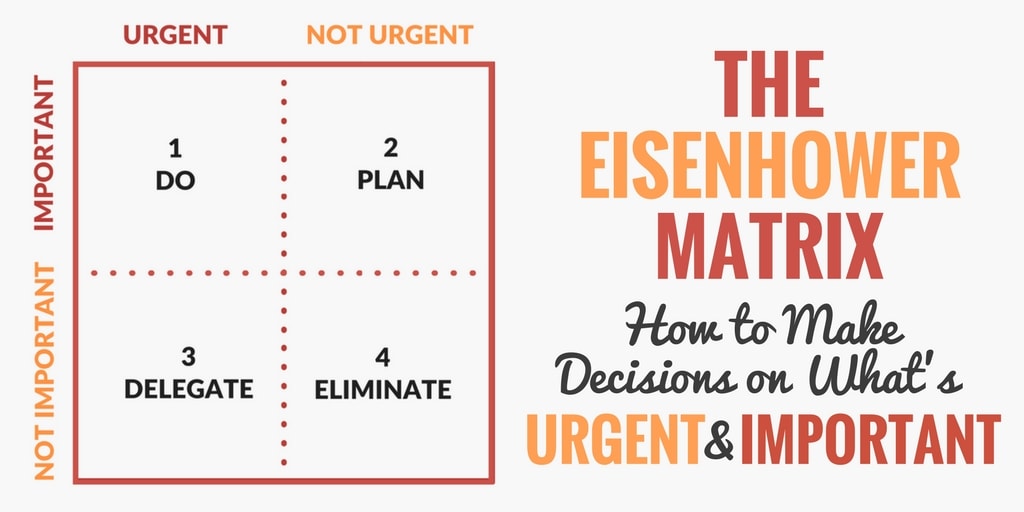
This reminded me of the Eisenhower matrix which classifies activity based on it’s urgency and importance. The simple question to ask is, how important is what I am going to do (i.e., task, activity, strategy, behavior and so on)?
The combination of urgency/importance can help guide the best mix of patience or perhaps impatiece, that is need to get it done right now.
Importance speaks to value, spending lots of time on less important activities is obviously less value than spending little time on important actions.
Definitions
Important tasks are things that clearly contribute to our strategy and objectives. We know they add value because they specifically solve a specific defined objective.
Urgent refers to any activity or task that seems to require require immediate attention. These are the things that we percieve to be shouting “Now!”.
The Matrix
Eisenhower’s matrix classifies things we want to do based on a Y axis of low to high urgency. The x axis is low to high importance. This results in four main quadrents:
- Low importance/low urgency – spend a lot a patience on these, in fact why even do them at all.
- High Importance/High Urgency – based on the classification obviously worth doing quickly, don’t waste patience on these. It is not appropriate and maybe detrimental.
- Low Importance/ High Urgency – You kind of wonder whats the urgency if it is not important. This is a category to be carefull with and a modicum of patience does not hurt.
- Low Urgency/ High Importance – there is good value here, they are important but be patient as you complete the work. Focus on getting the best value, patience is an asset.