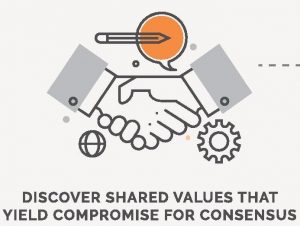
One method of getting everyone involved to arrive at problem resolution is for the stakeholders to reach a settlement of the disputed items by each side making concessions.
This approach varies from consensus agreement, which is not about anyone giving anything up but rather finding a solution that satisfies everyone, albeit to different extents.
Passive Aggressive
Compromise is often a hallmark of situations where although resolution appears to have been achieved in reality discontent lurksclose to the surface.
Giving up or giving in can be motivated by a number of things like frustration ,disenchantment, boredom, etc. None of these are really positive nor leave the giver in a positive mood.
Often the giving in (passive behaviour) leads to a hidden agressive response. We haven’t actually given up, we just make it seem so to give us time to prepare our resources for attack.
Consensus
Although not true in every case consensus agreement provides an opportunity for all parties to buy-in to the solution. That is, there can be real satisfaction to participating in the outcomes if you were involved in their creation (not so much when you feel pushed).
Strangely, although a much more effective approach with outcomes proven to be more sustainable I often see agreements forged through compromise.
I believe this is largely because achieving consensus is much harder than either through compromise or of course the easiest method, pure force (also the least sustainable).
When working with groups to arrive at common goals and strategies, facilitatIng consensus over compromise Is always best.