Reality is factual. It exists and their proofs which can be used to validate reality. The assesment of reality is objective. It is real or it is not and generally the state should be inarguable.
What is the truth?
Truthful statements or other communications are those that accord with the facts or reality. This is an objective measure but, as we all recognize, almost anything can be argued.
No matter how real or factual the circumstances, whether the assessment of a given set of facts or reality is clearly objective could be arguable.
Thus determination of truth, something that is accepted as true, is not necessarily a simple task and often the determination can include a subjective component.
Lies
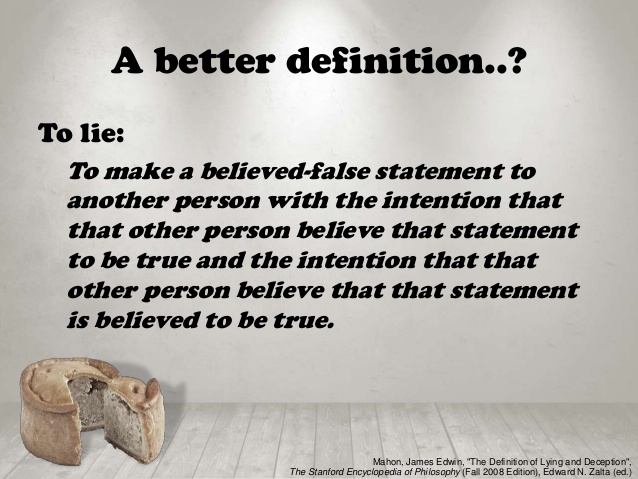
Rather than being the opposite of truth, a lie has the added qualification of intent, that is an intentionally false statement or communication.
Lies are founded on deceptions or false understandings, but if you do not know it is a lie, than it is not. The logic here is based on the principle that without knowledge there cannot be intent.
Conceptual Analysis
It is likely most believe truth is good and should be valued while lies are bad and to be avoided. Given neither truth nor lies have an absolute determination, the assessment of value (good or bad) has a subjective component.
Additionally a falsehood might not be truly false if the propnent of the thought or idea believes it to be true. In this case those that view it as a lie could be doing a disservice to the believer.
Truth and lies are actually complex concepts and how we interpret them and what they mean to us are points of consideration that deserve great caution before letting our assements of statements we believe to be lies (or true) colour our behaviour in ways we may later regret.